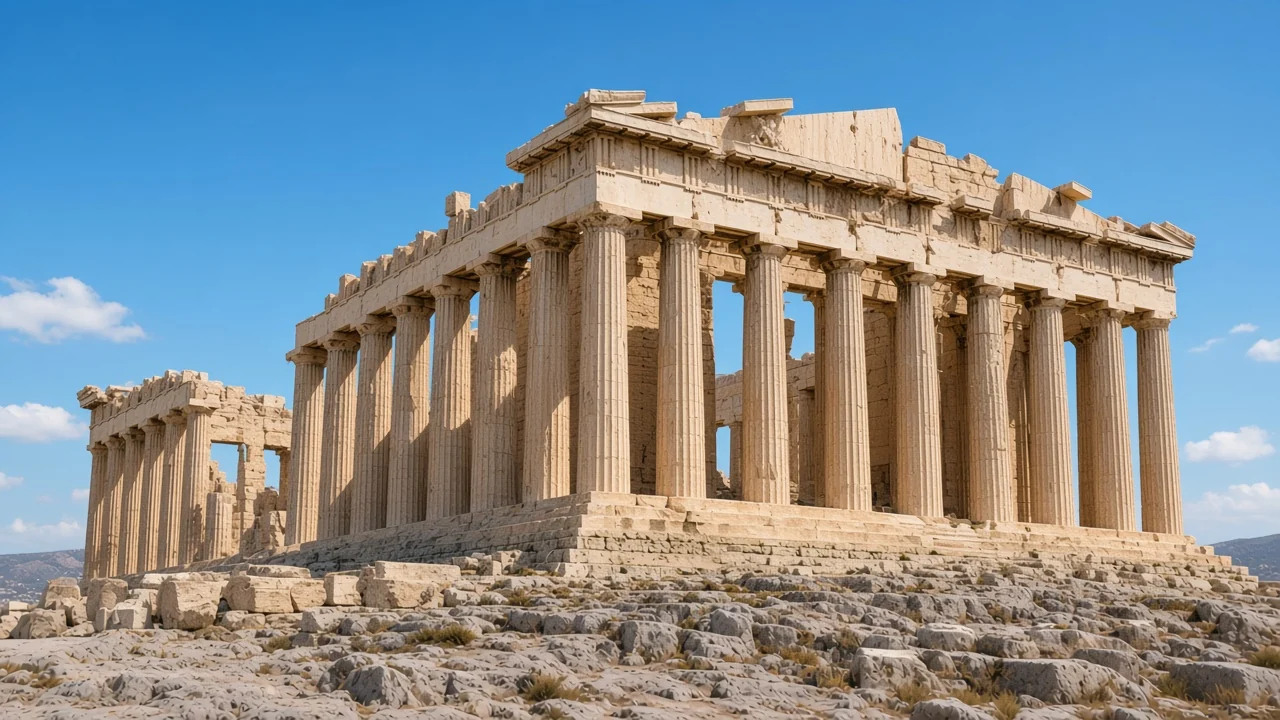
 -432
Athens, Greece Classical Greek
Parthenon
A Doric temple on the Acropolis whose proportions and entasis became a reference point for the classical tradition.
Chronicle
One decade at a time, one plate after another.
-432 Athens, Greece Classical Greek
A Doric temple on the Acropolis whose proportions and entasis became a reference point for the classical tradition.
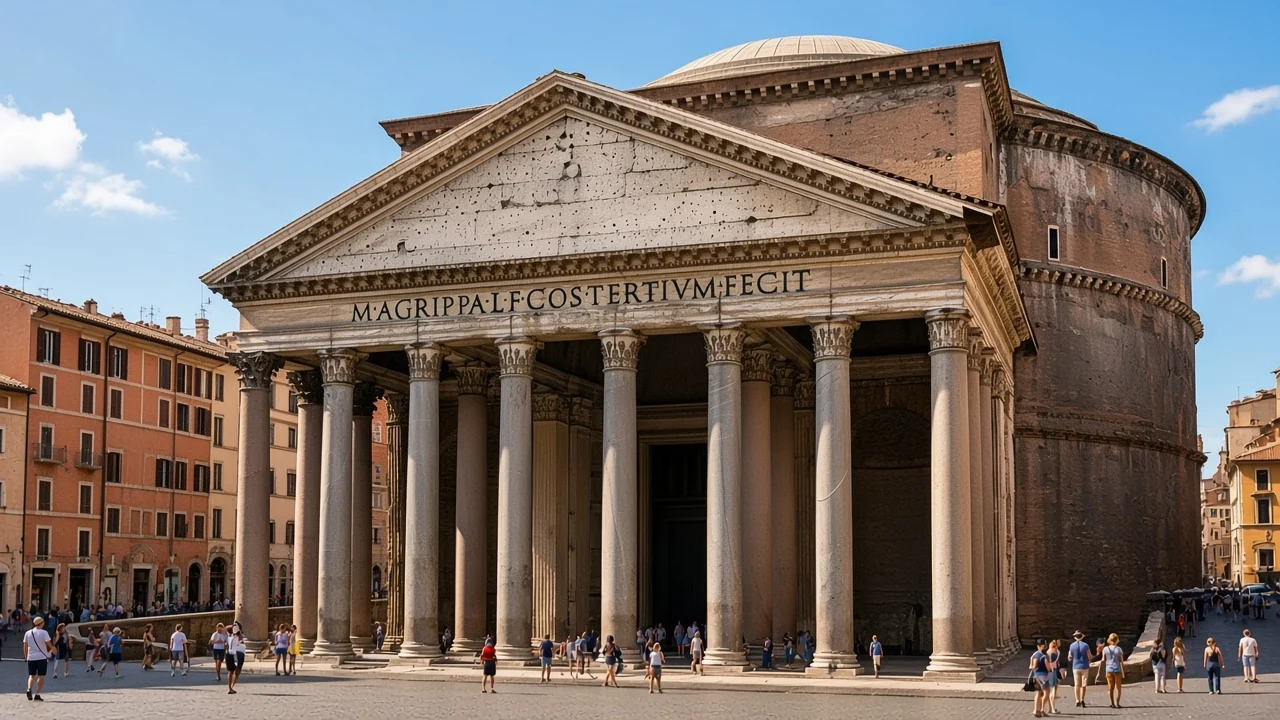 126
Rome, Italy Roman
Rome’s concrete-domed temple, rebuilt under Hadrian, is famous for its circular hall and the beam of light from its oculus.
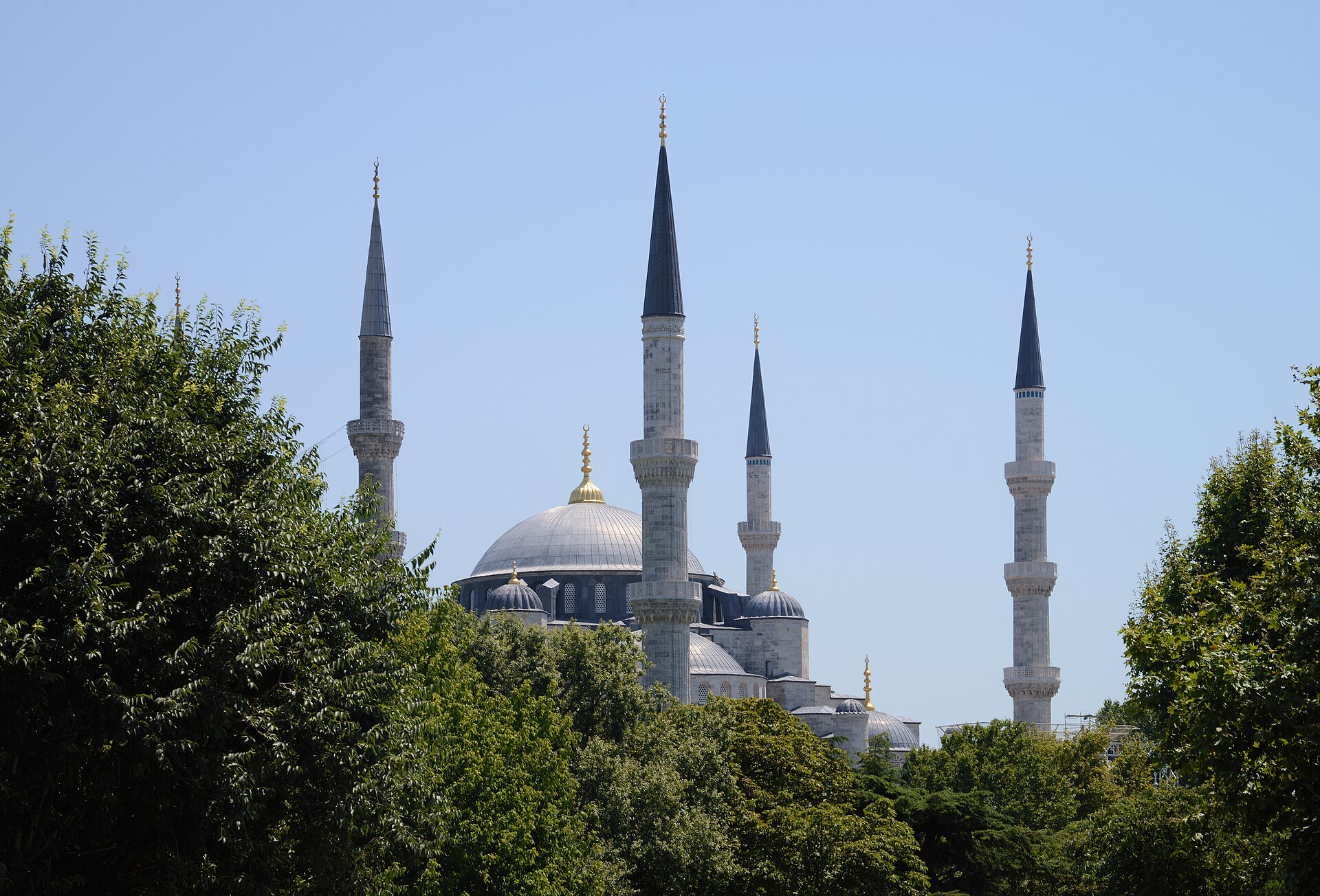 537
Istanbul, Türkiye Byzantine
Anthemius of Tralles and Isidore of Miletus
A Byzantine monument with a vast central dome on pendentives, whose uses have changed between cathedral, mosque, museum, and mosque.
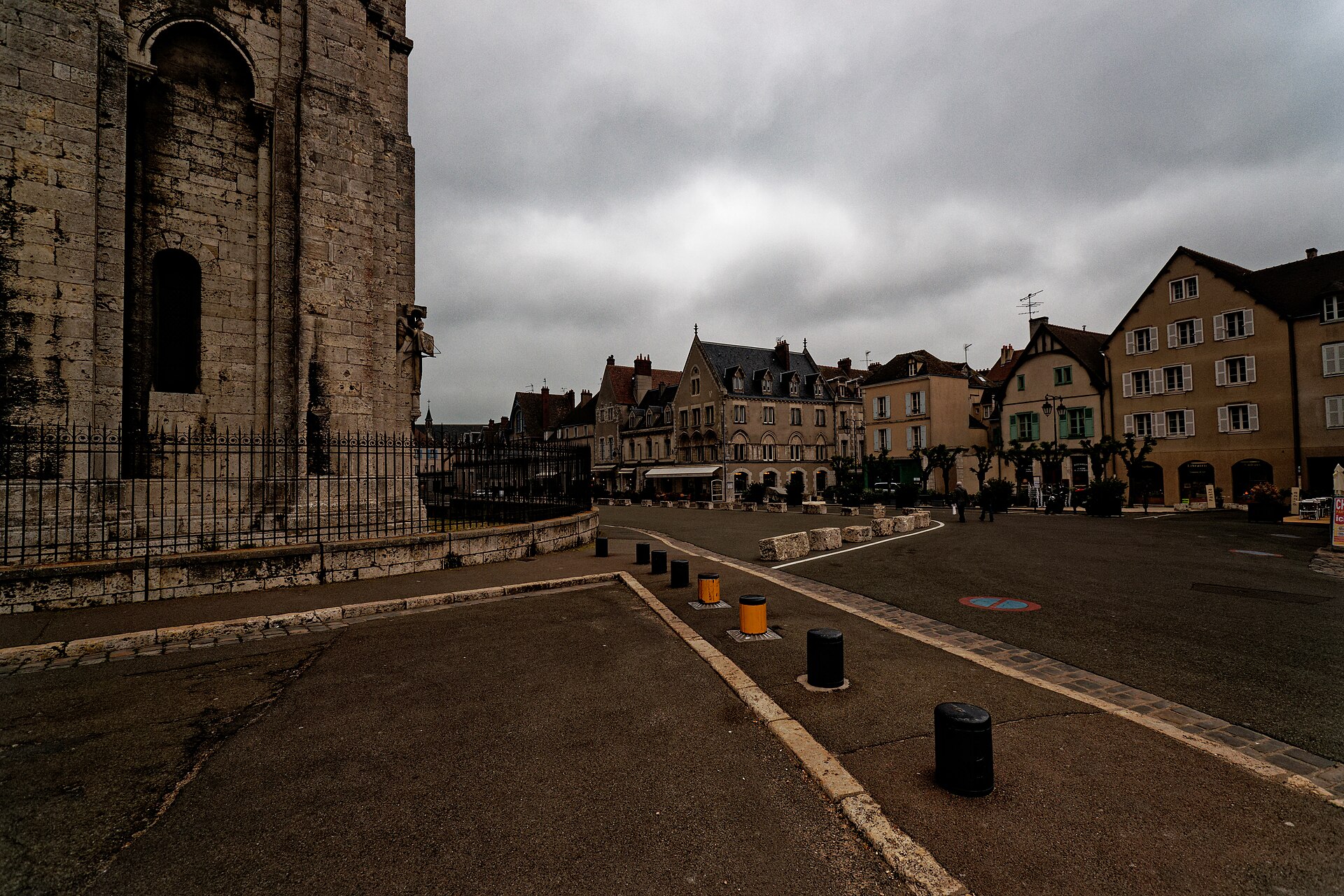 1220
Chartres, France Gothic
A canonical French Gothic cathedral known for its lofty nave and stained glass.
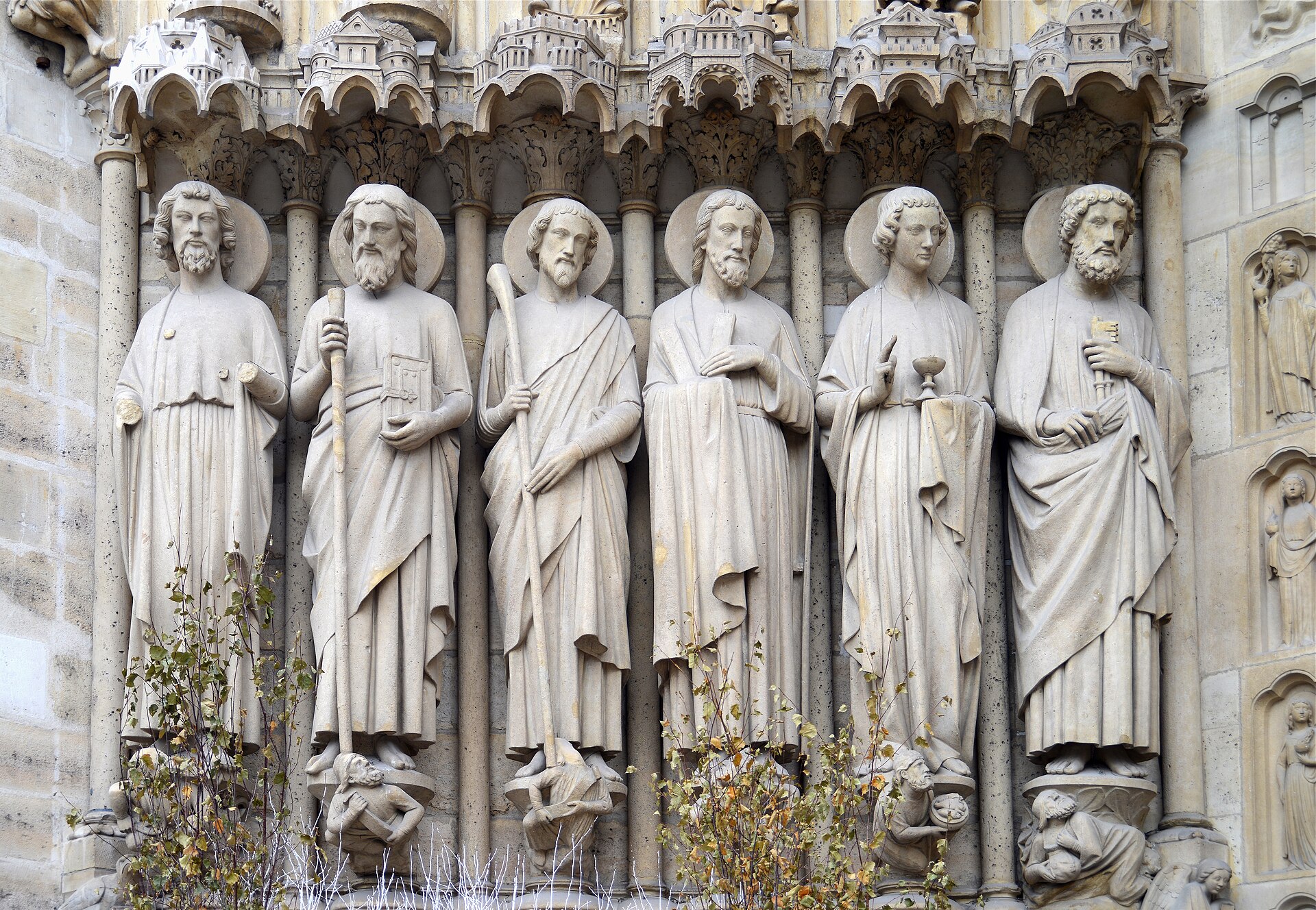 1345
Paris, France Gothic
The Gothic cathedral on Paris’s Île de la Cité is renowned for flying buttresses and rose windows.
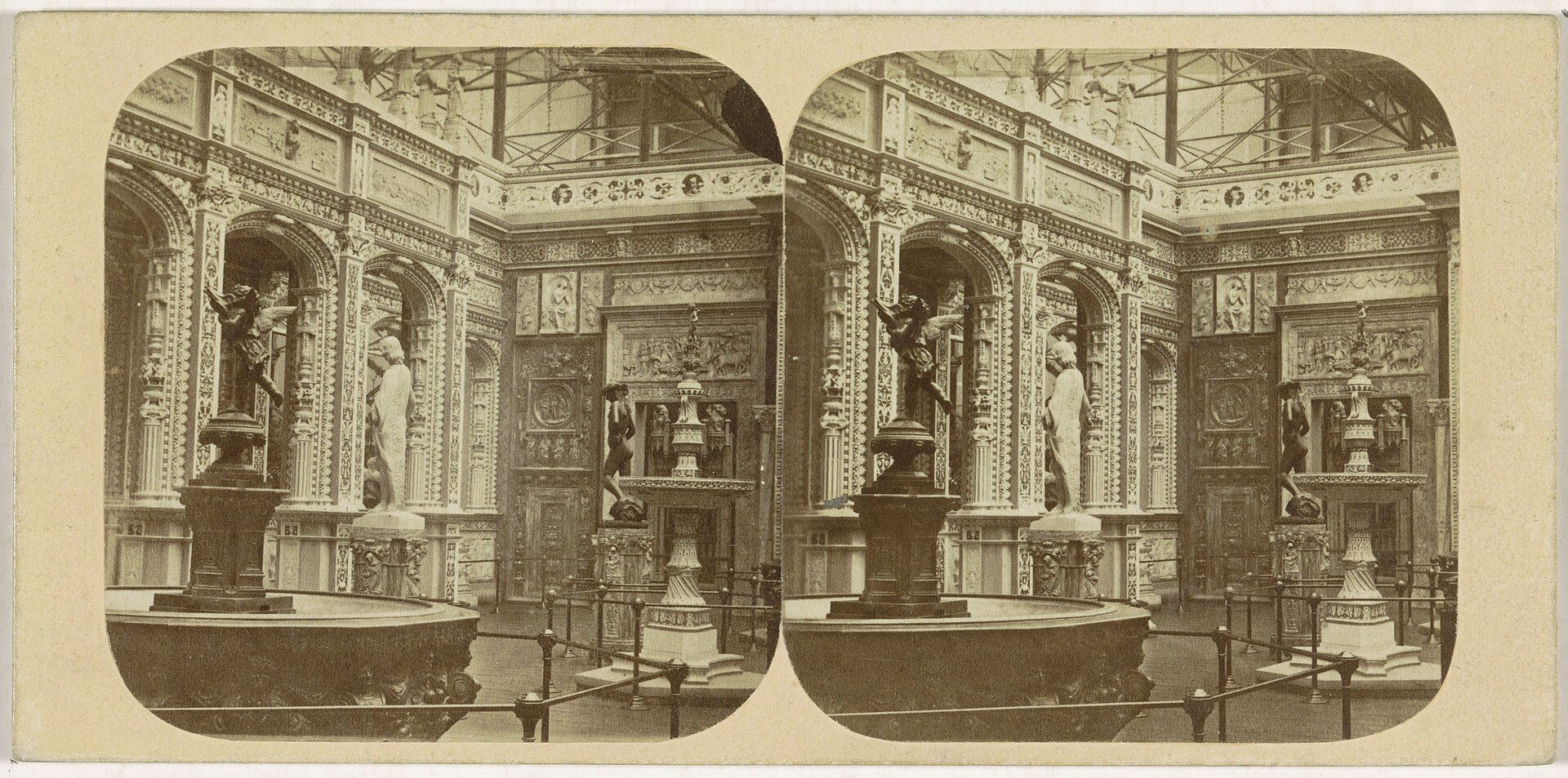 1851
London, United Kingdom Iron and glass
The 1851 exhibition hall assembled at enormous scale from prefabricated iron and glass, later destroyed by fire.
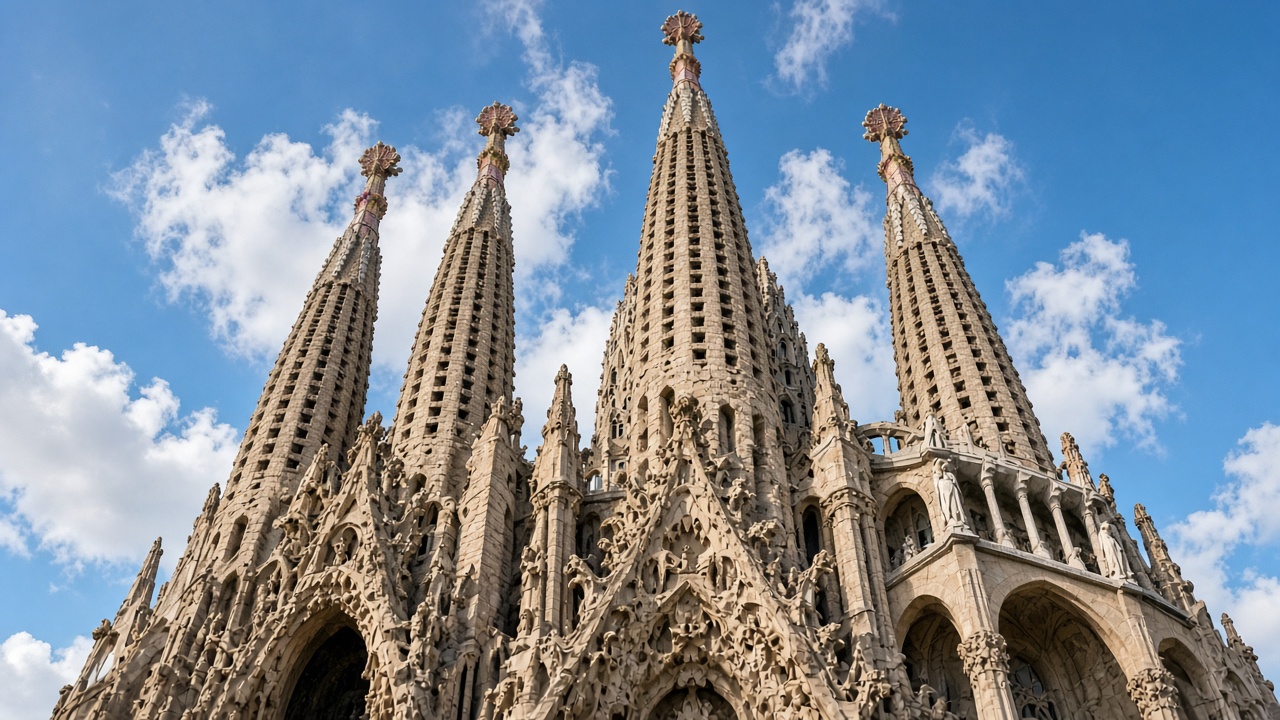 1882
Barcelona, Spain Catalan Modernisme
Barcelona’s basilica has remained under construction since 1882. Gaudí devoted his later life to it, while later teams continue the work.
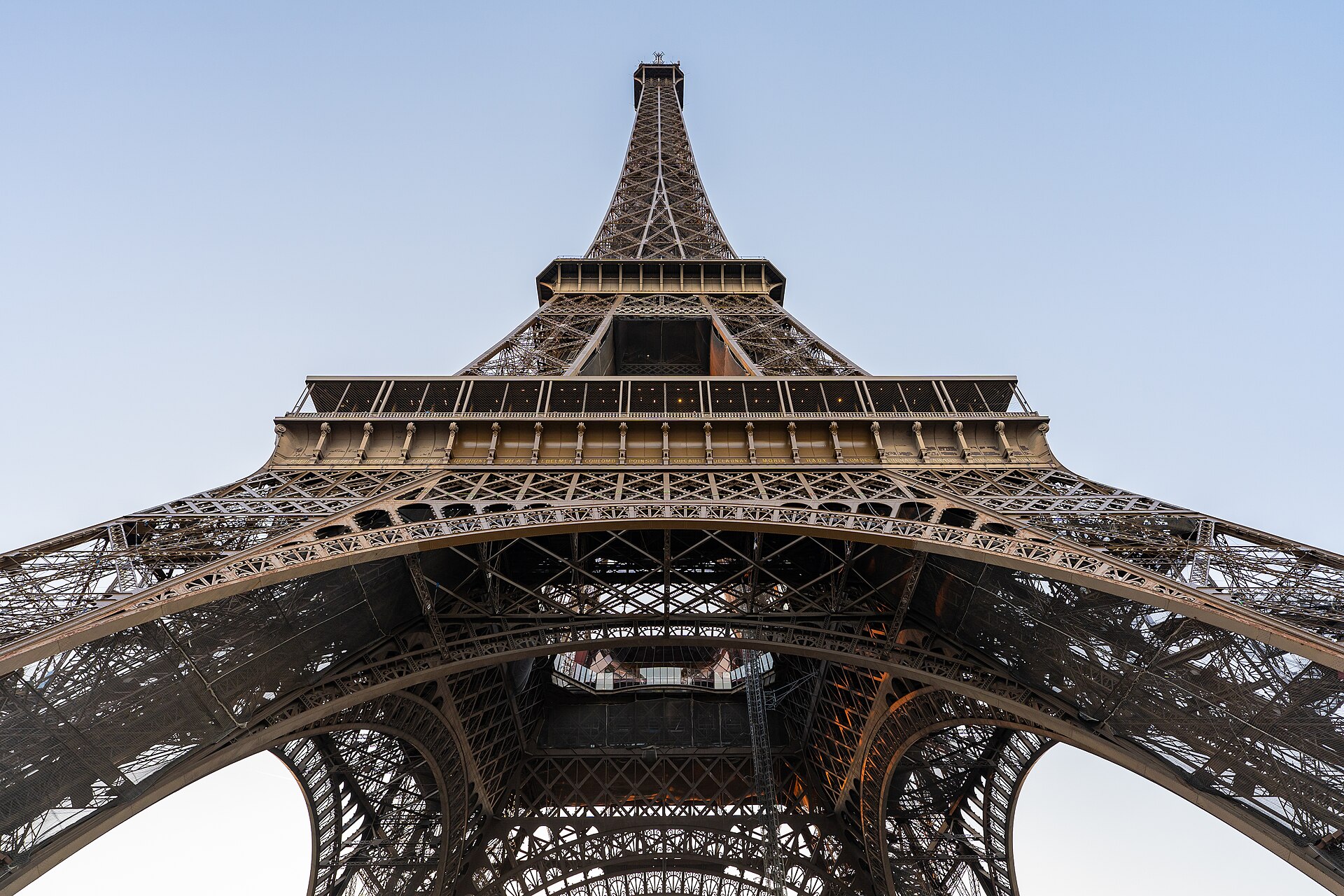 1889
Paris, France Steel frame
An iron tower built for the 1889 Exposition, later becoming the emblem of structural beauty in the industrial age.
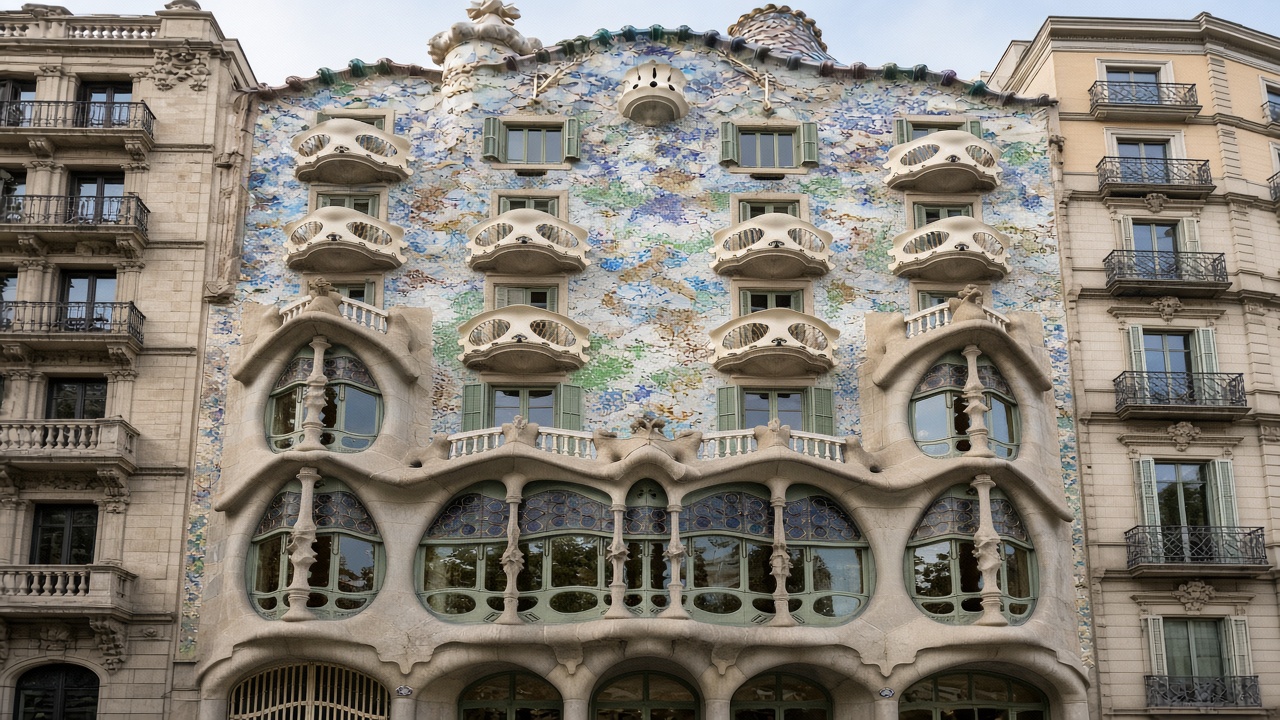 1906
Barcelona, Spain Art Nouveau
Gaudí’s remodeling of a Barcelona house, mainly from 1904 to 1906, is renowned for a facade evoking bone and skin.
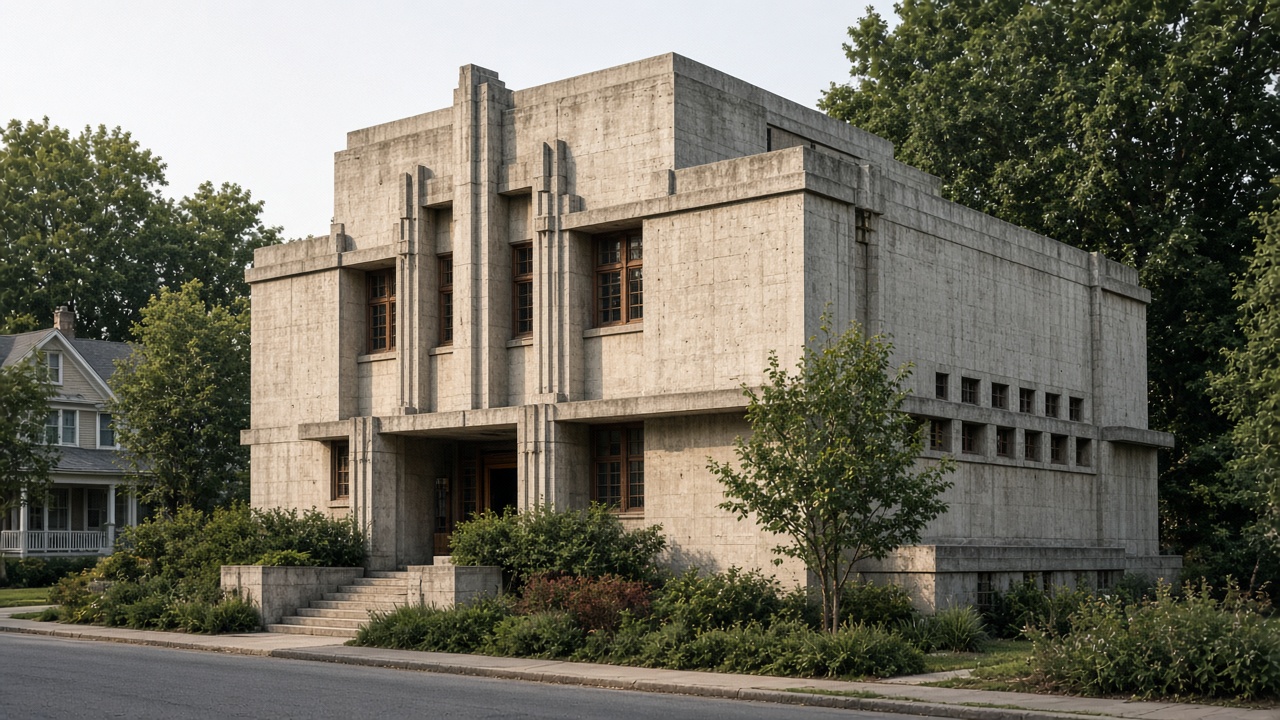 1908
Oak Park, United States Prairie
A reinforced-concrete Unitarian meeting house in Oak Park, completed in 1908, and an early landmark of modern American religious architecture.
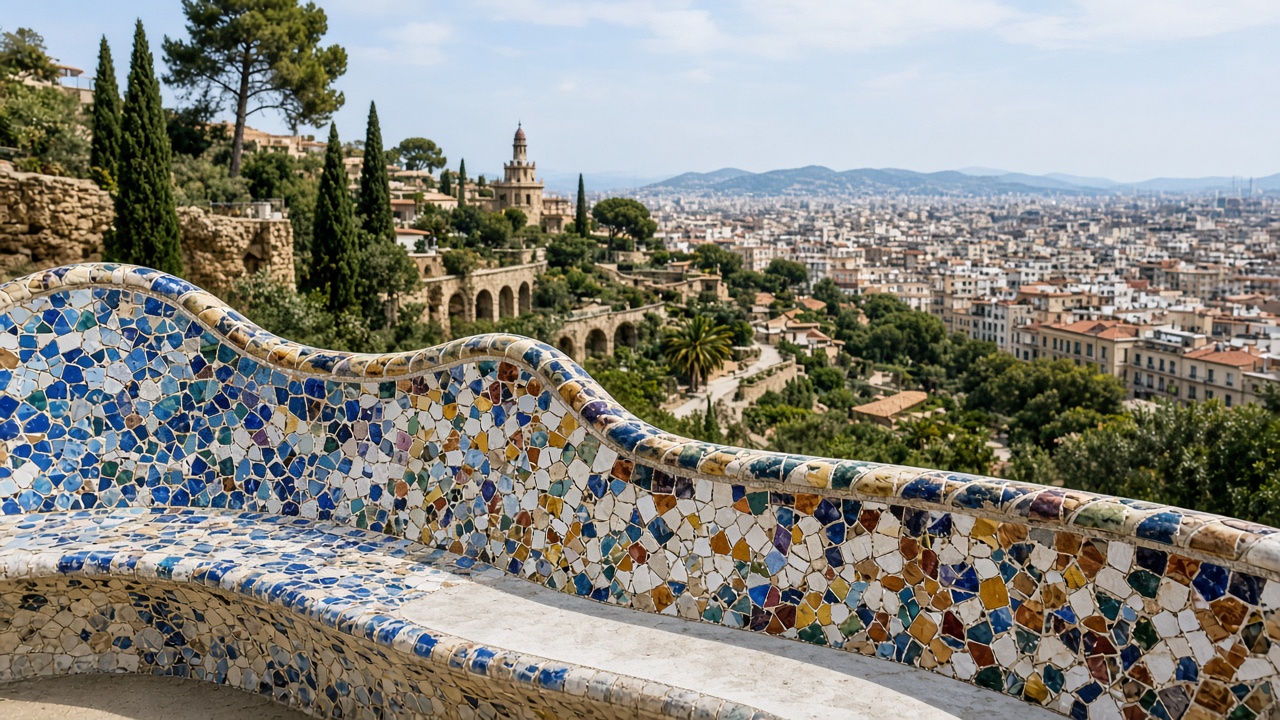 1914
Barcelona, Spain Catalan Modernisme
Begun as a housing development and opened as a park, its principal works date roughly from 1900 to 1914.
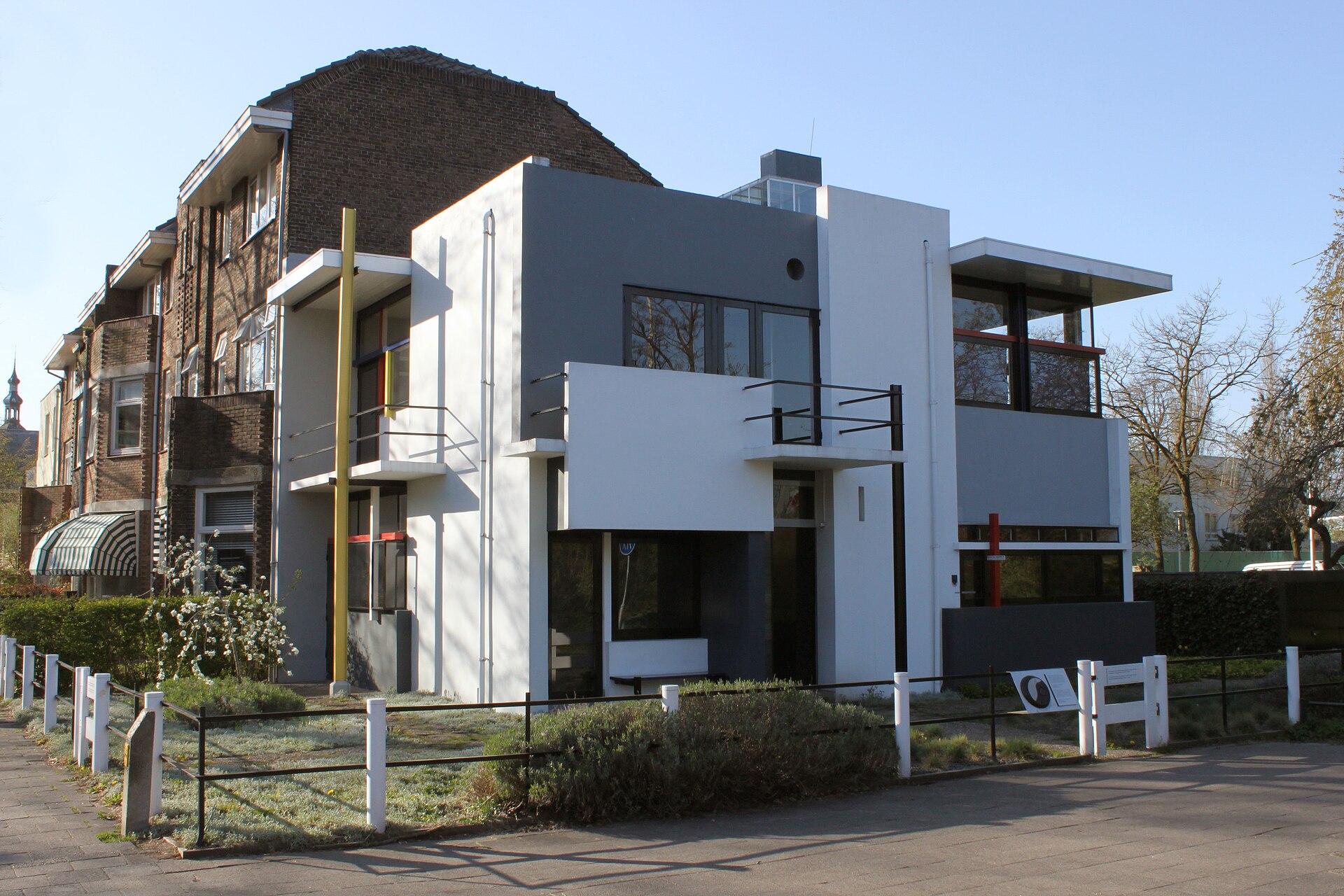 1924
Utrecht, Netherlands De Stijl
Rietveld’s De Stijl house assembles space from planes, lines, and primary colors.
 1926
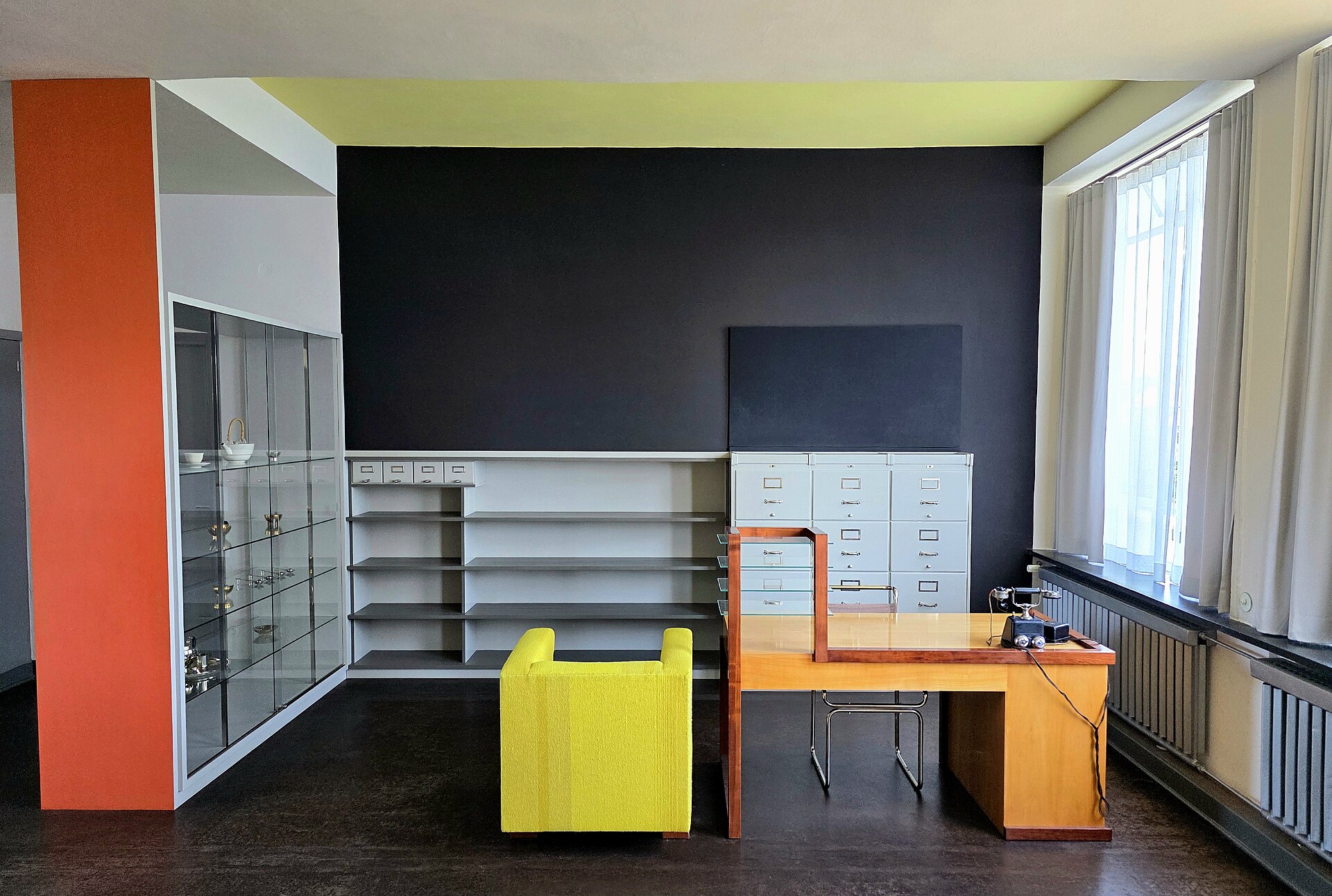
Dessau, Germany Modernism
Gropius’s Bauhaus school and workshop complex, clearly separating functions behind a glass curtain wall.
 1929
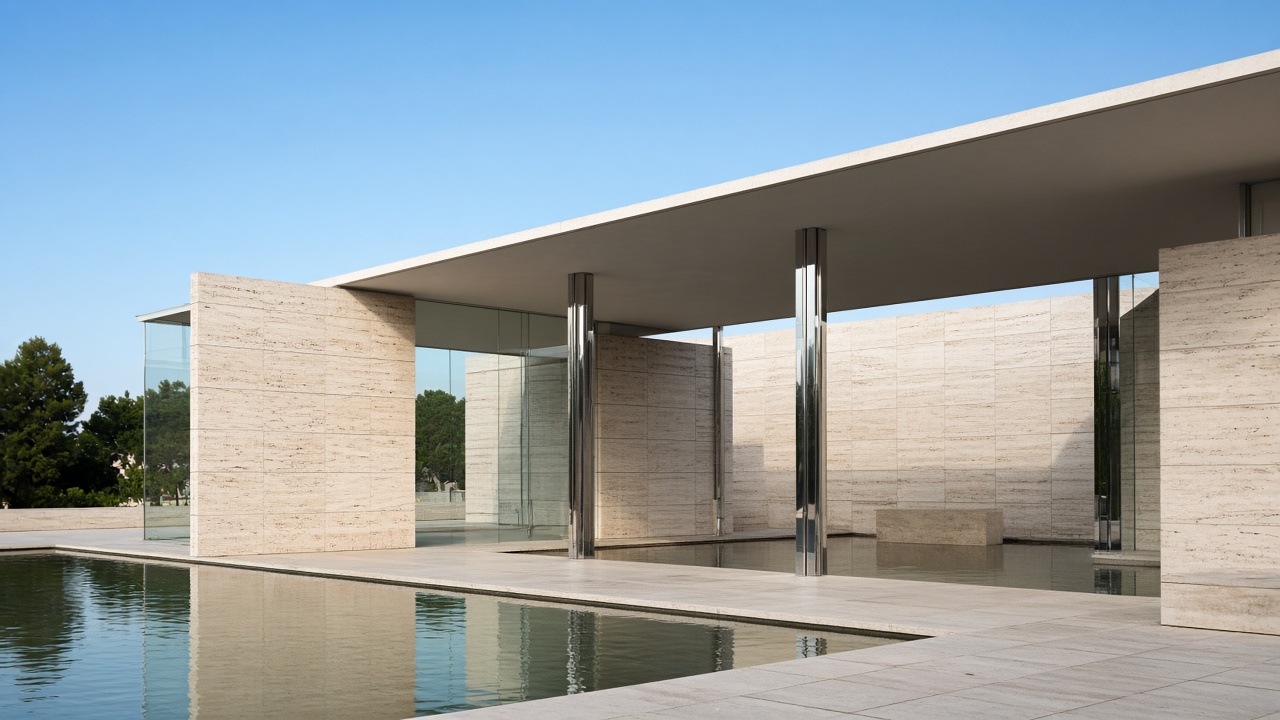
Barcelona, Spain International Style
The German Pavilion for the 1929 exposition, reconstructed in the 1980s, is defined by a free plan and flowing material planes.
 1931
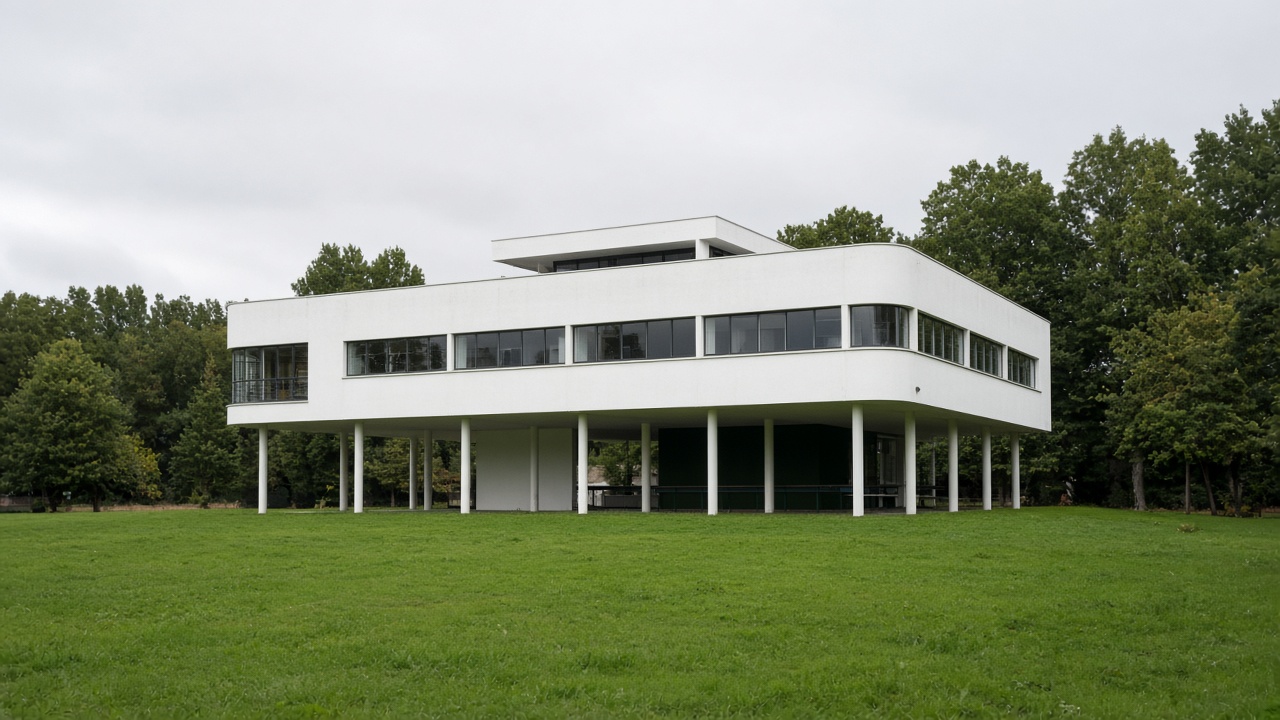
Poissy, France Modernism
Le Corbusier’s iconic 1931 white house at Poissy condenses the Five Points of Modern Architecture into one design.
 1933
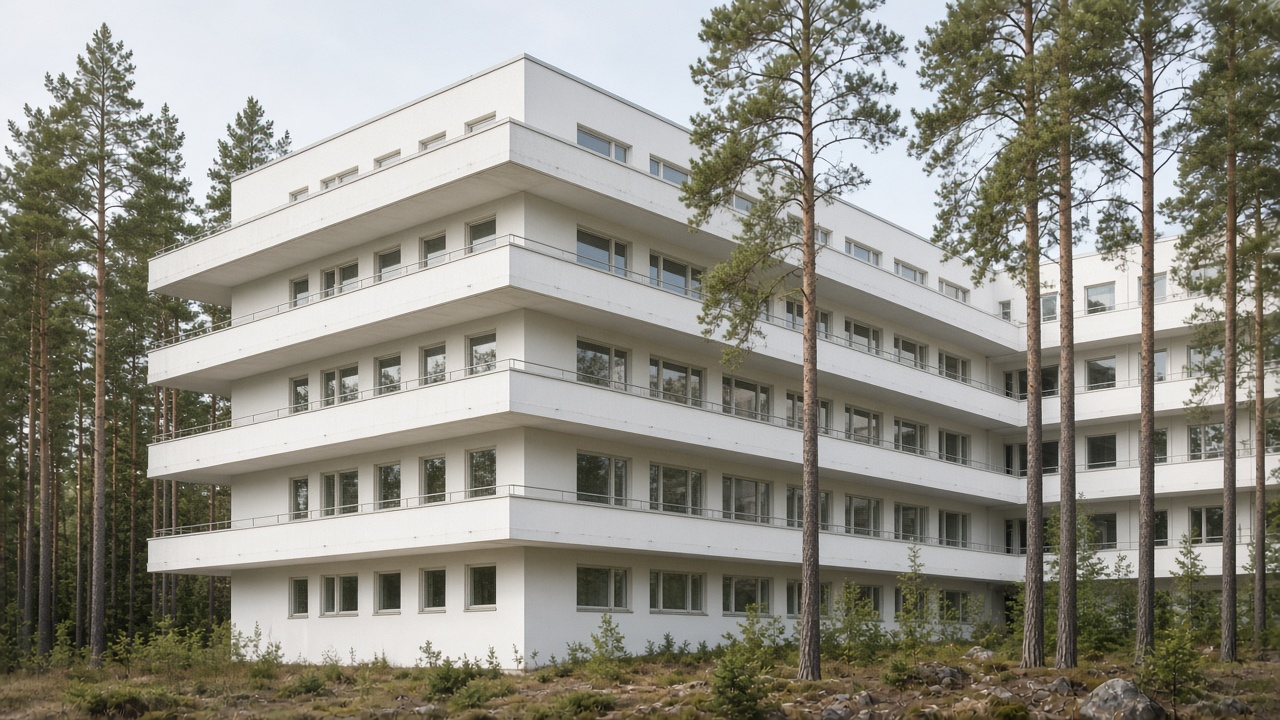
Paimio, Finland Nordic modernism
A 1933 Finnish tuberculosis sanatorium where beds, windows, and rail heights shaped a humane modernist design.
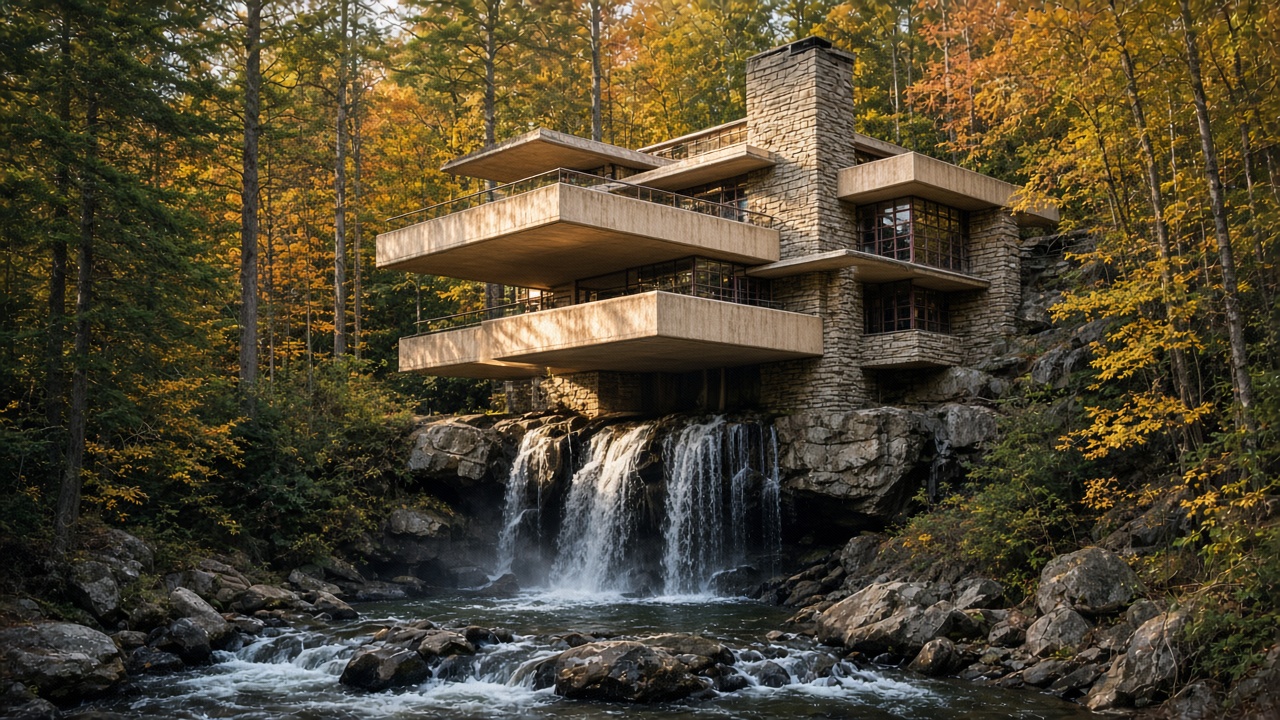 1937
Mill Run, United States Organic architecture
A 1937 house with horizontal terraces cantilevered over a waterfall in Mill Run, Pennsylvania, and Wright’s defining work of organic architecture.
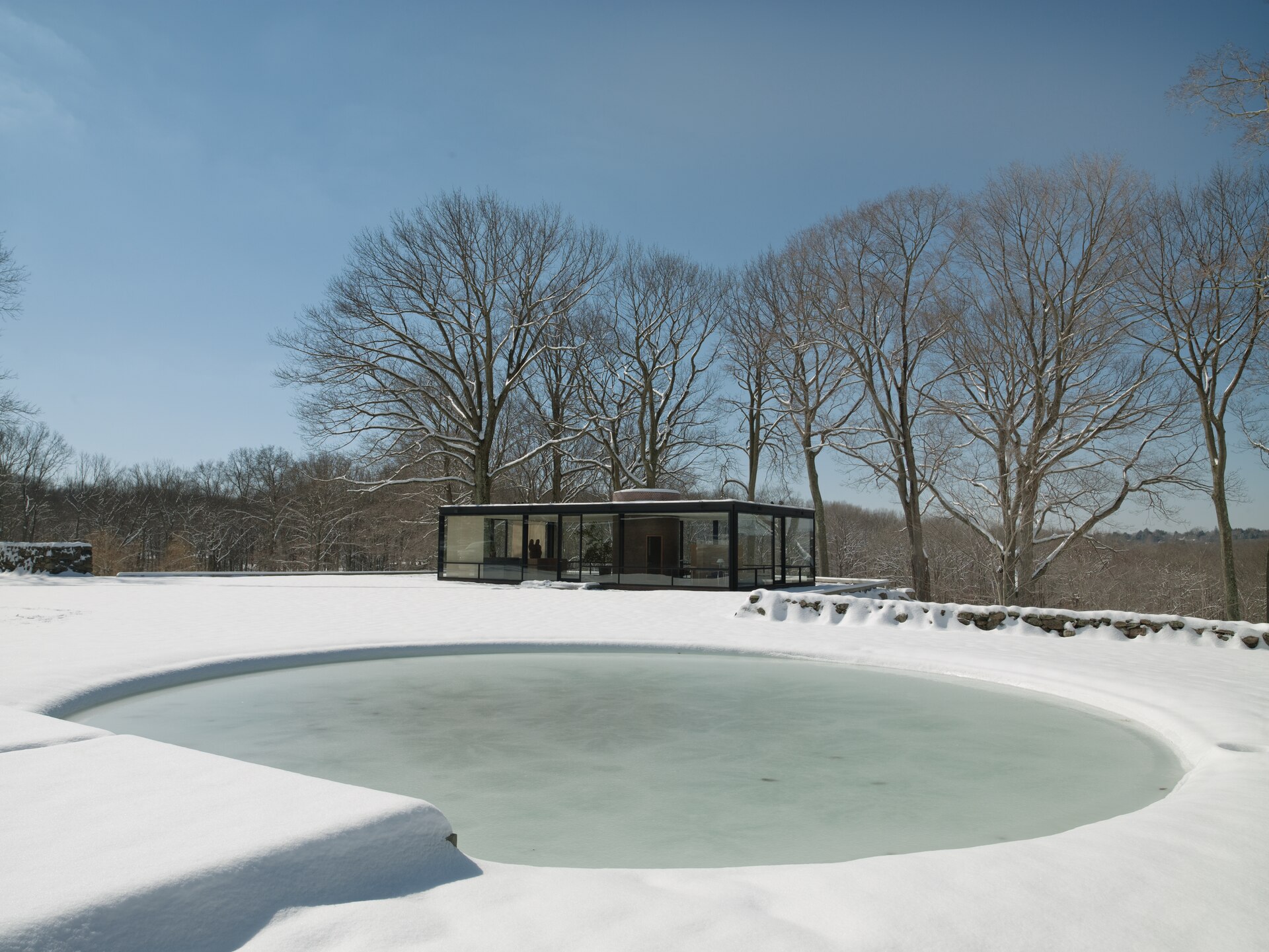 1949
New Canaan, United States International Style
Philip Johnson’s glass-and-steel residence explores the transparent box under the influence of Mies.
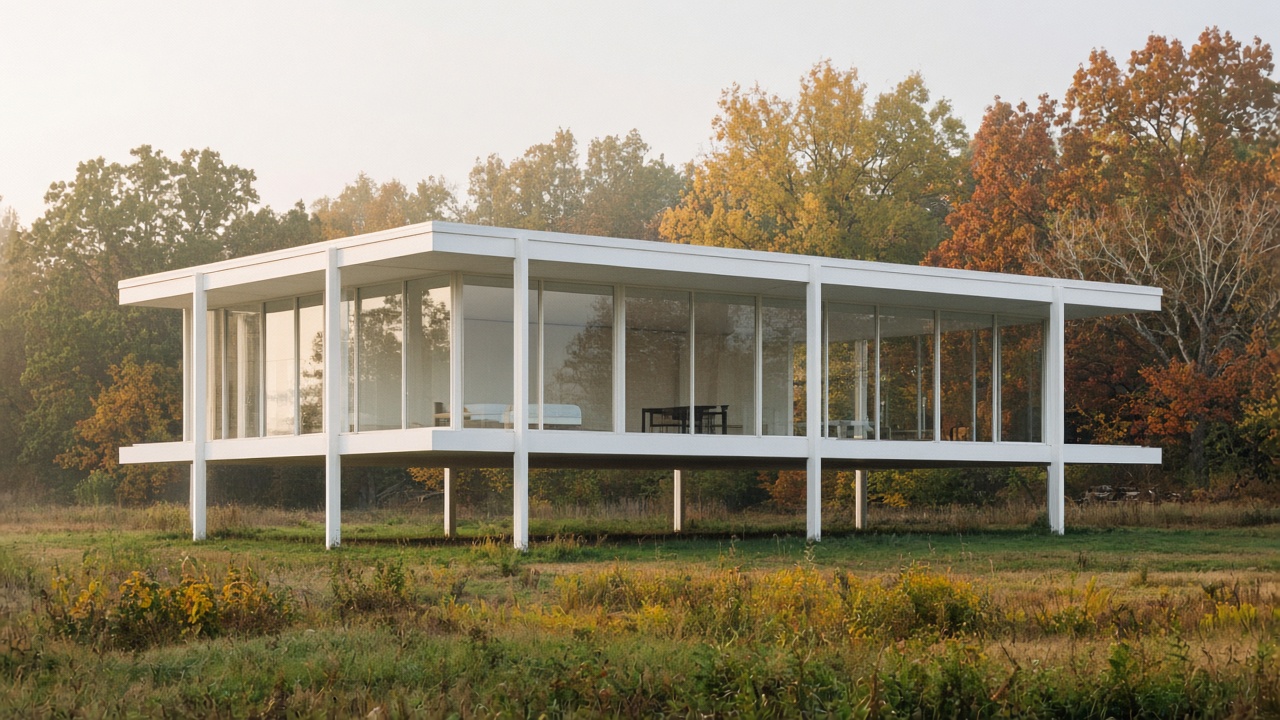 1951
Plano, United States Minimal
A 1951 single-story glass-and-steel house beside the Fox River, conceived as an experiment in transparency and minimal structure.
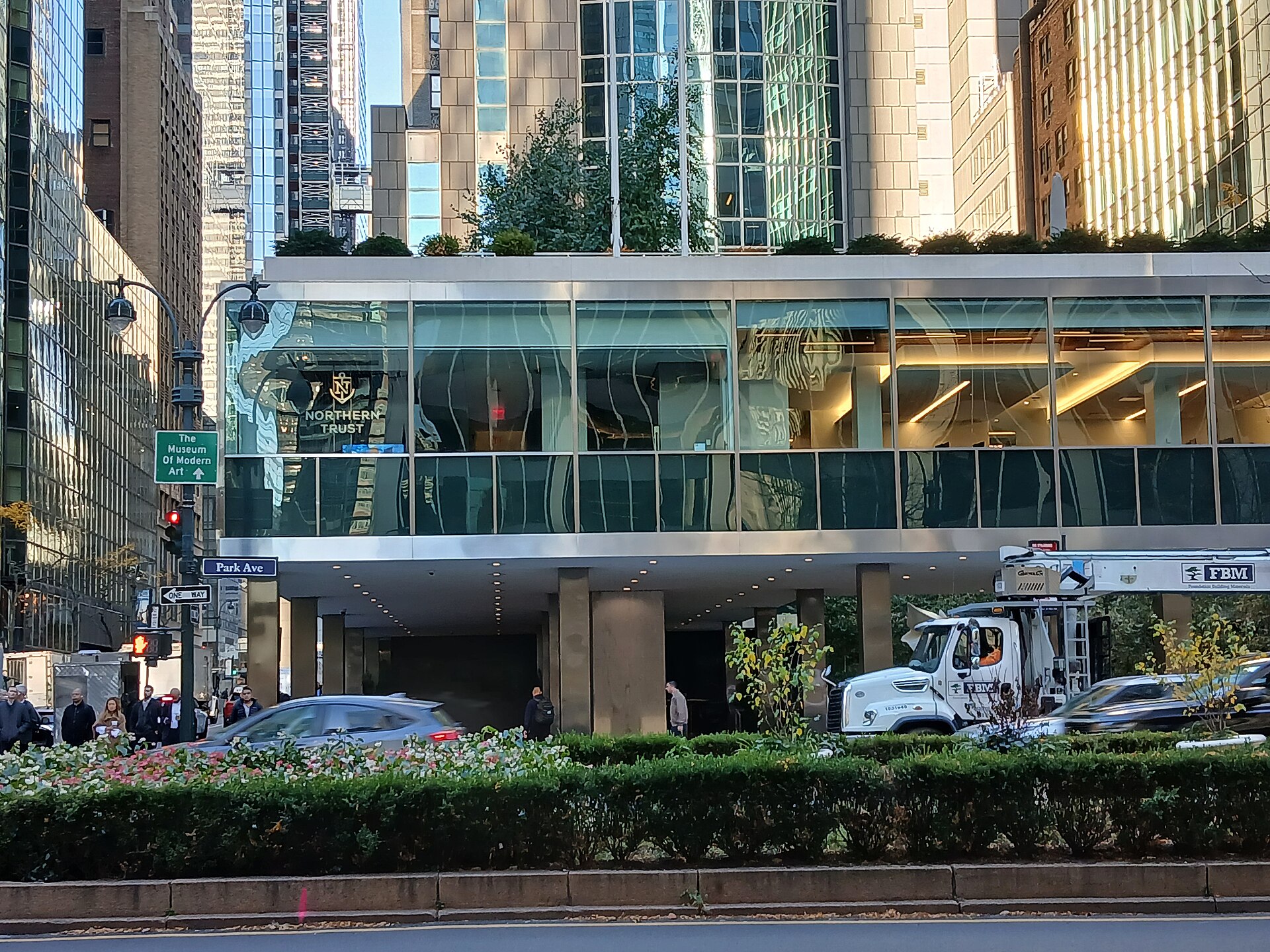 1952
New York, United States International Style
An early glass curtain-wall tower on Park Avenue designed by Gordon Bunshaft at SOM.
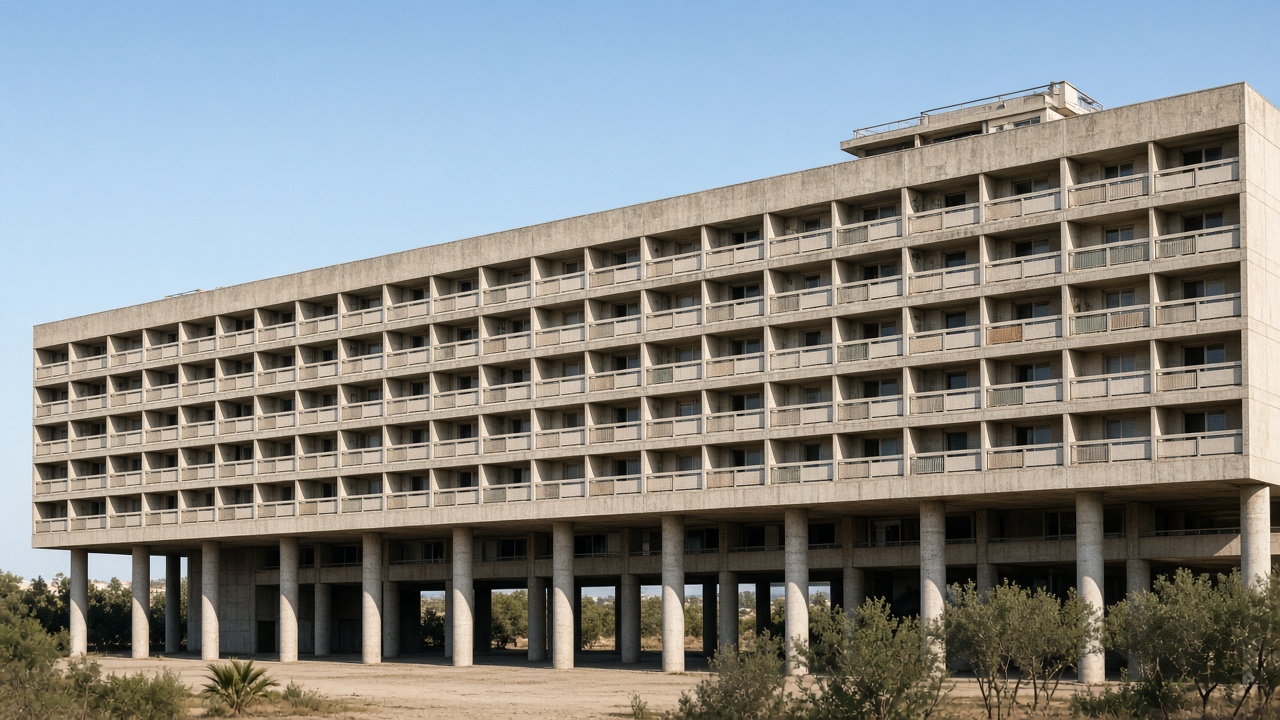 1952
Marseille, France Early Brutalism
A 1952 vertical-village housing block in Marseille combining dwellings, shops, shared facilities, and a communal roof.
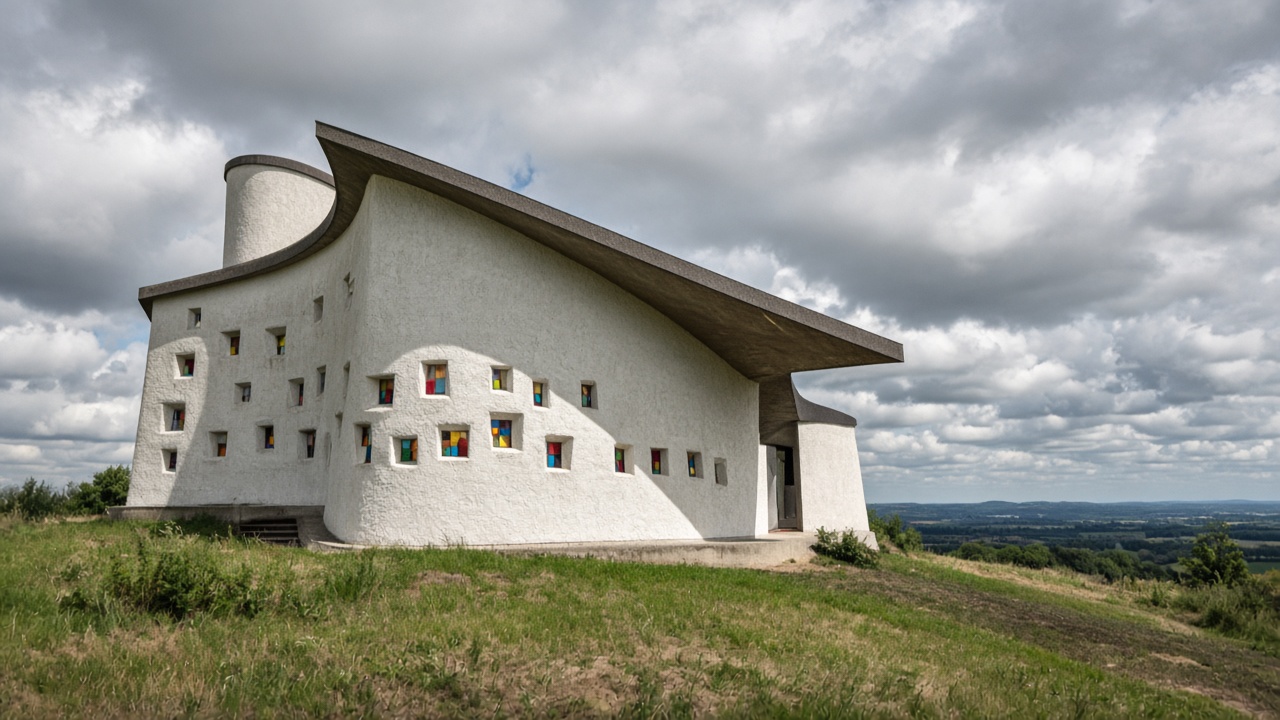 1955
Ronchamp, France Expressive modernism
A 1955 pilgrimage chapel at Ronchamp where a sculptural roof and light openings in thick walls create a sacred atmosphere.
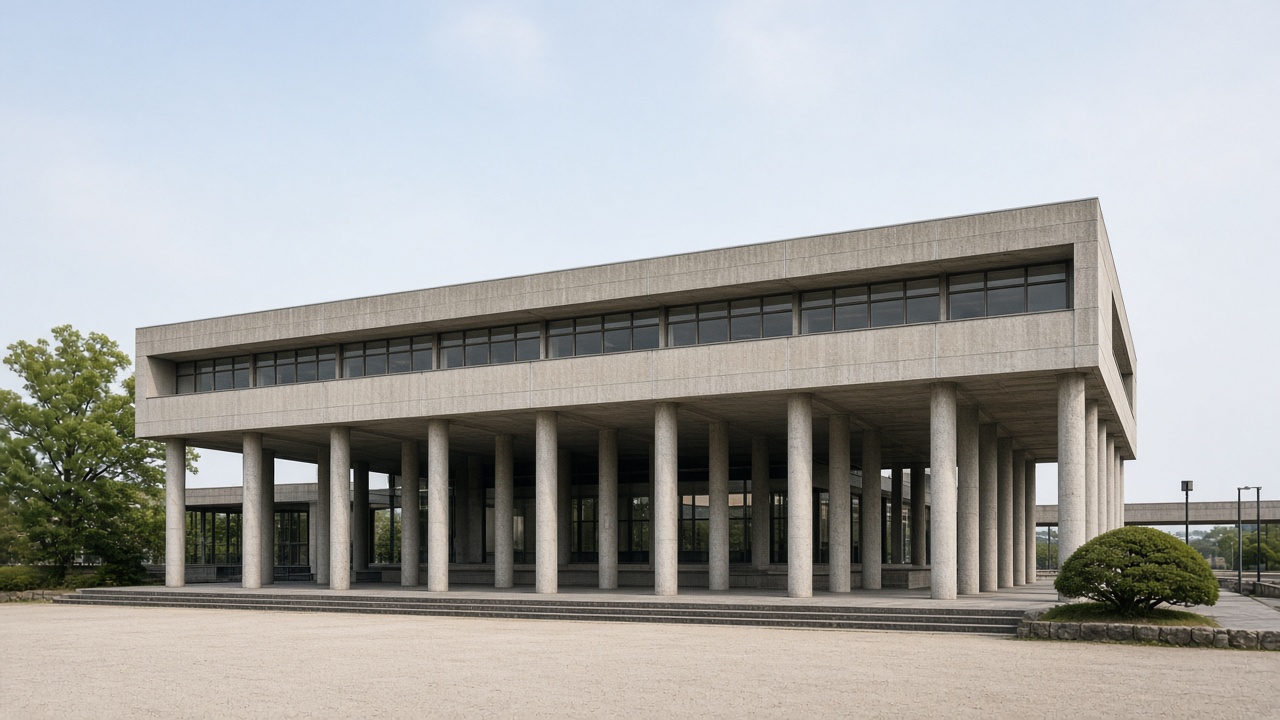 1955
Hiroshima, Japan Modernism
The 1955 museum in Hiroshima Peace Memorial Park uses a raised mass and a strong axis to shape a place of memory.
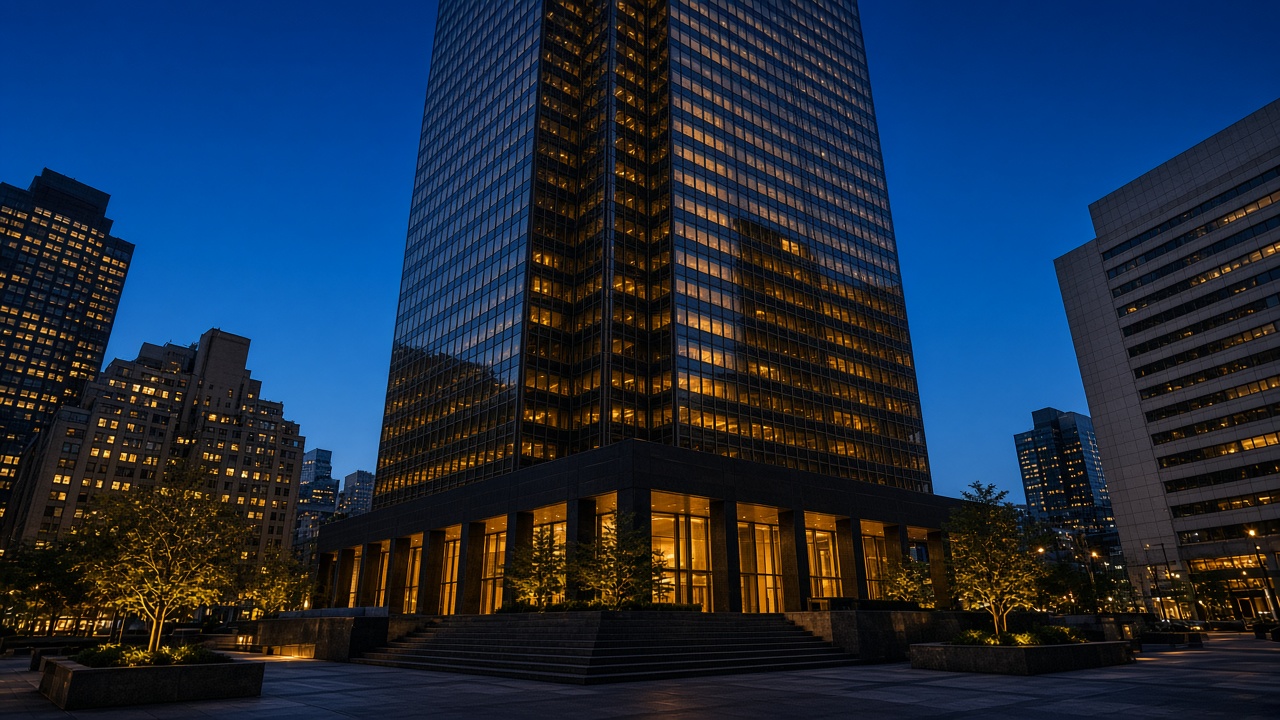 1958
New York, United States International Style
The 1958 bronze curtain-wall tower and its setback plaza established a model for Midtown office architecture.
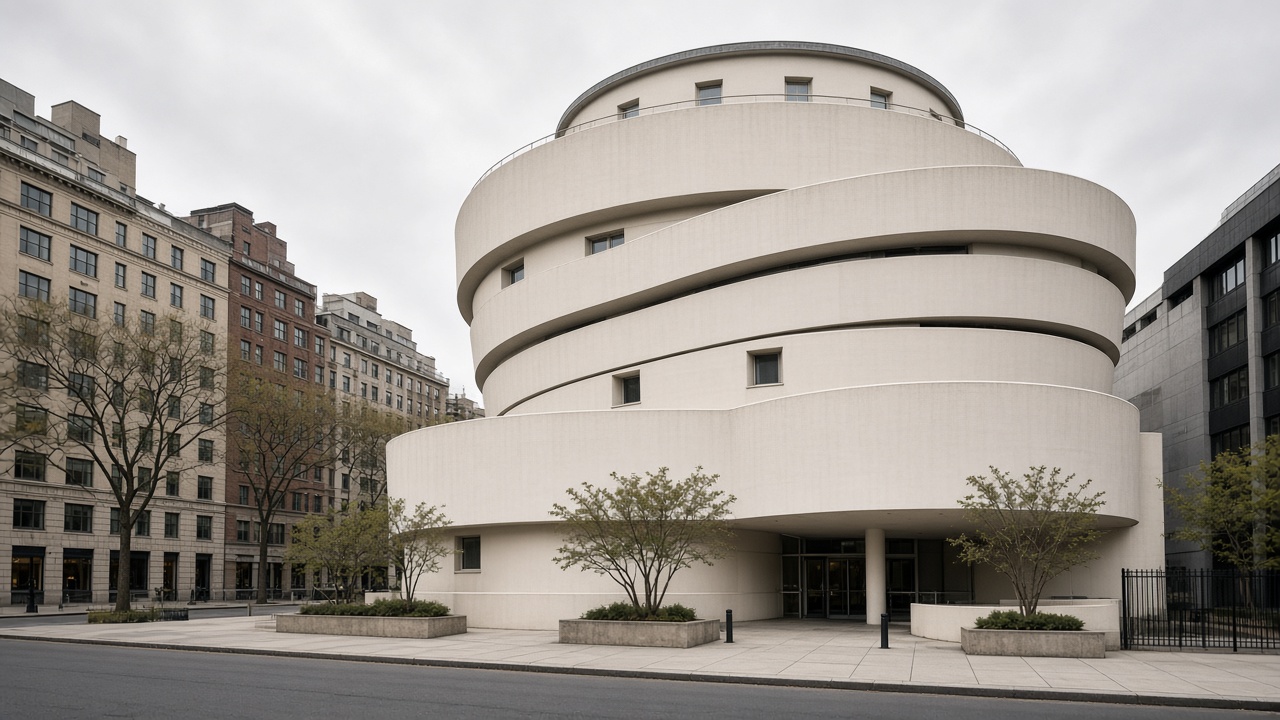 1959
New York, United States Organic architecture
Wright’s 1959 museum on Fifth Avenue replaced a sequence of galleries with one continuous spiral ramp.
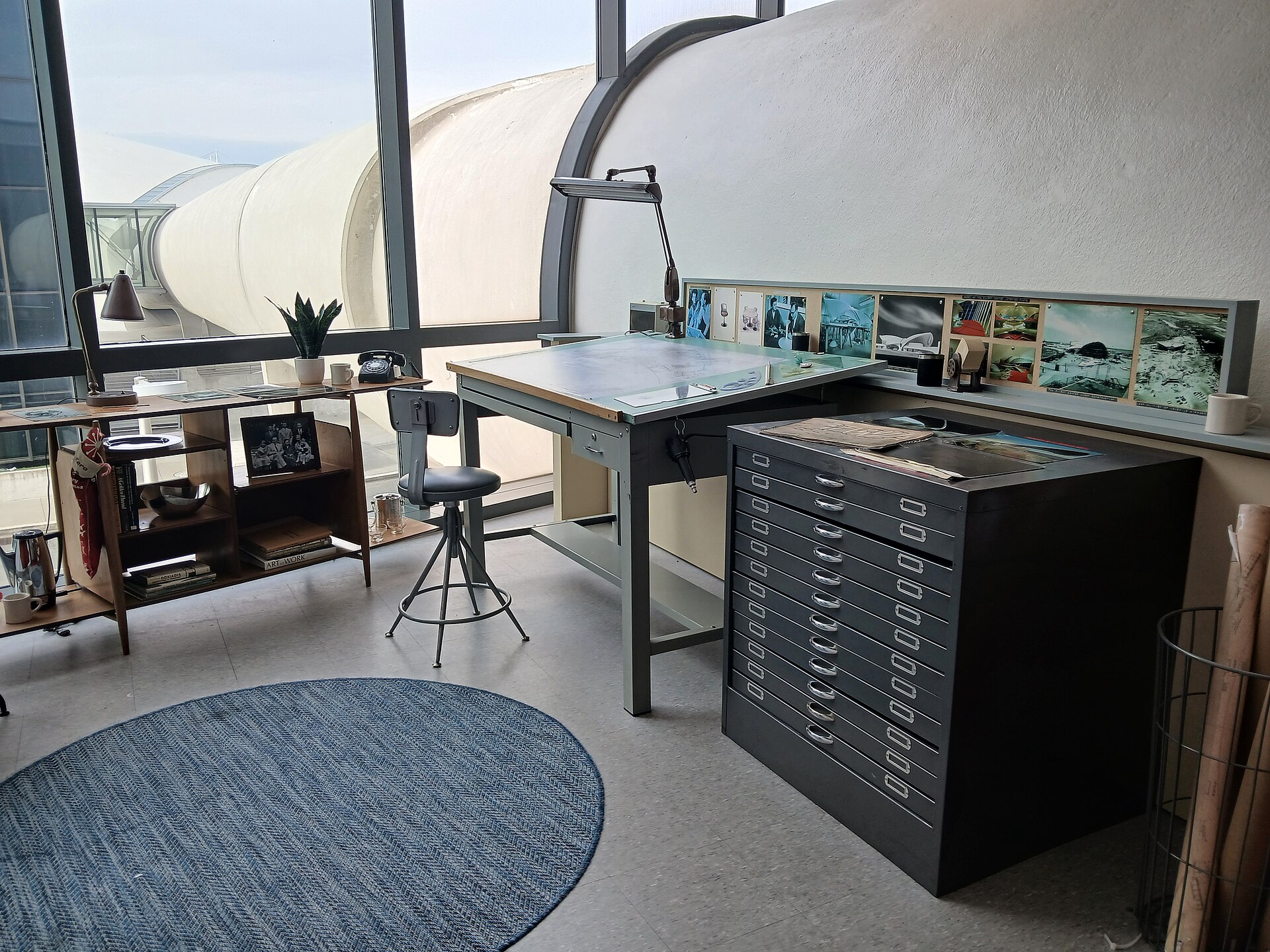 1962
New York, United States Expressionist modern
Eero Saarinen’s wing-like terminal at JFK, a landmark of flowing concrete form.
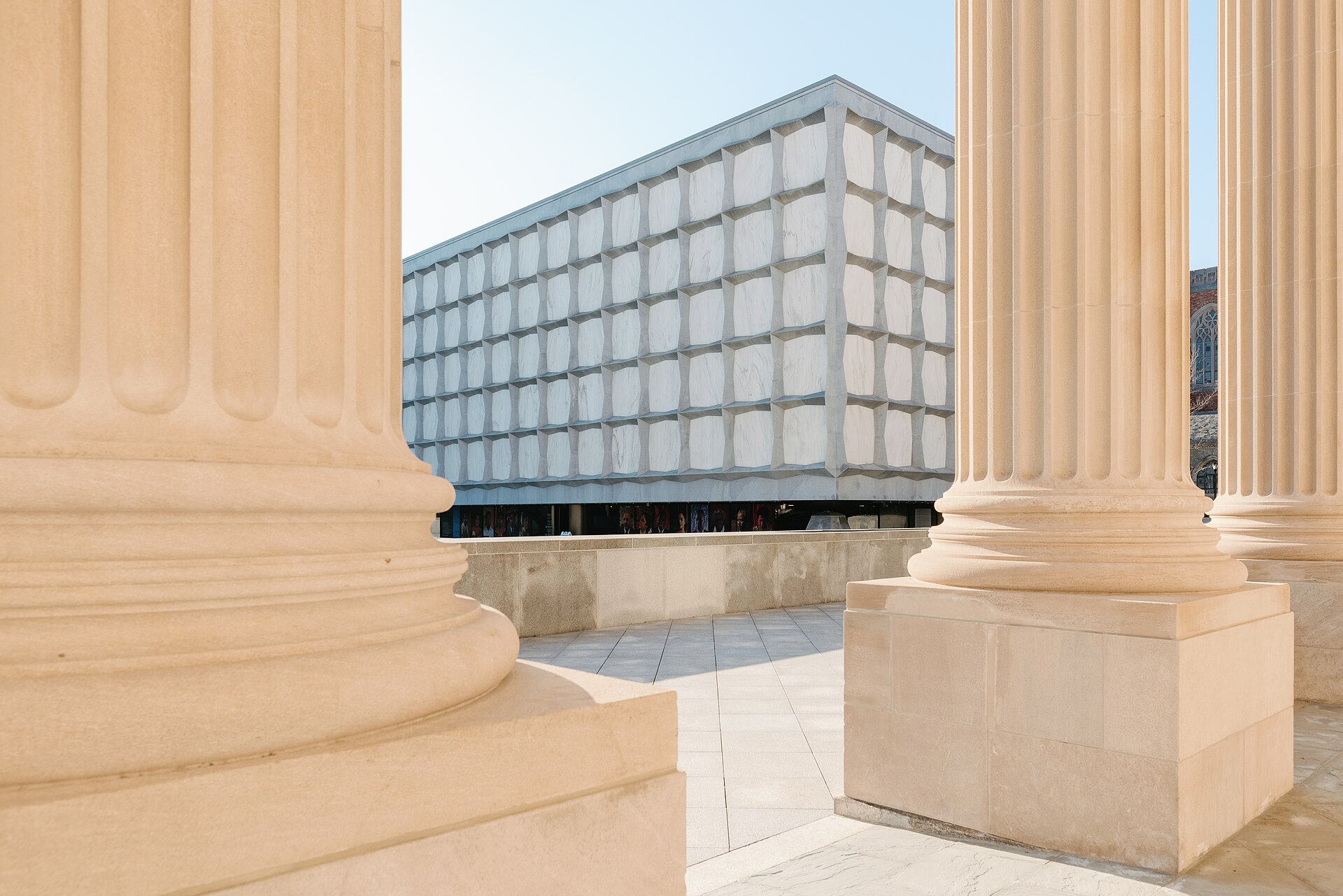 1963
New Haven, United States Modernism
Yale’s rare-book library filters daylight through marble panels and displays its collection in a glass tower.
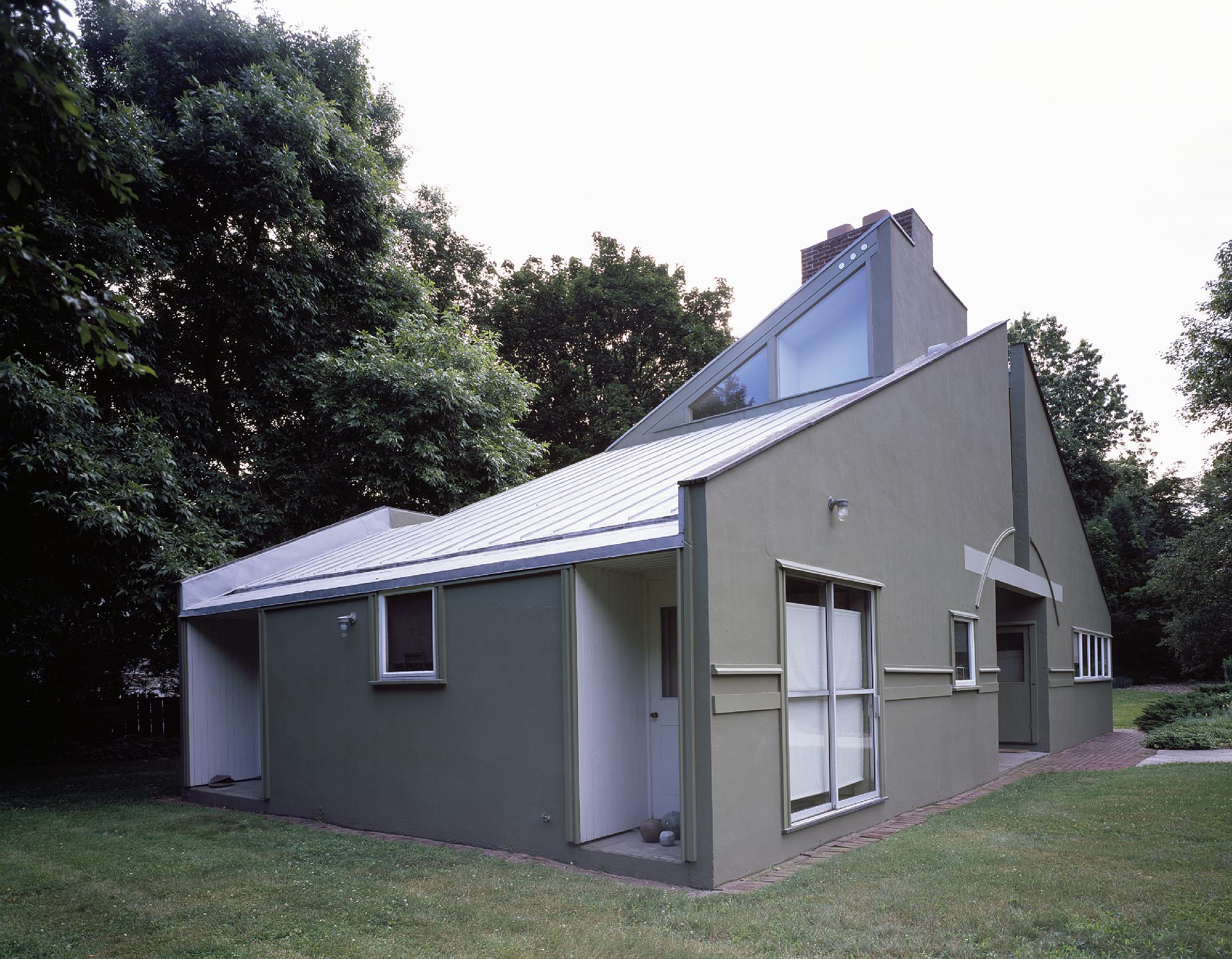 1964
Philadelphia, United States Postmodern
A house for Venturi’s mother that helped announce Postmodernism and the claim that less is a bore.
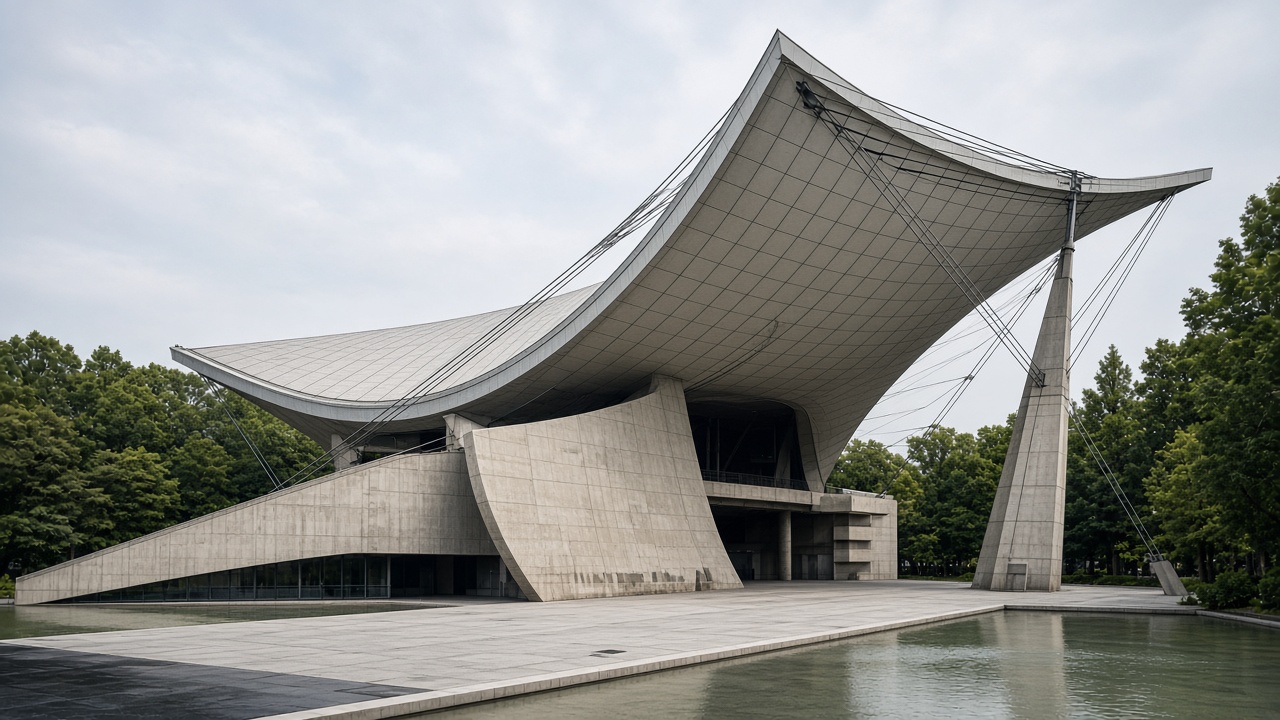 1964
Tokyo, Japan Modernism
A 1964 Tokyo Olympic arena whose suspended roof, cables, and sweeping eaves form one silhouette.
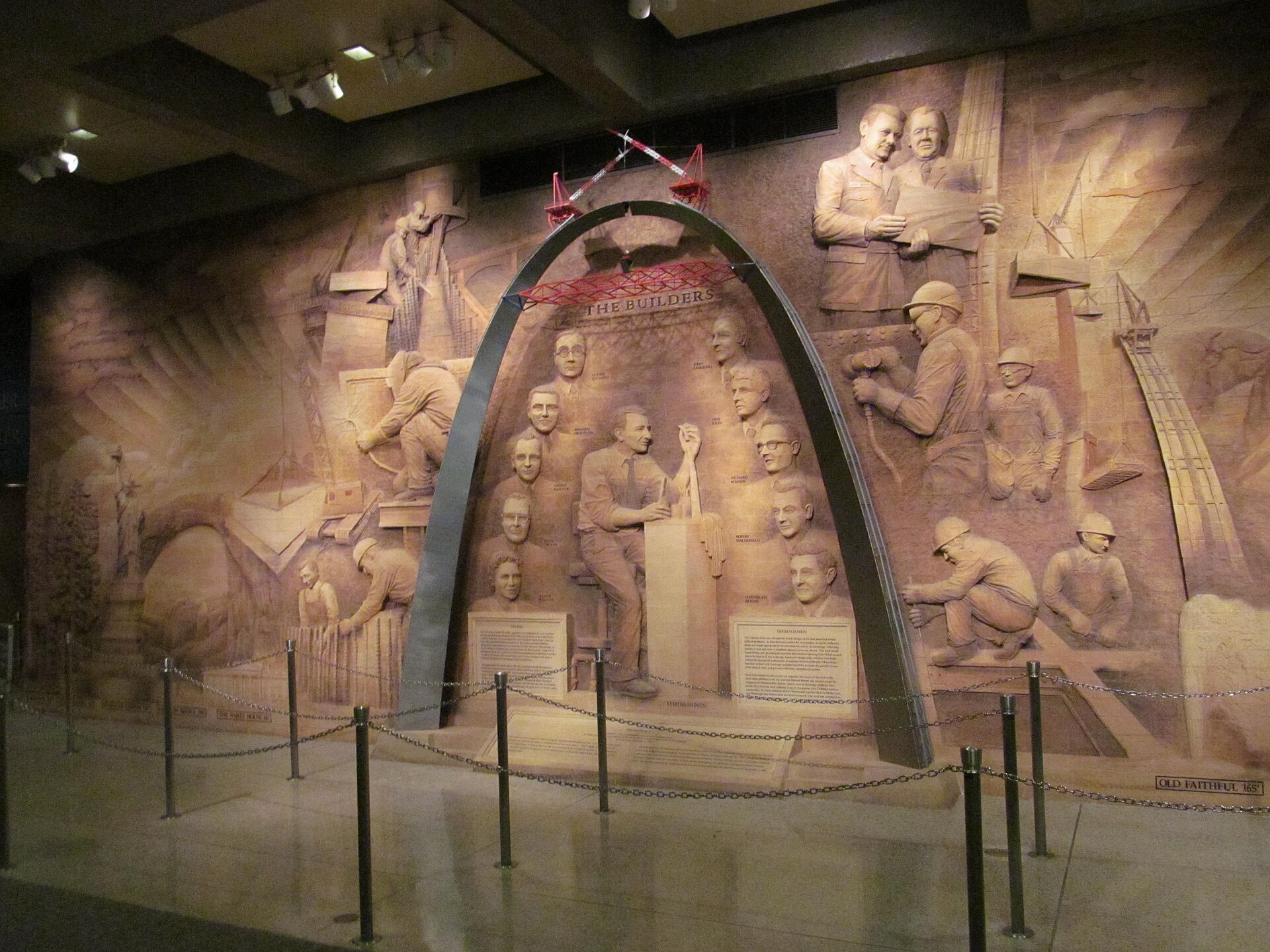 1965
St. Louis, United States Modernism
A stainless-steel catenary arch beside the Mississippi River, conceived as a monumental symbol of St. Louis.
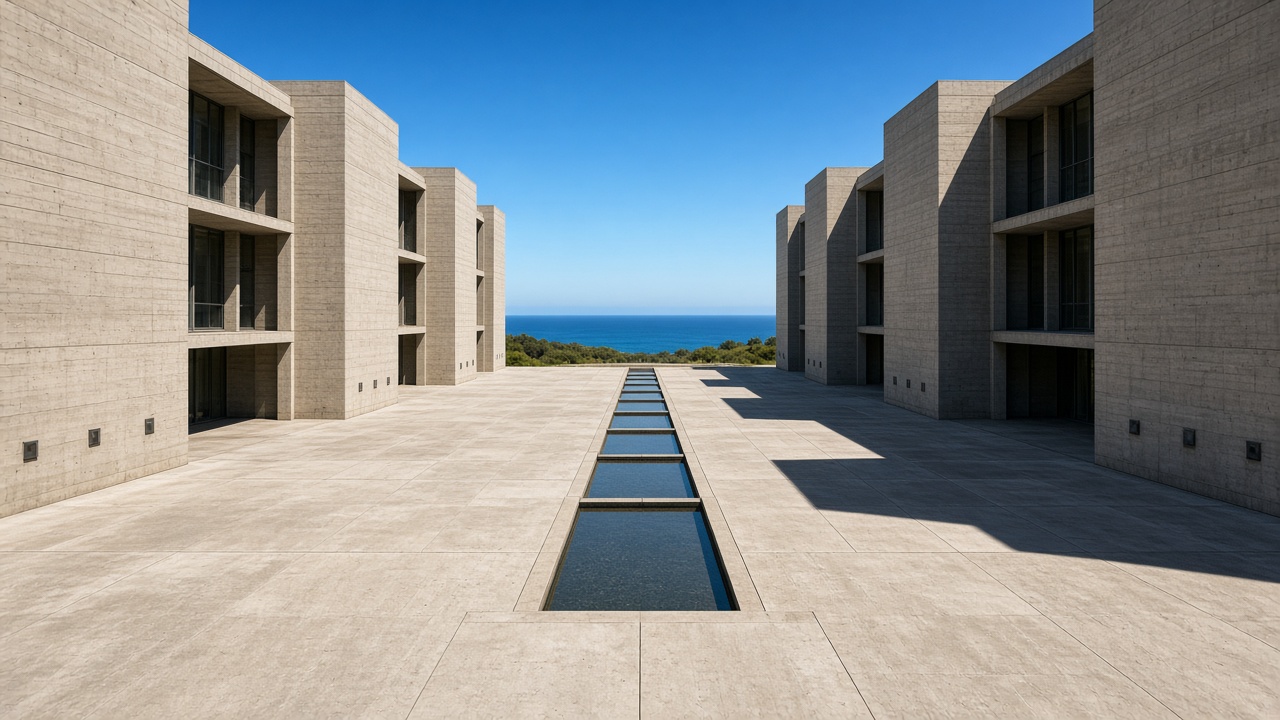 1965
La Jolla, United States Modernism
A 1965 research campus on the La Jolla cliffs, famous for its austere central court and axis toward the Pacific.
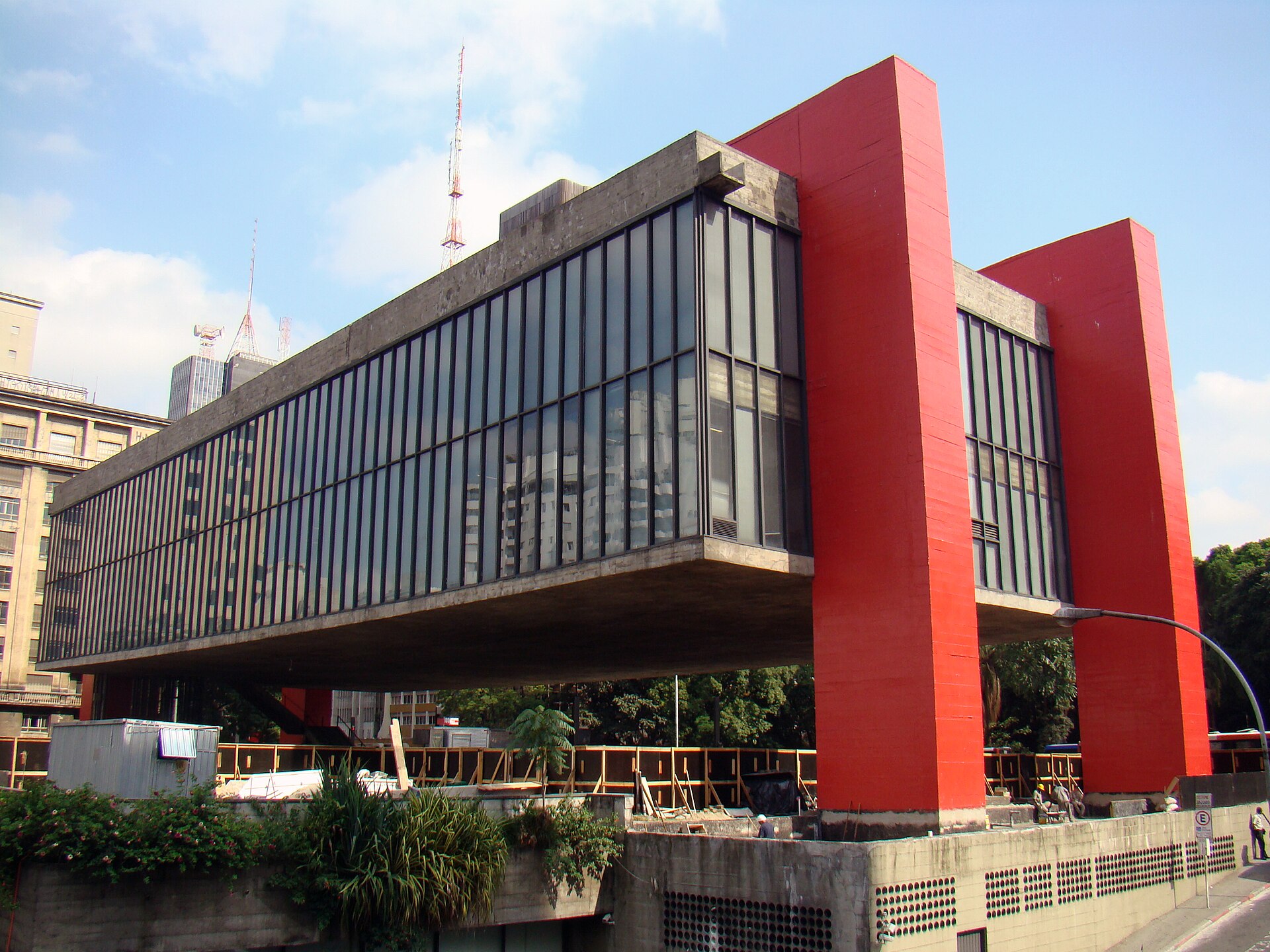 1968
São Paulo, Brazil Brazilian modernism
A museum whose glass gallery is suspended from red beams, leaving an urban plaza open below.
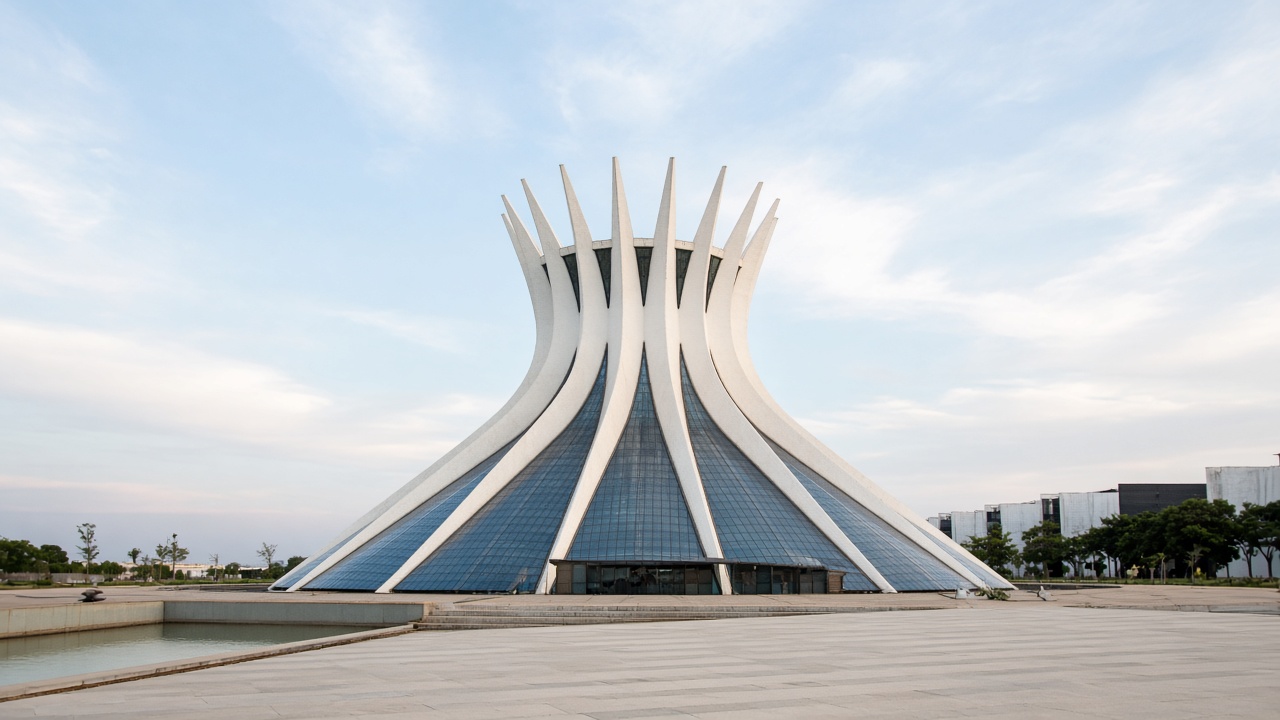 1970
Brasília, Brazil Brazilian modernism
A 1970 cathedral in Brasília whose hyperbolic concrete columns surround a circular plan.
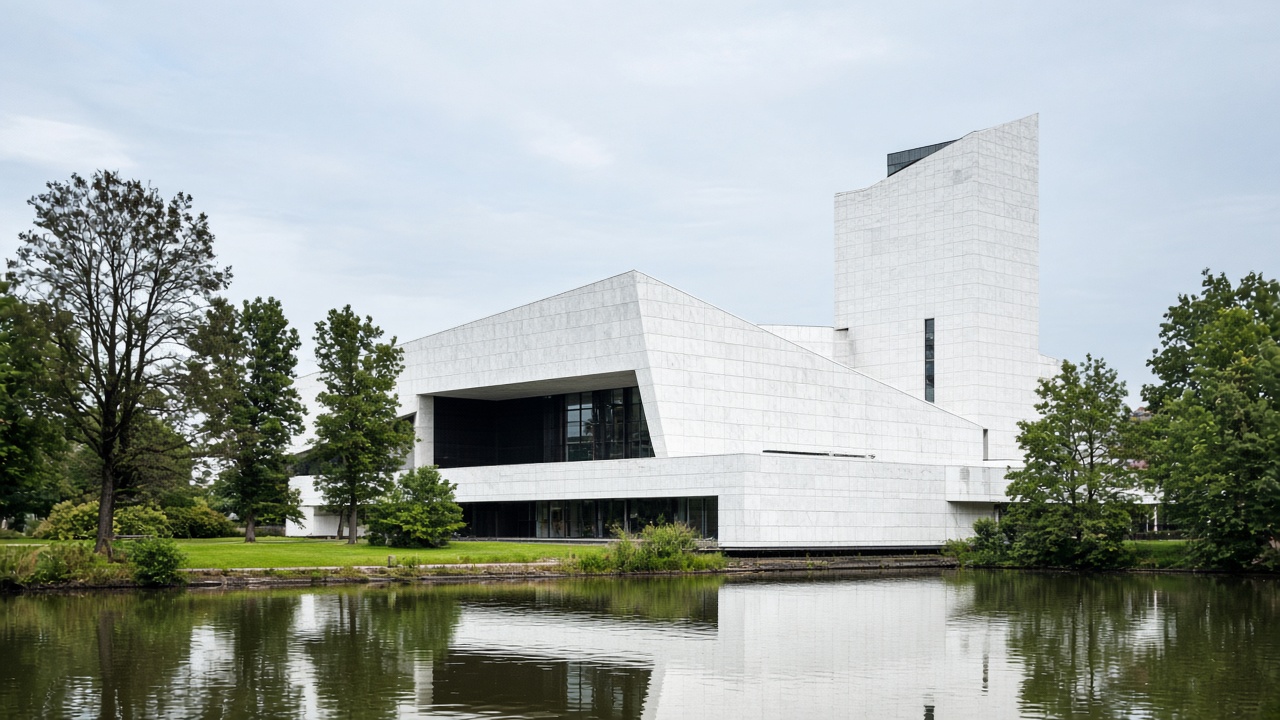 1971
Helsinki, Finland Nordic modernism
A 1971 concert and conference hall in Helsinki where white marble masses and curves meet the lakeside setting.
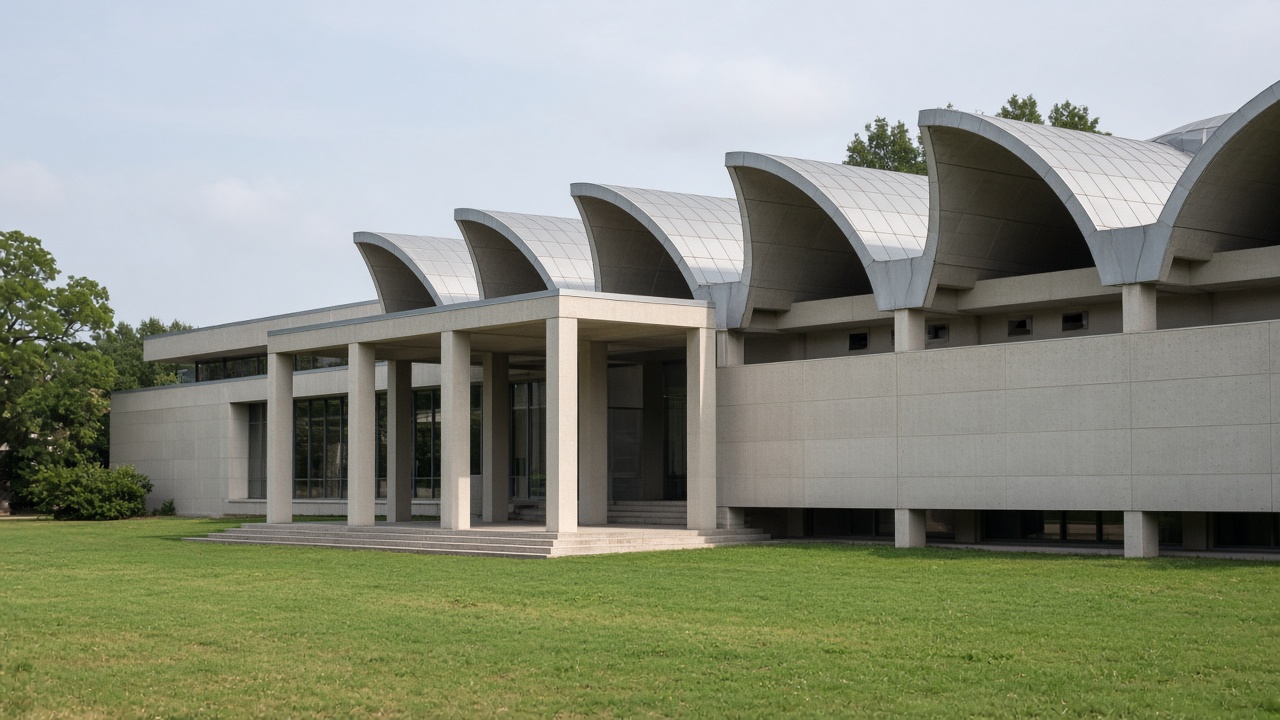 1972
Fort Worth, United States Modernism
A 1972 museum in Fort Worth whose cycloid vaults and daylight slots softly illuminate the galleries.
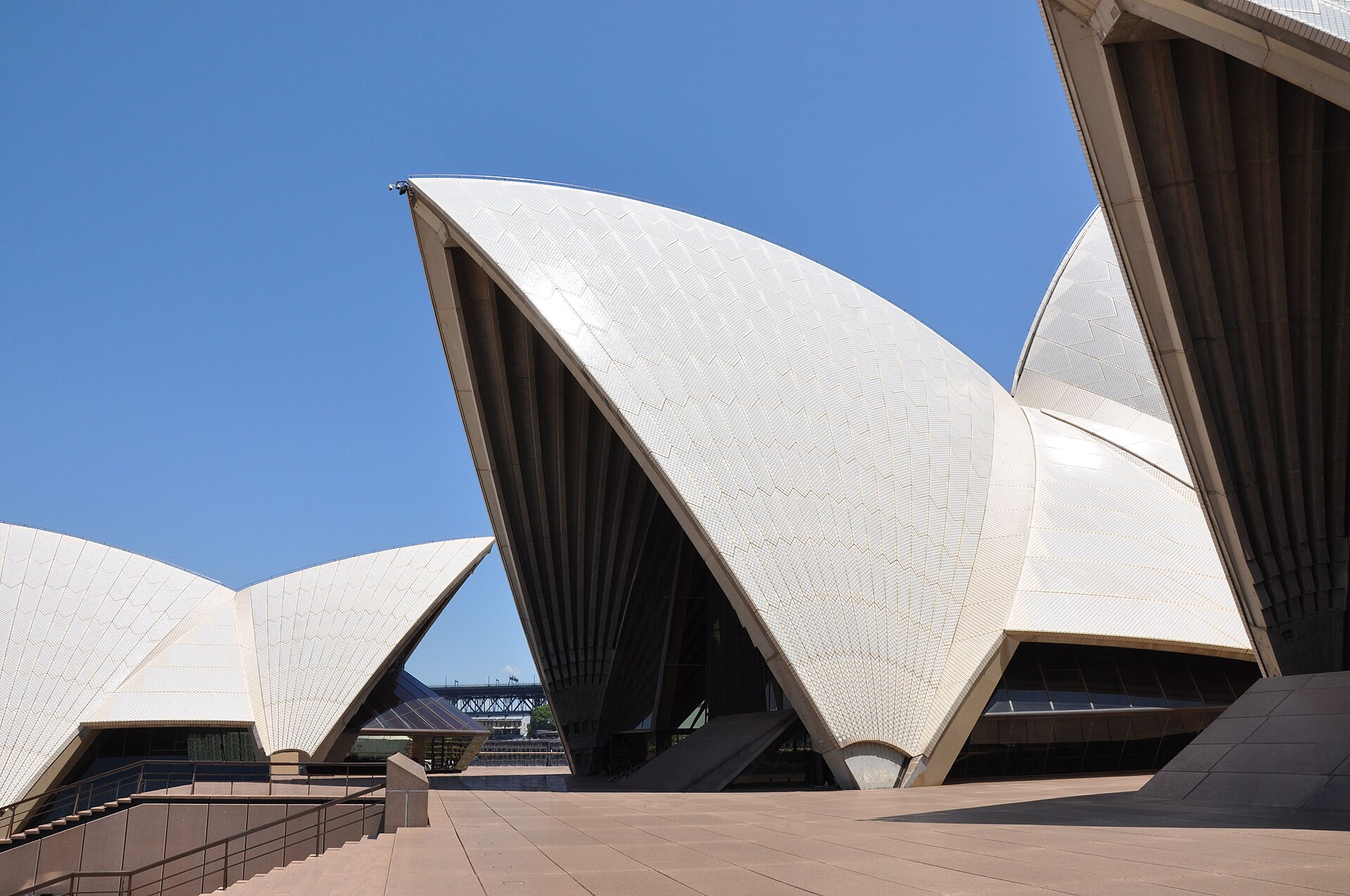 1973
Sydney, Australia Expressionist modern
Jørn Utzon’s harbor performance complex, whose shell roofs became a late twentieth-century landmark.
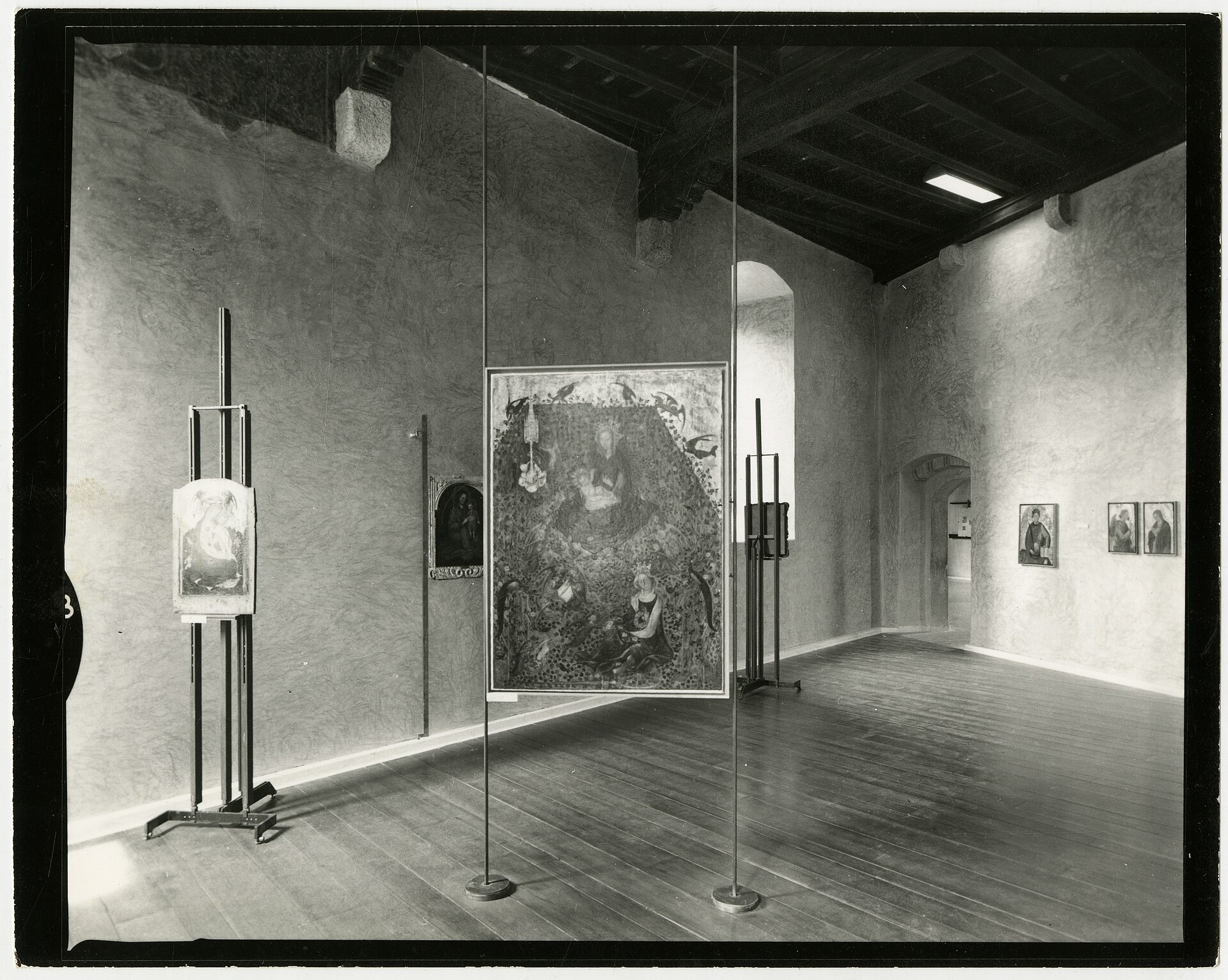 1973
Verona, Italy Modernism
Carlo Scarpa’s museum conversion of a medieval fortress, celebrated as a lesson in material joints and intervention.
 1974
Chicago, United States Skyscraper
A Chicago skyscraper using a bundled-tube structure, formerly known as the Sears Tower.
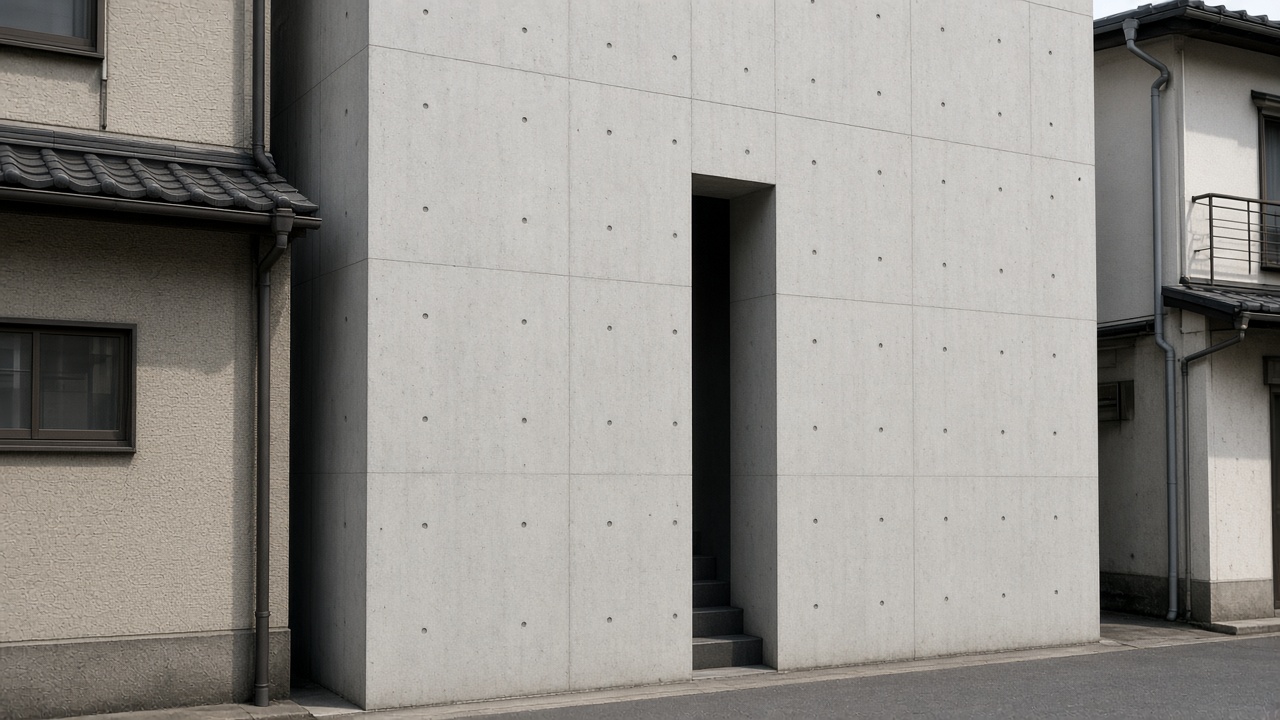 1976
Osaka, Japan Minimal
Ando’s seminal 1976 house on a narrow Osaka site brings daylight and rain into daily life through a central court.
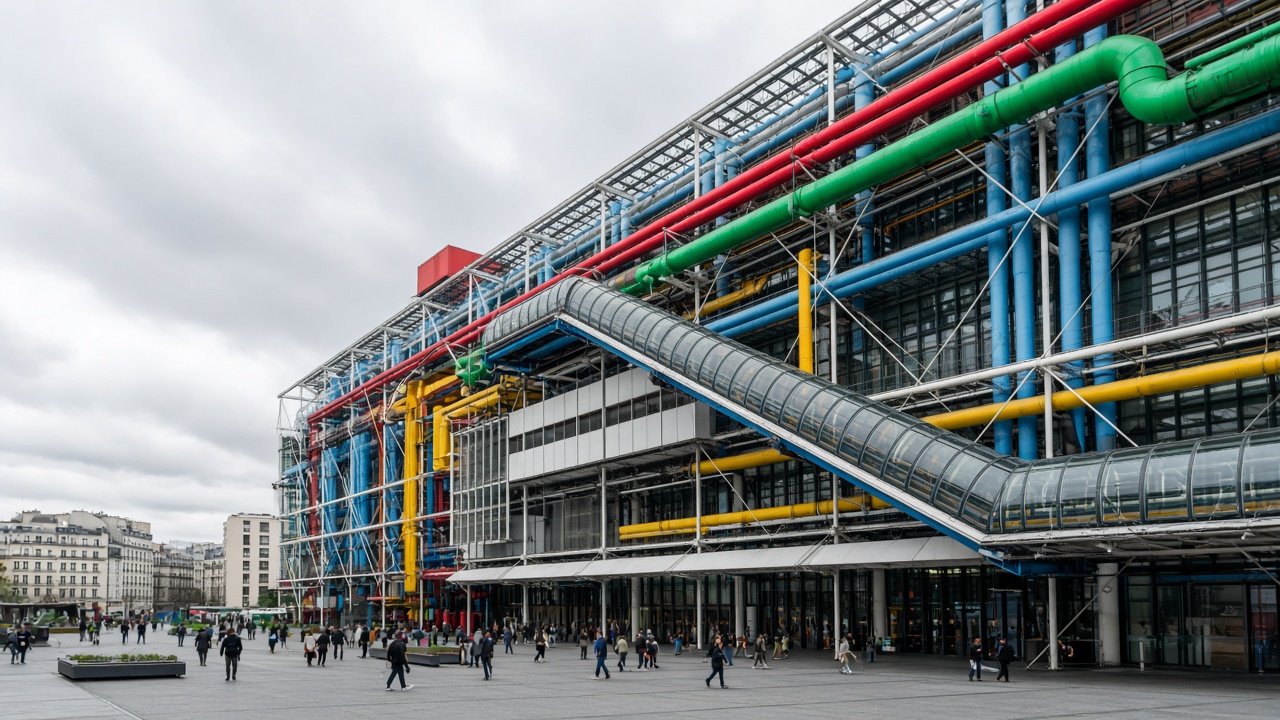 1977
Paris, France High-tech
The 1977 Beaubourg cultural center by Piano and Rogers turns structure and services outward to free the interior.
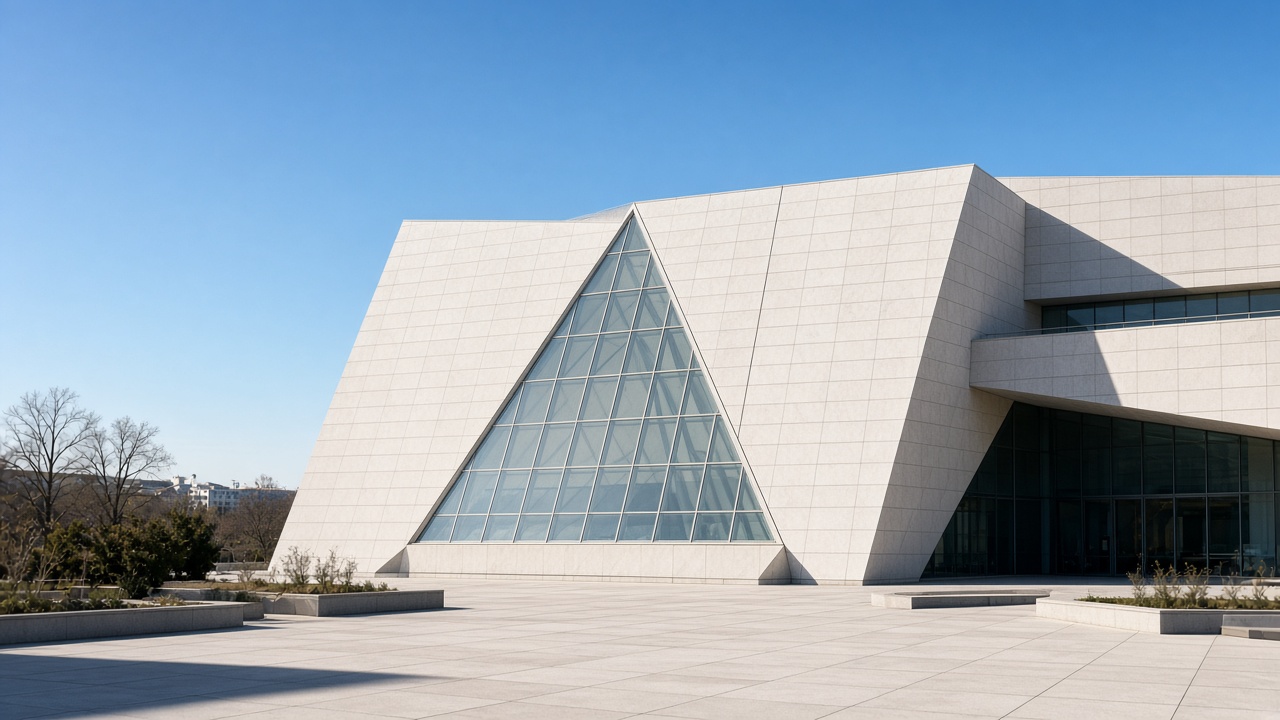 1978
Washington, D.C., United States Modernism
The 1978 East Building of the National Gallery of Art uses triangular geometry and an atrium of daylight to guide circulation.
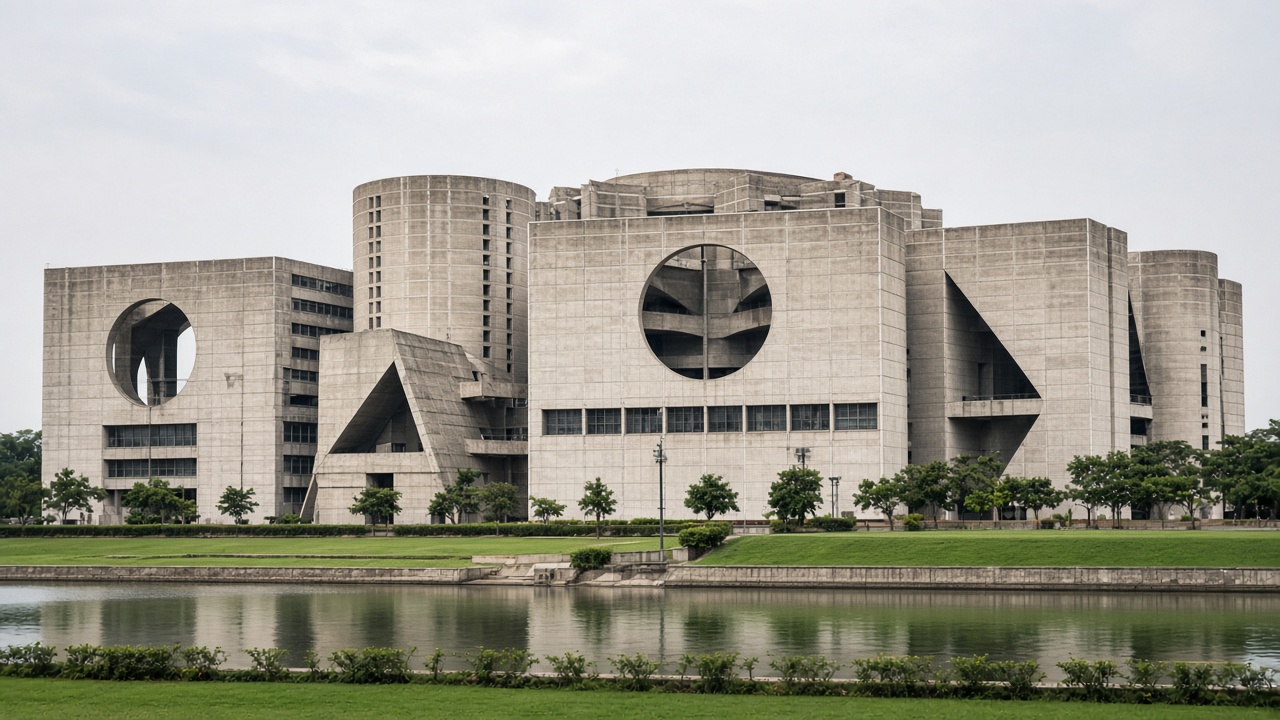 1982
Dhaka, Bangladesh Monumentality
Kahn’s monumental parliamentary complex in Dhaka, completed in 1982, is framed by geometric openings and water courts.
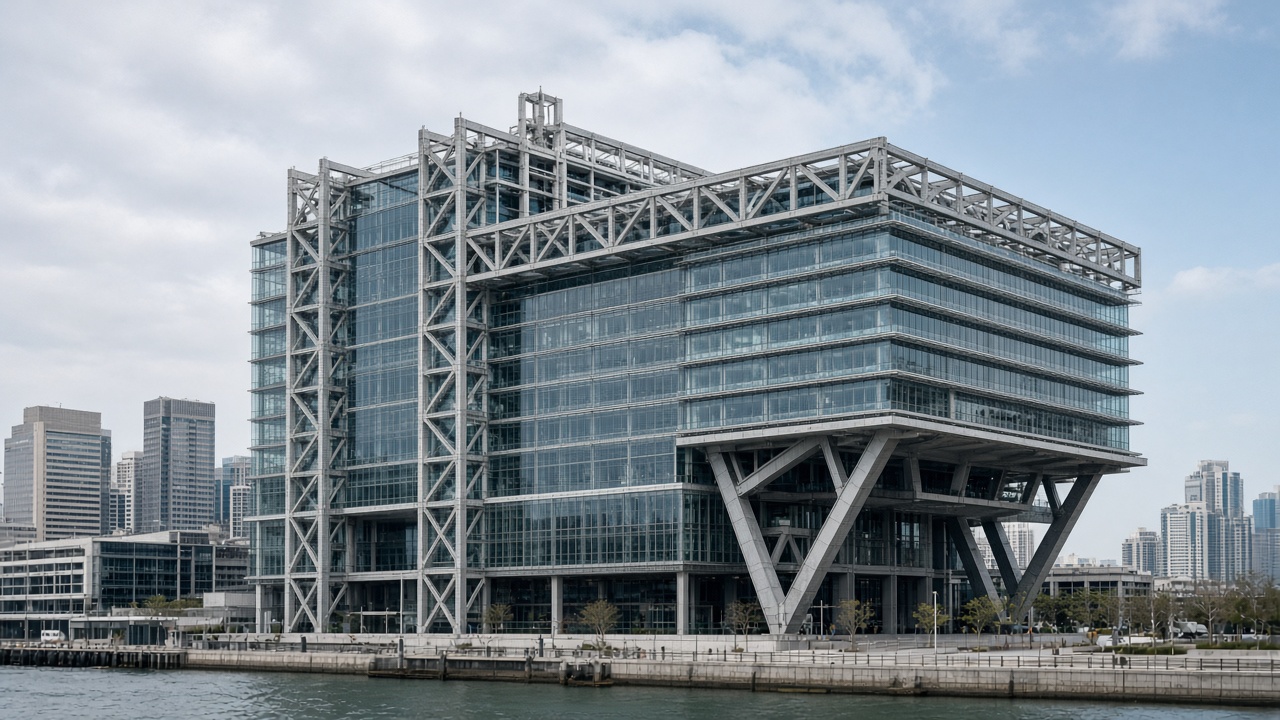 1985
Central, Hong Kong High-tech
A 1985 High-Tech headquarters in Central, Hong Kong, exposing its external trusses and service towers.
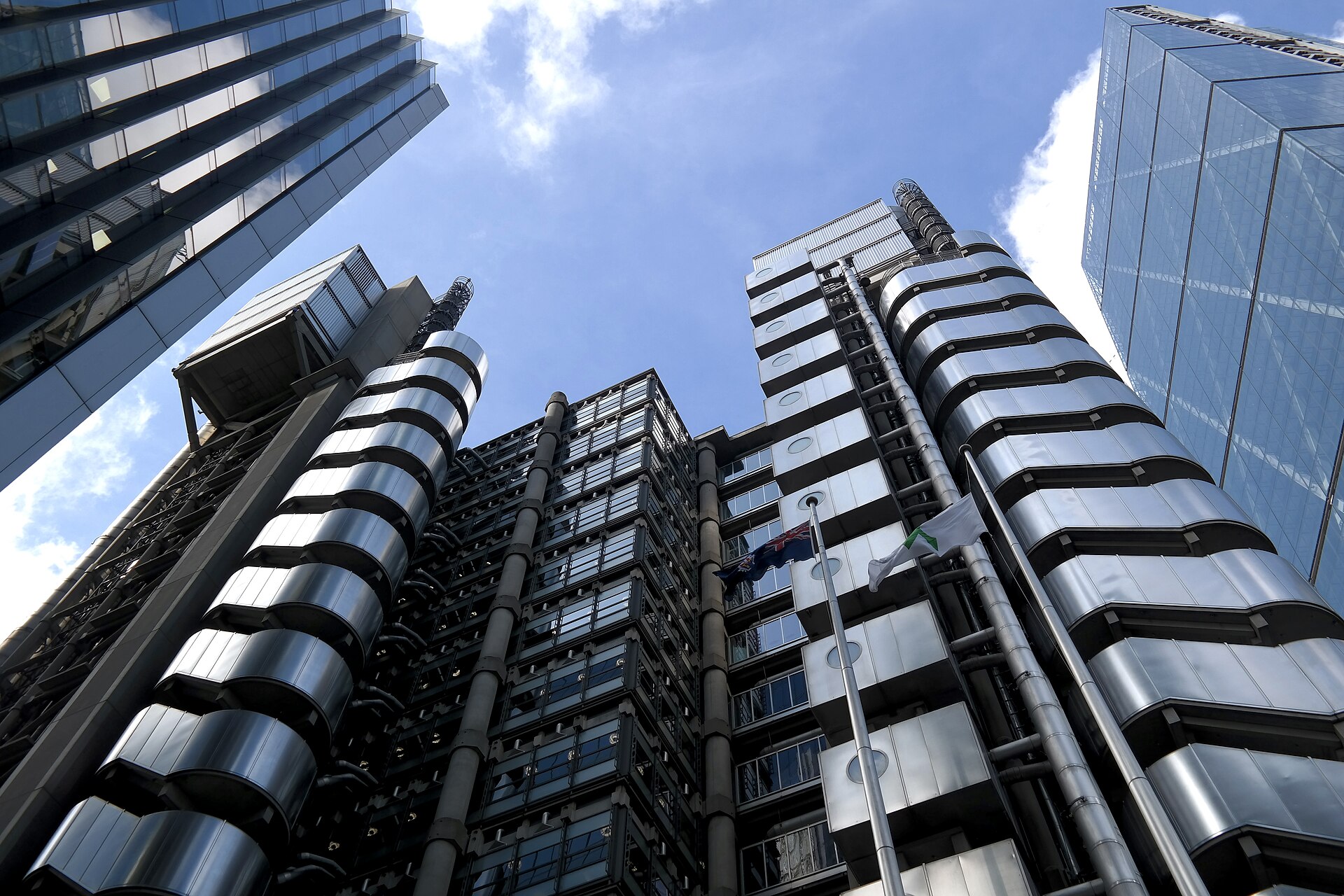 1986
London, United Kingdom High-tech
An inside-out office building with services placed outside, extending the High-Tech lineage of the Pompidou.
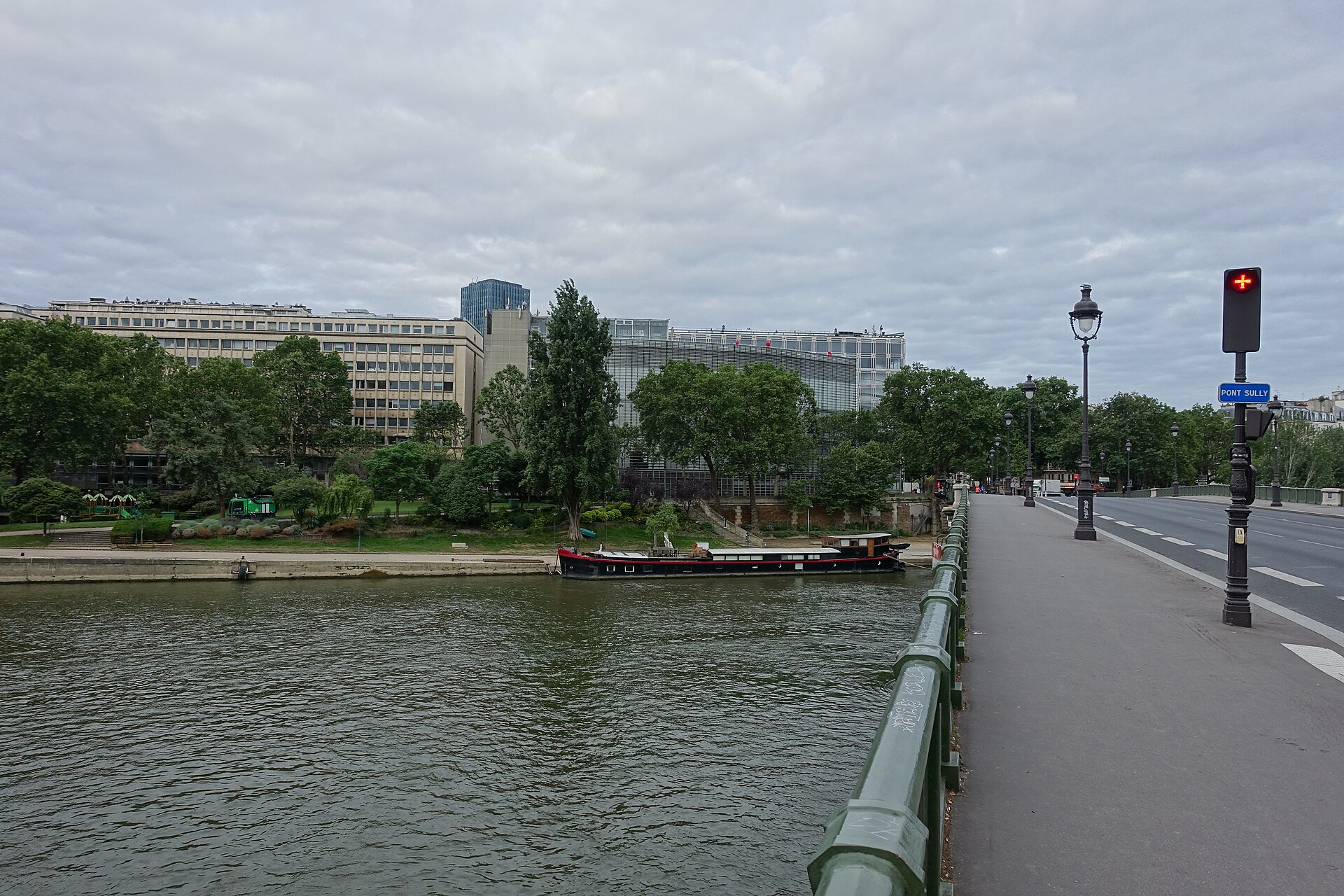 1987
Paris, France High-tech
A Paris cultural institution whose diaphragm-like south facade modulates daylight.
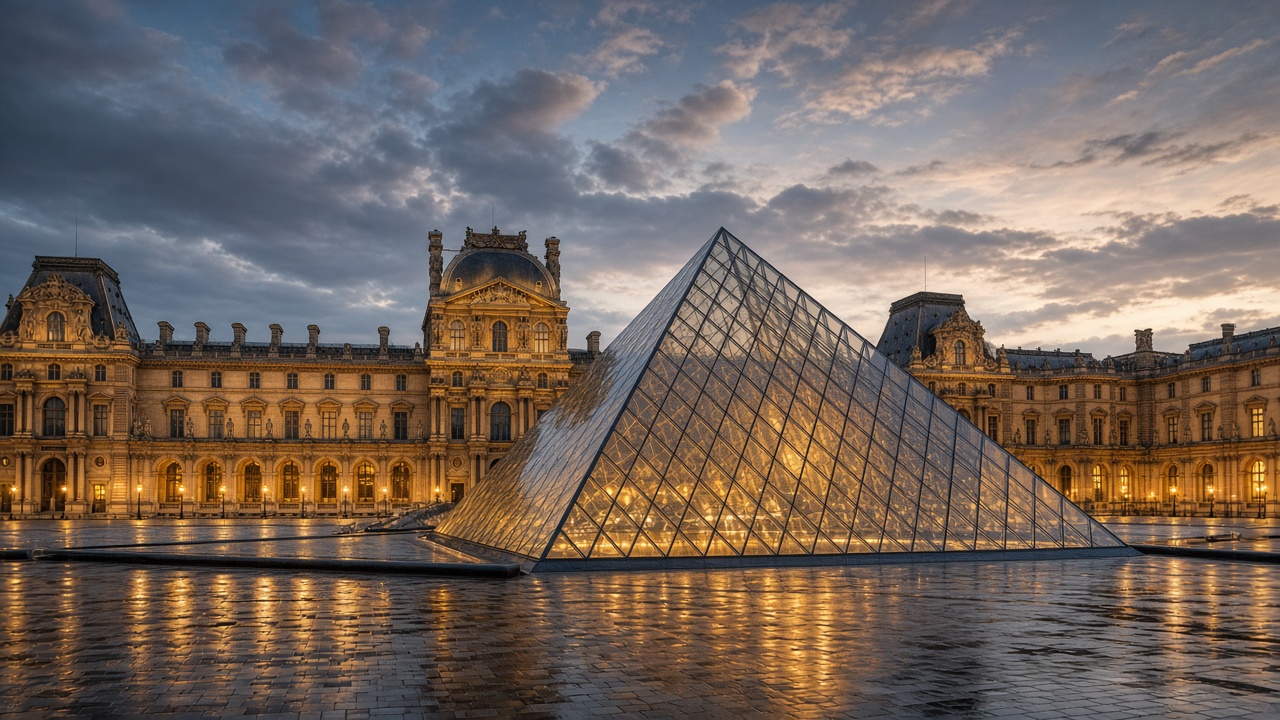 1989
Paris, France Modernism
The 1989 glass-pyramid entrance to the Louvre contrasts modern geometry with a historic palace court.
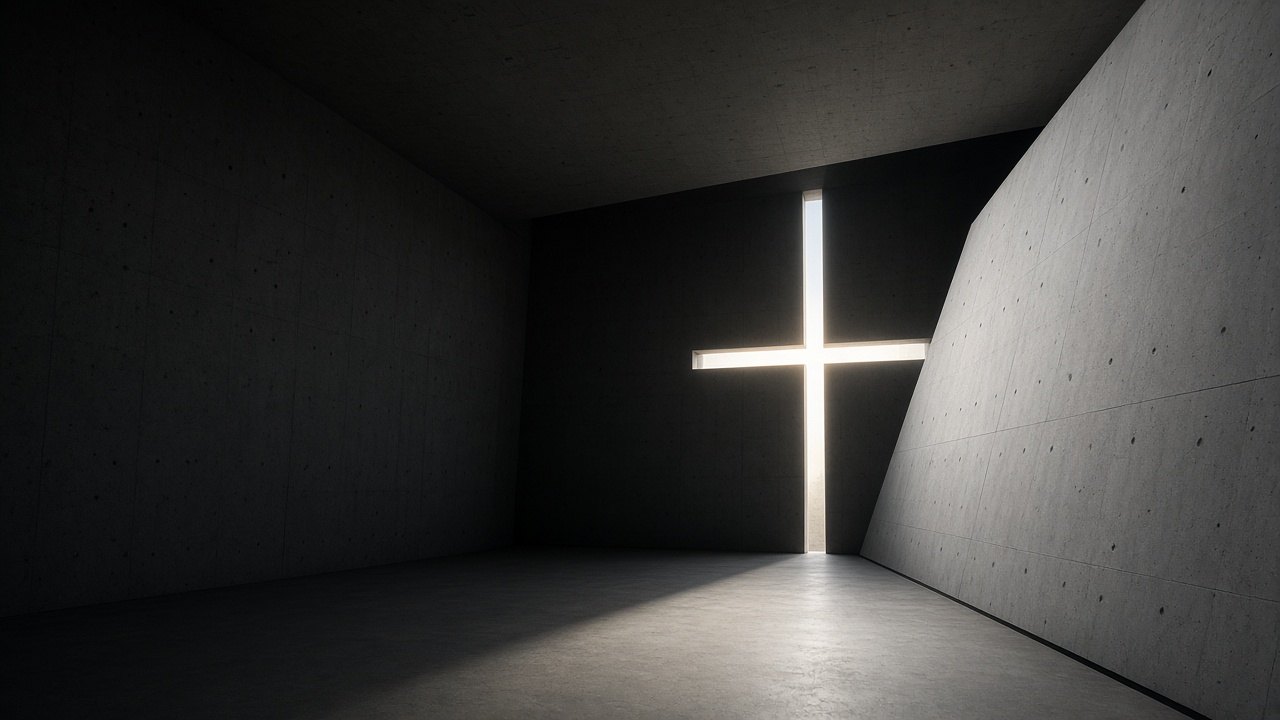 1989
Ibaraki, Japan Exposed concrete
A small 1989 chapel in Ibaraki, Osaka Prefecture, where a cross-shaped opening cuts through exposed concrete.
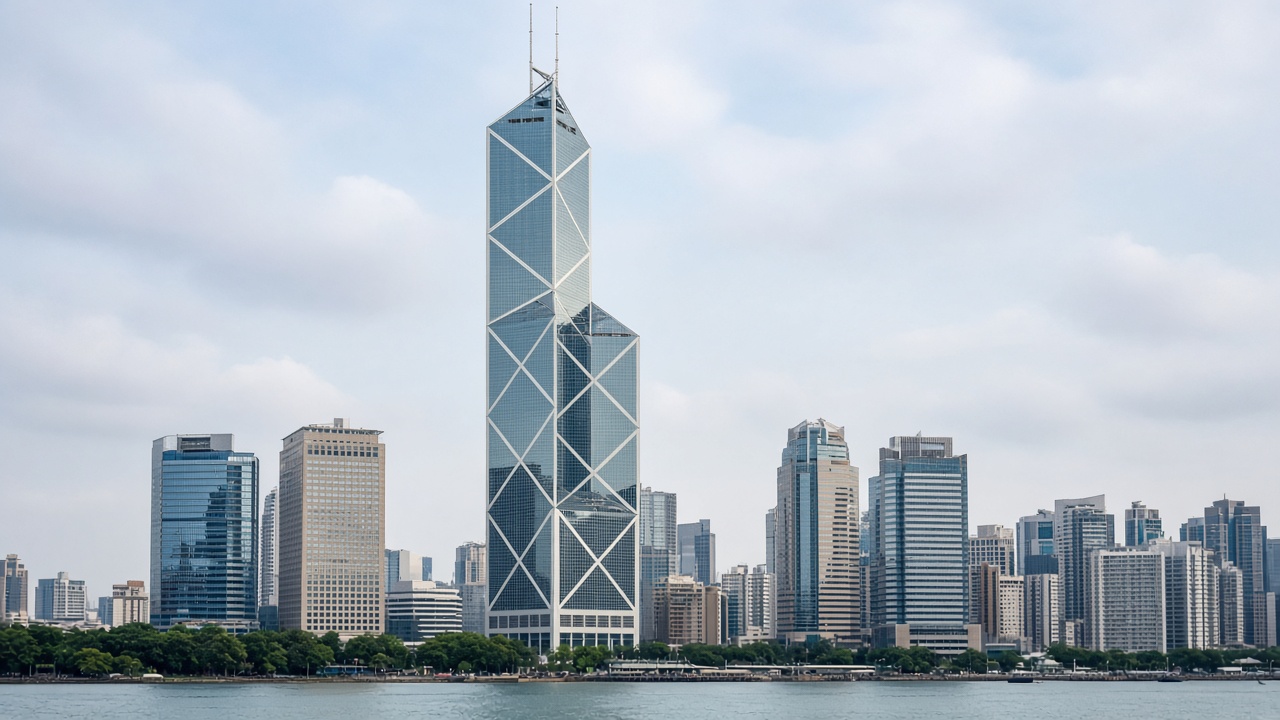 1990
Central, Hong Kong Modernism
A 1990 Hong Kong skyscraper whose triangular geometry and diagonal bracing are expressed on the facade.
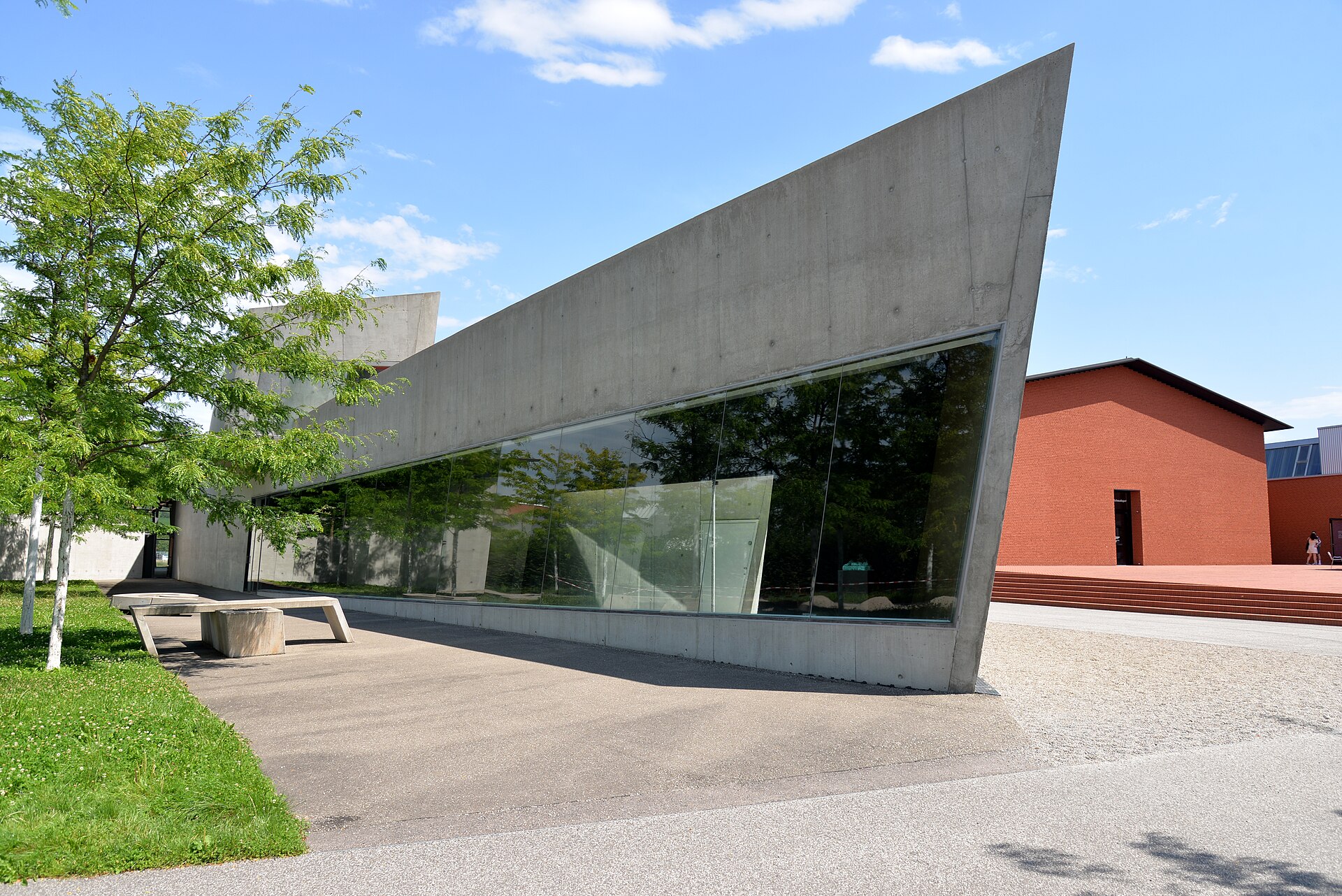 1993
Weil am Rhein, Germany Deconstructivism
Hadid’s early built work, composed of sharply angled concrete planes in collision.
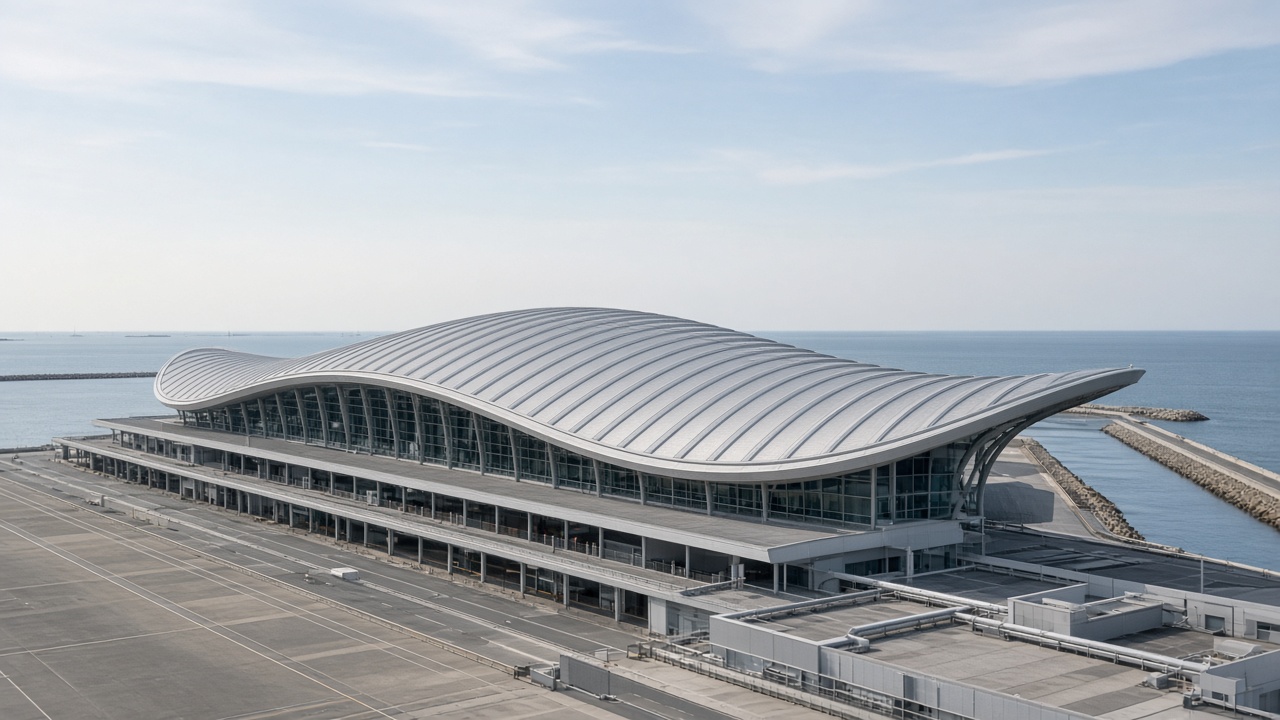 1994
Osaka, Japan High-tech
A long, curving 1994 terminal on an artificial island in Osaka Bay, notable for its roof span and immense check-in hall.
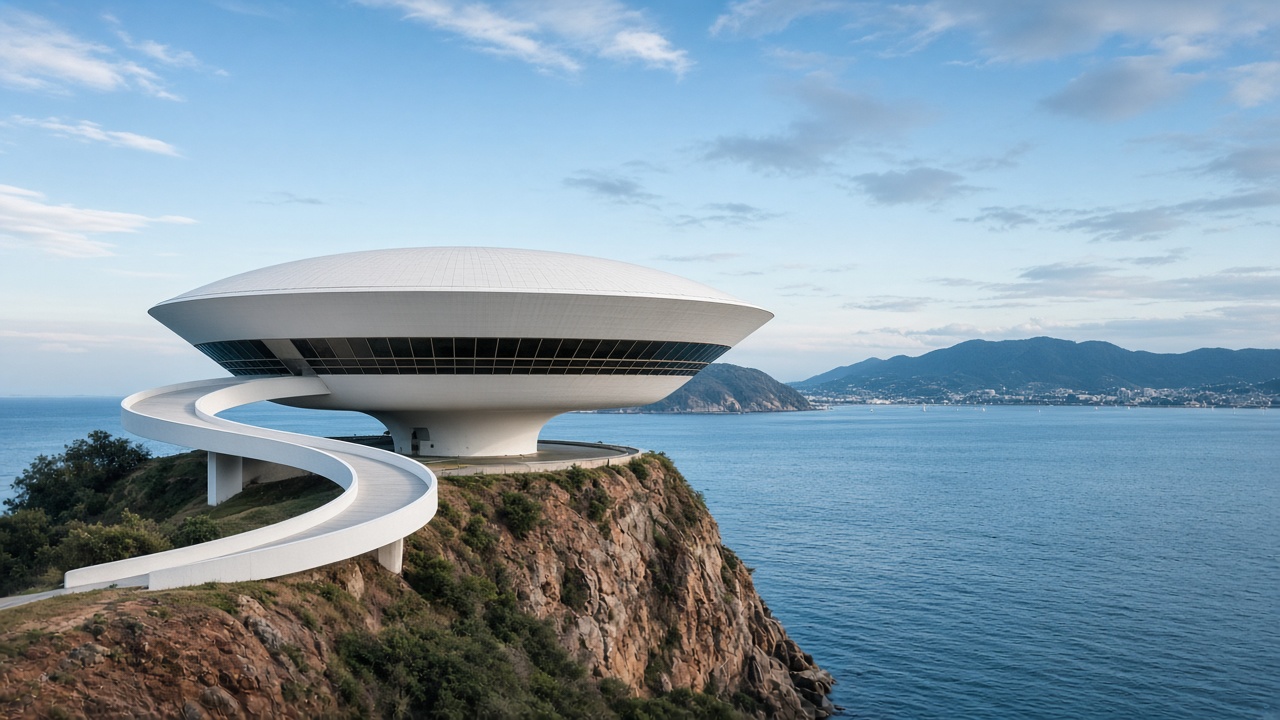 1996
Niterói, Brazil Brazilian modernism
A 1996 saucer-shaped museum overlooking Guanabara Bay, approached by a long curving ramp.
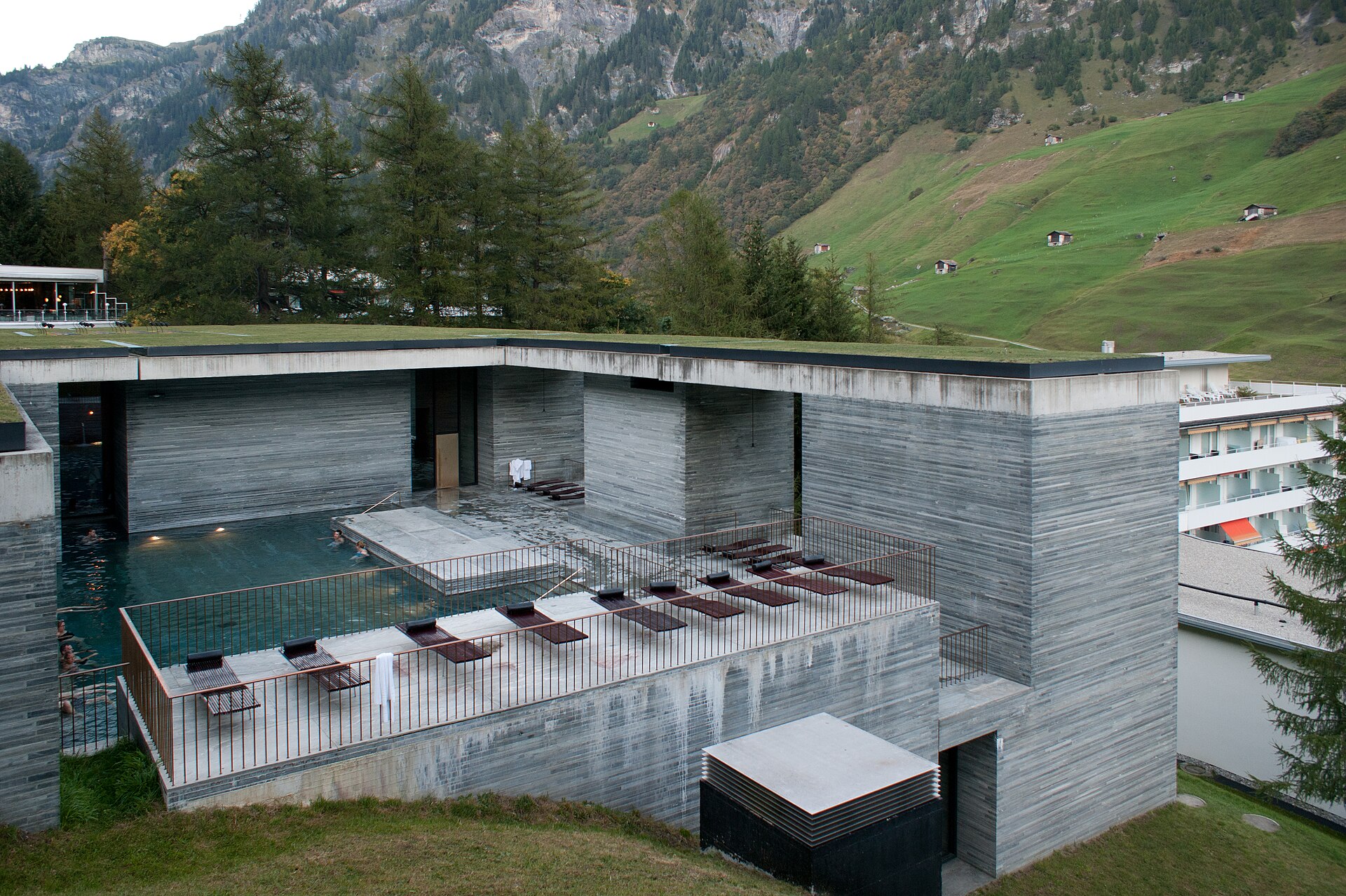 1996
Vals, Switzerland Minimal
A stone thermal bath in an Alpine village, renowned for silent chambers and narrow passages.
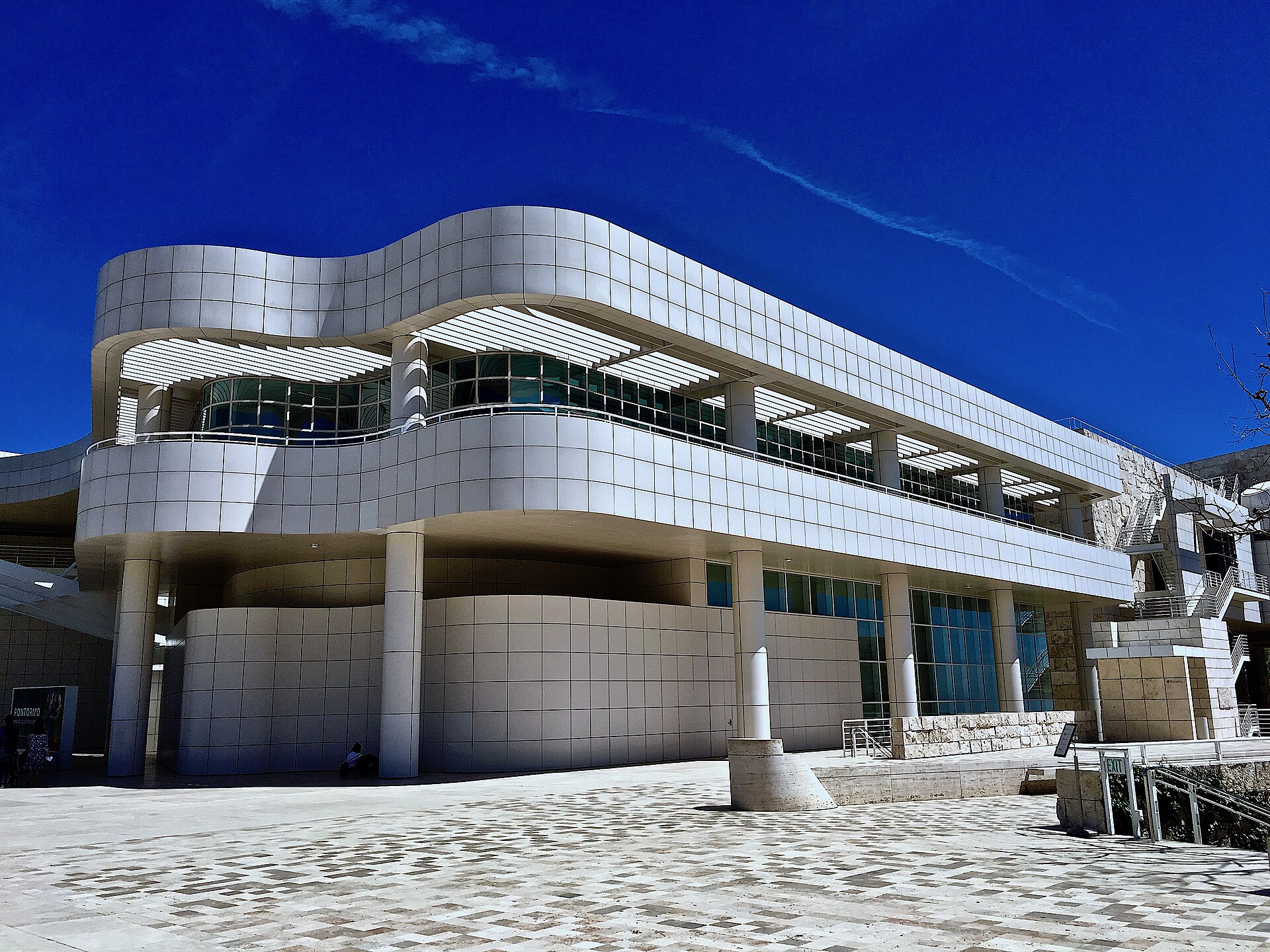 1997
Los Angeles, United States Modernism
A hilltop campus of museum and research institutions characterized by white planes, stone, and strong axes.
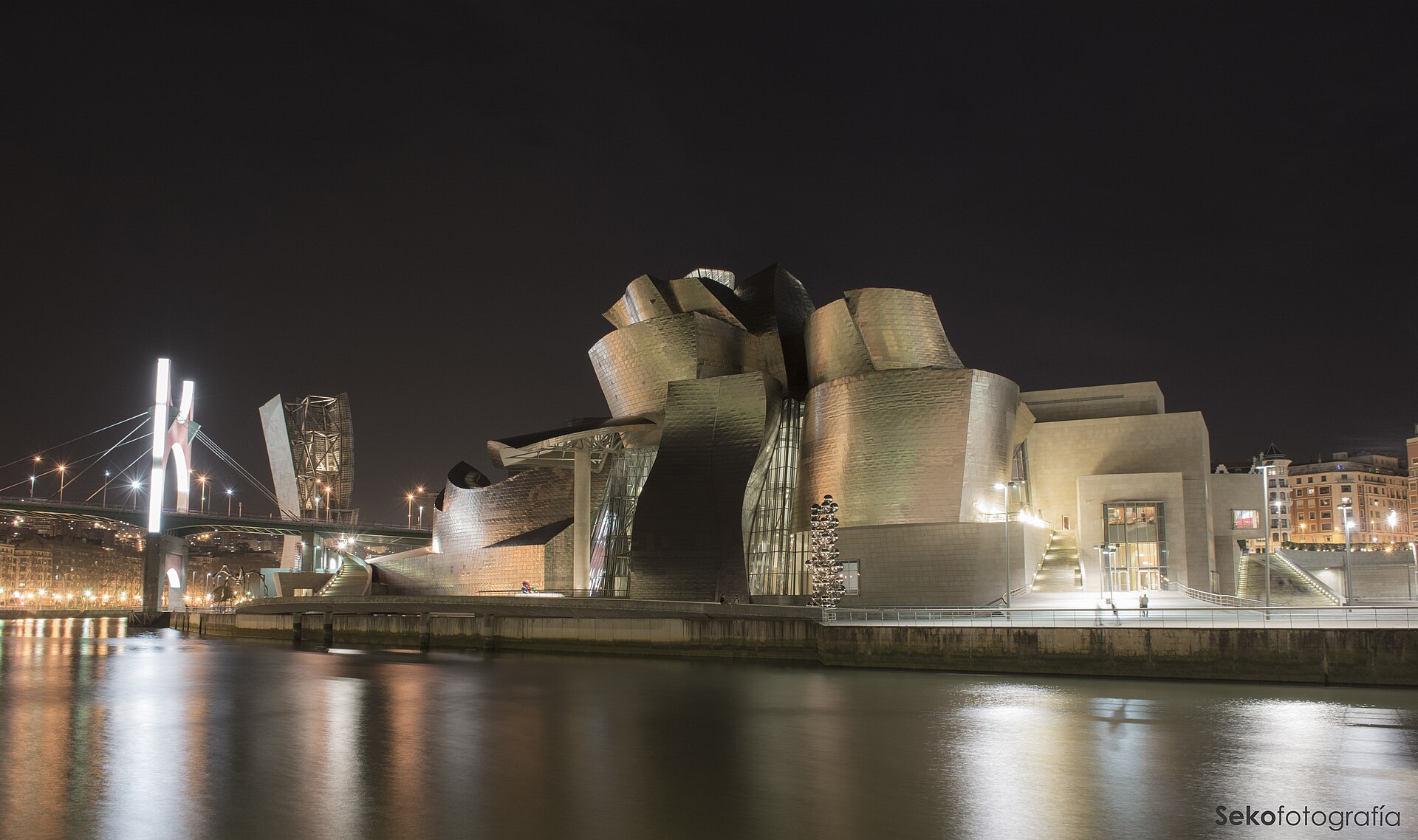 1997
Bilbao, Spain Deconstructivism
A museum of curving titanium surfaces and a symbol of urban regeneration known as the Bilbao effect.
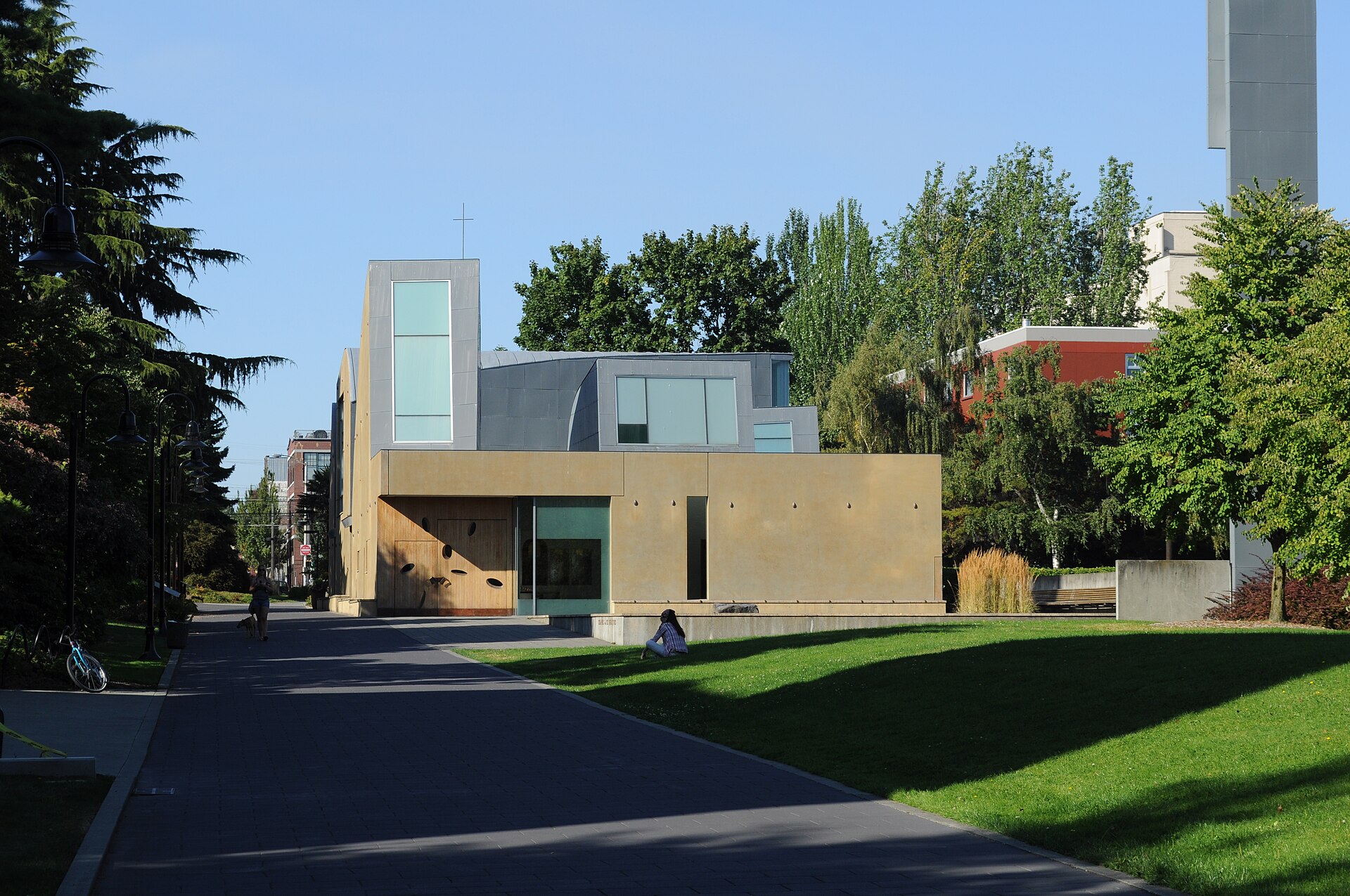 1997
Seattle, United States Contemporary
A university chapel based on the concept of seven bottles of light, known for its colored luminous interior.
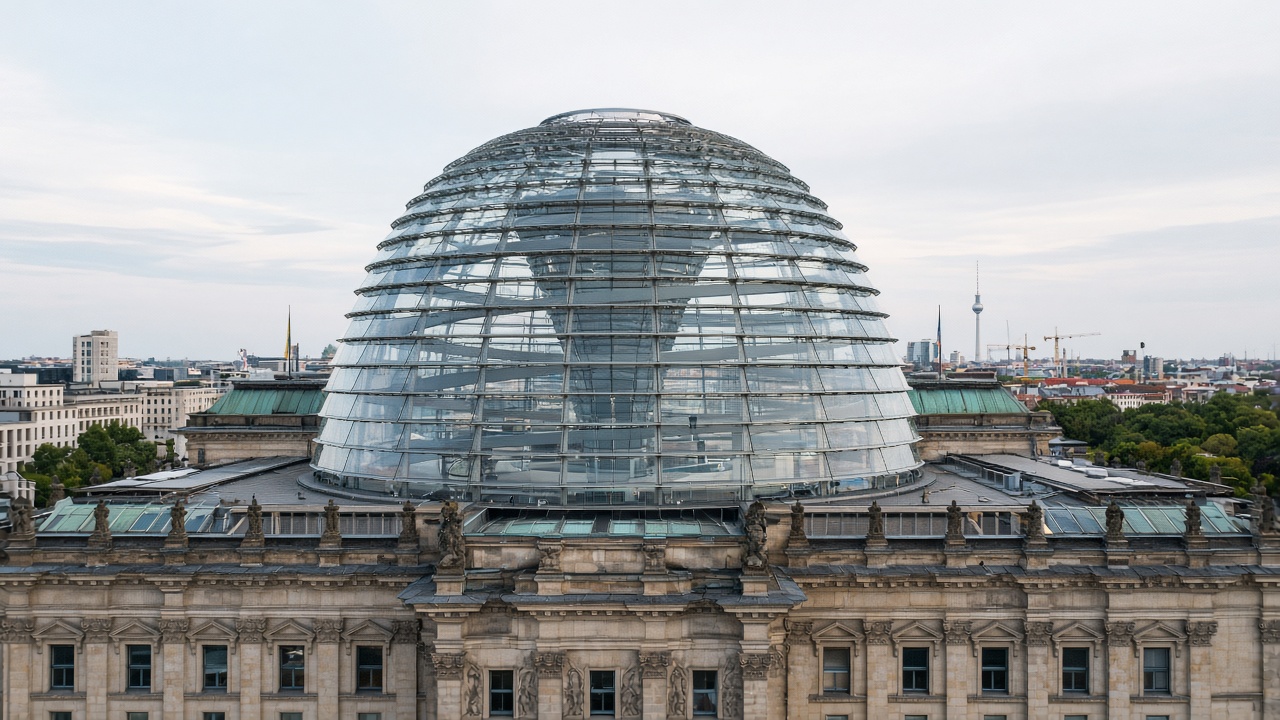 1999
Berlin, Germany High-tech
The 1999 glass dome added to Berlin’s parliament, with spiral ramps and a mirrored cone directing light below.
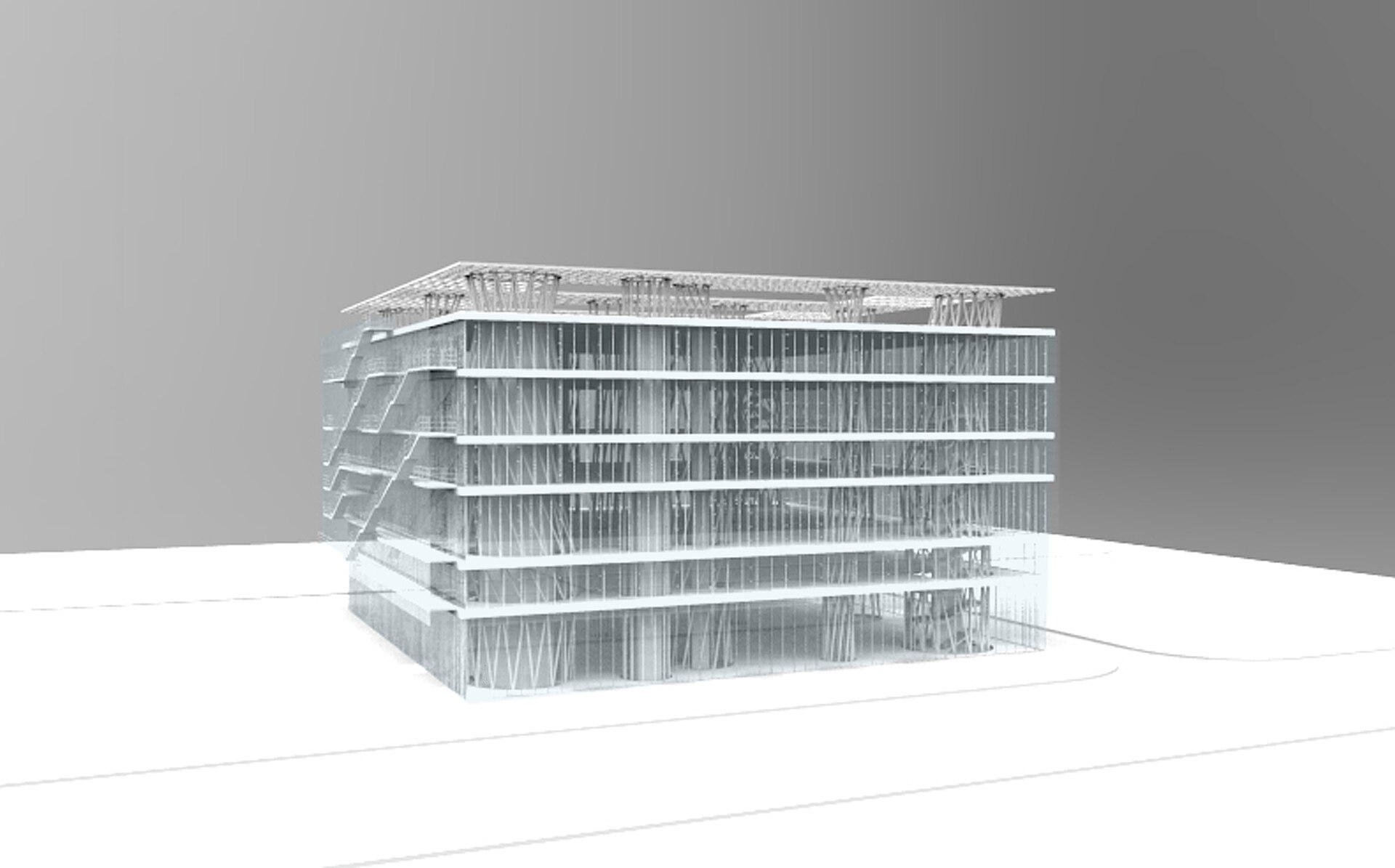 2001
Sendai, Japan Contemporary
A transparent public media library whose lattice tubes pierce a stack of open floor plates.
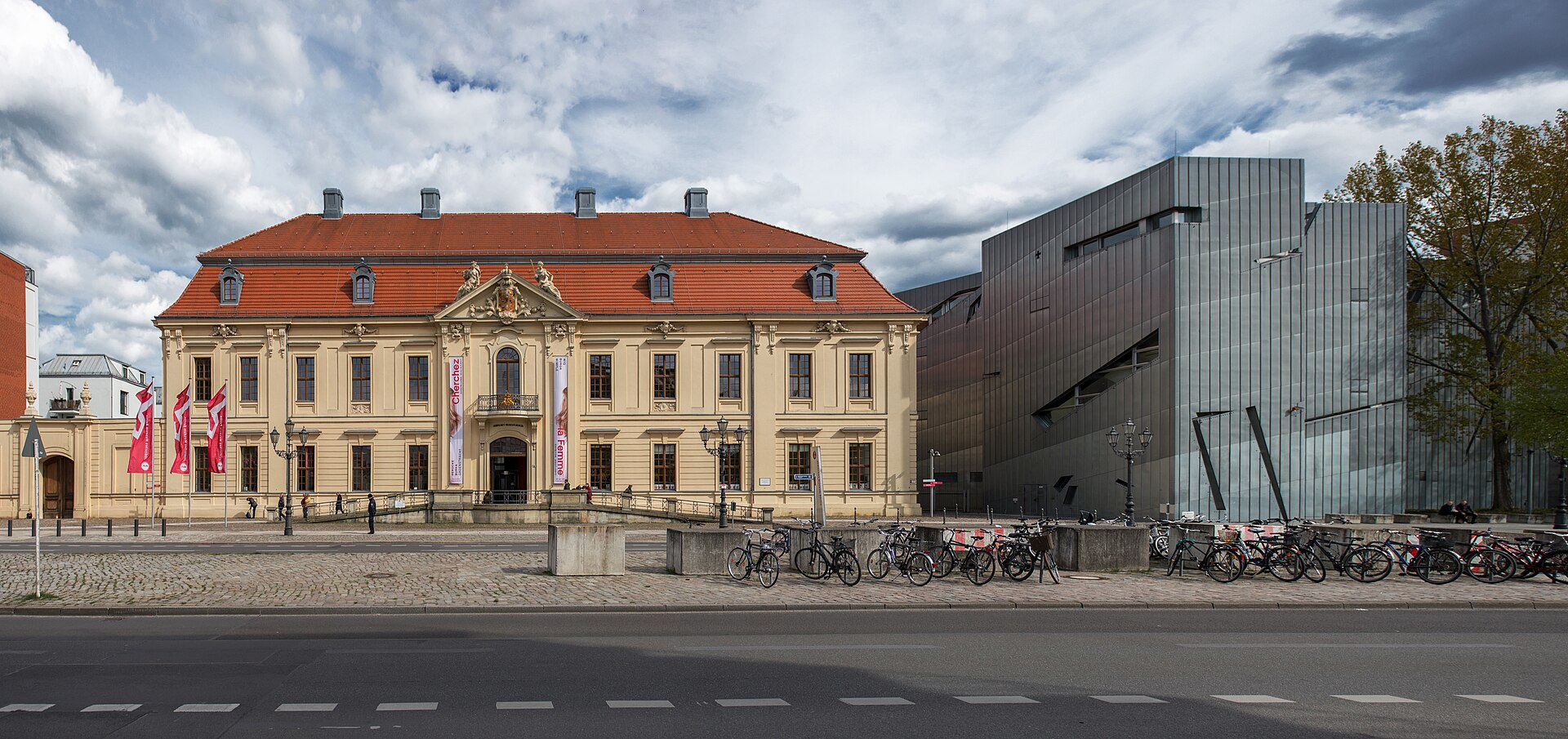 2001
Berlin, Germany Deconstructivism
A museum of zigzag plans and voids that gives spatial form to memory and absence.
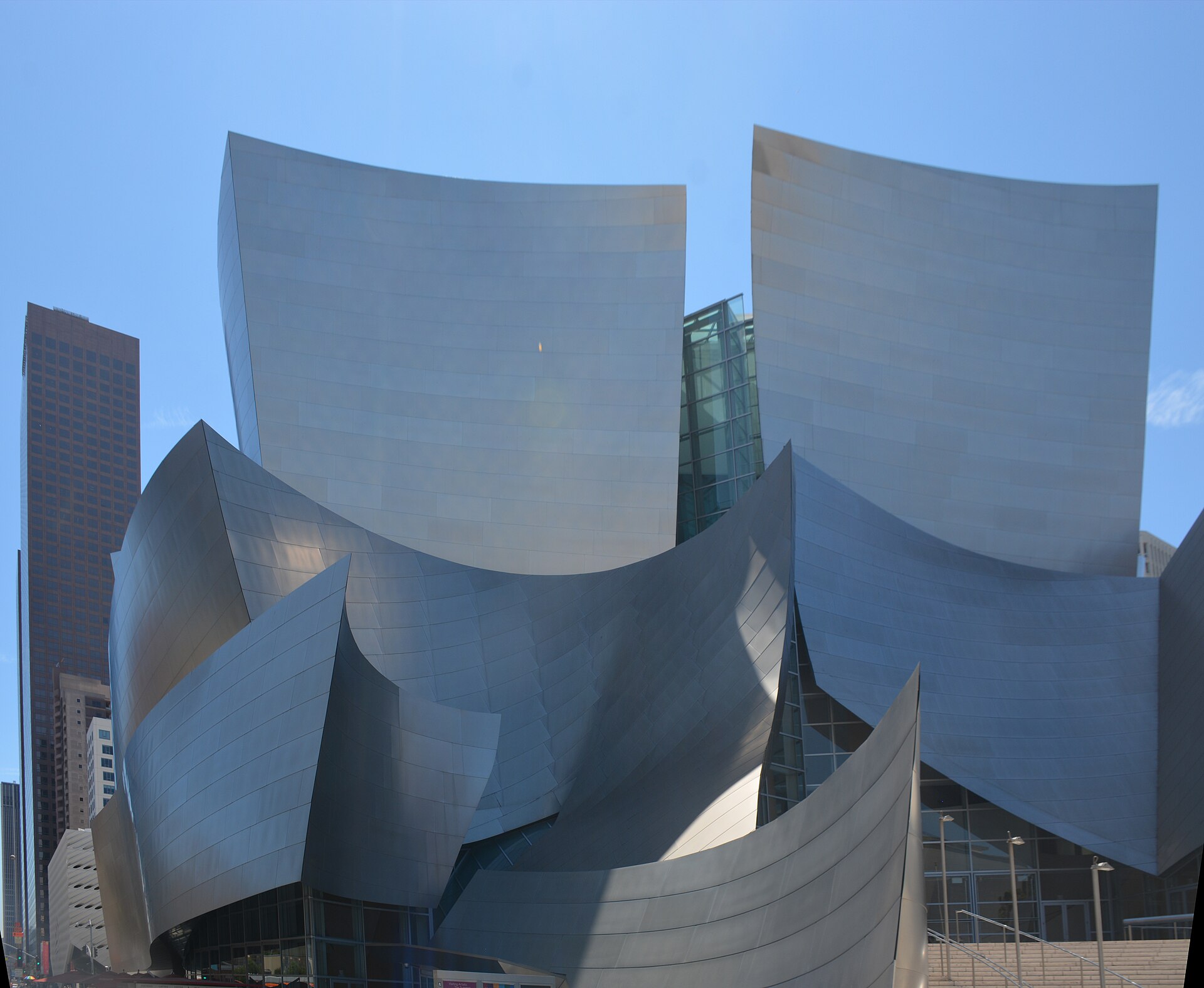 2003
Los Angeles, United States Deconstructivism
A Los Angeles concert hall wrapped in stainless-steel curves, and Gehry’s major American performance building.
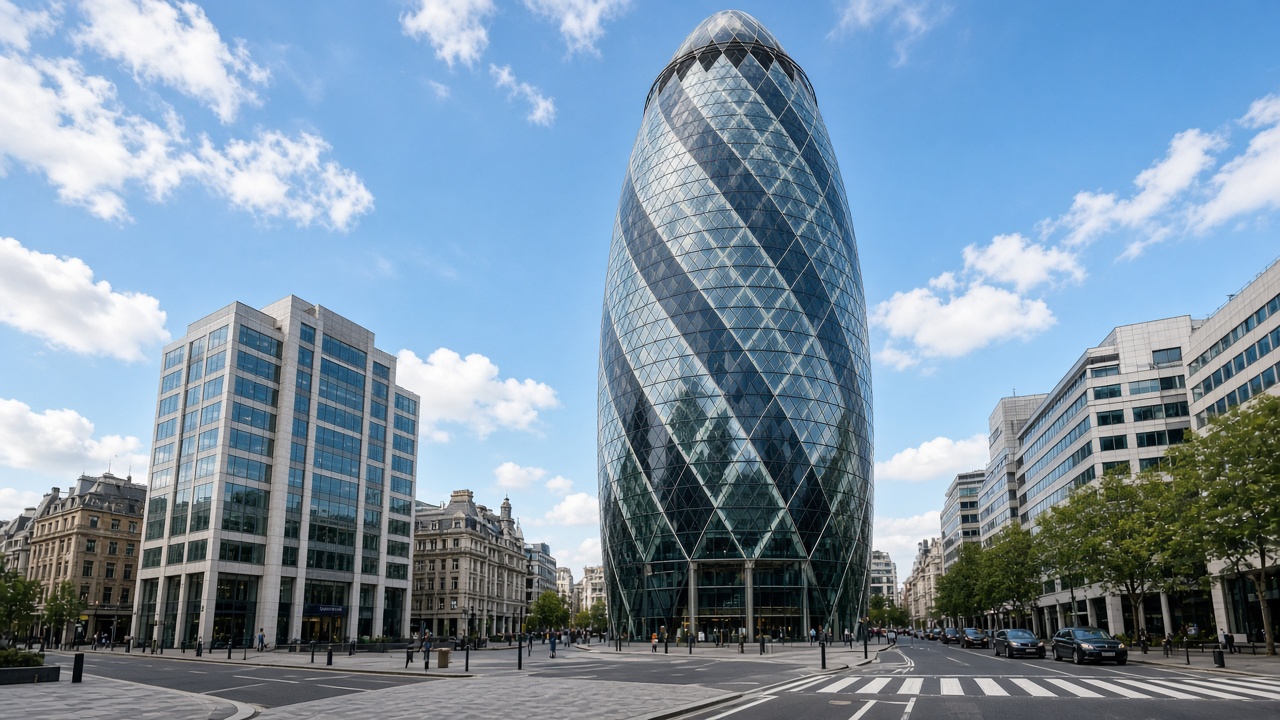 2004
London, United Kingdom High-tech
The 2004 diagrid office tower at 30 St Mary Axe, widely known as the Gherkin.
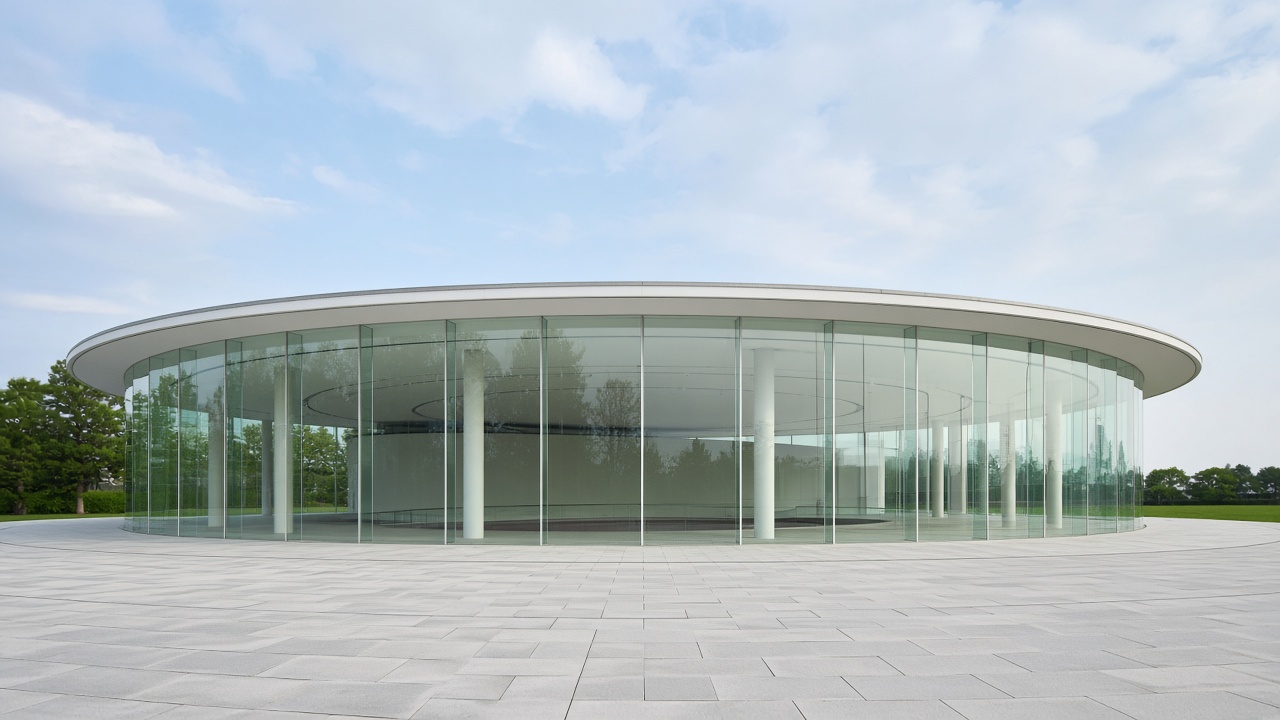 2004
Kanazawa, Japan Minimal
A 2004 circular museum in Kanazawa where glass and white planes loosen the boundary between park and institution.
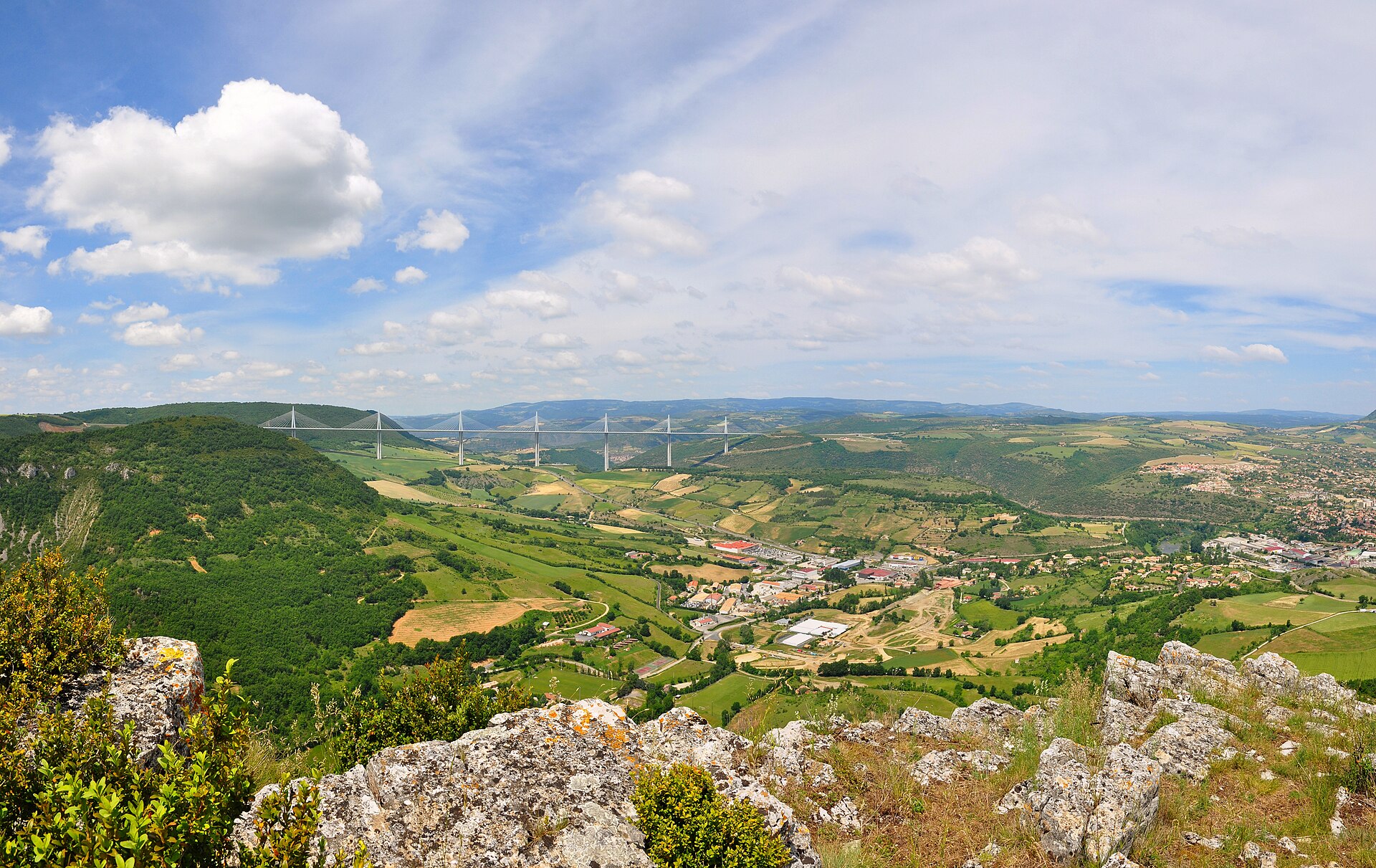 2004
Millau, France High-tech
A cable-stayed bridge crossing the Tarn Valley, and a landmark collaboration between Foster and structural engineers.
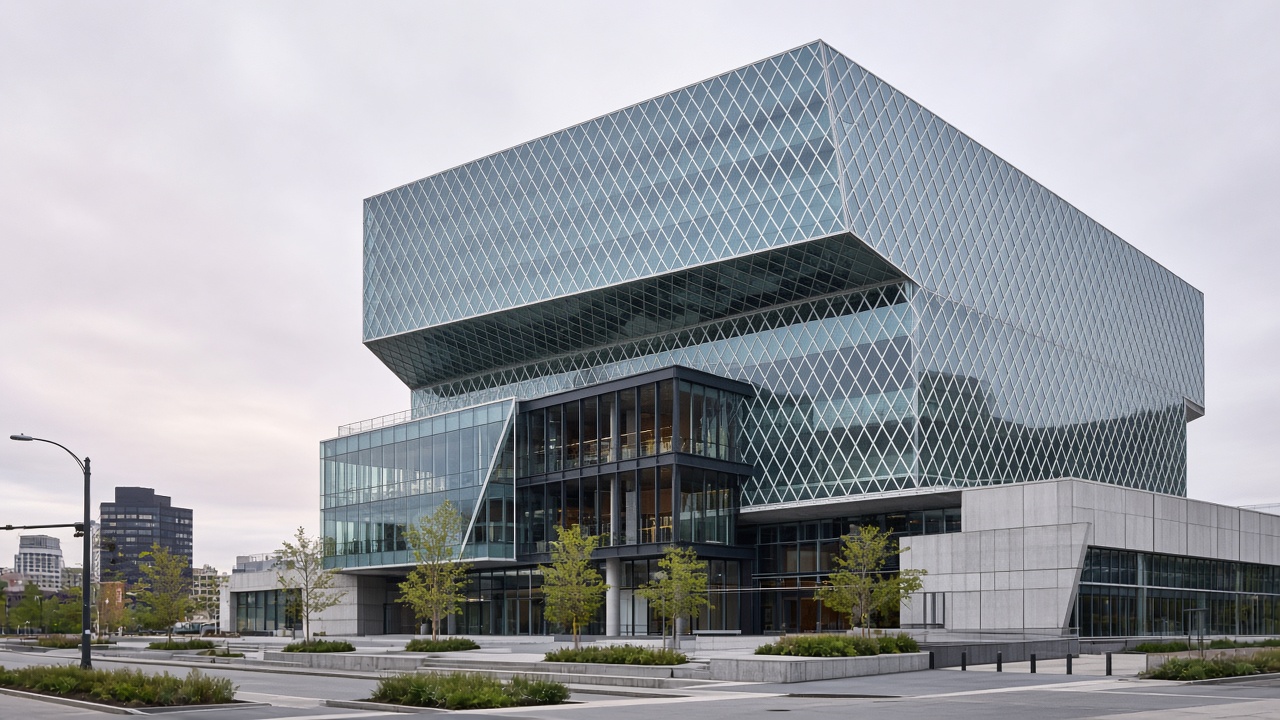 2004
Seattle, United States Contemporary
A 2004 public library stacking functional platforms inside a faceted glass envelope.
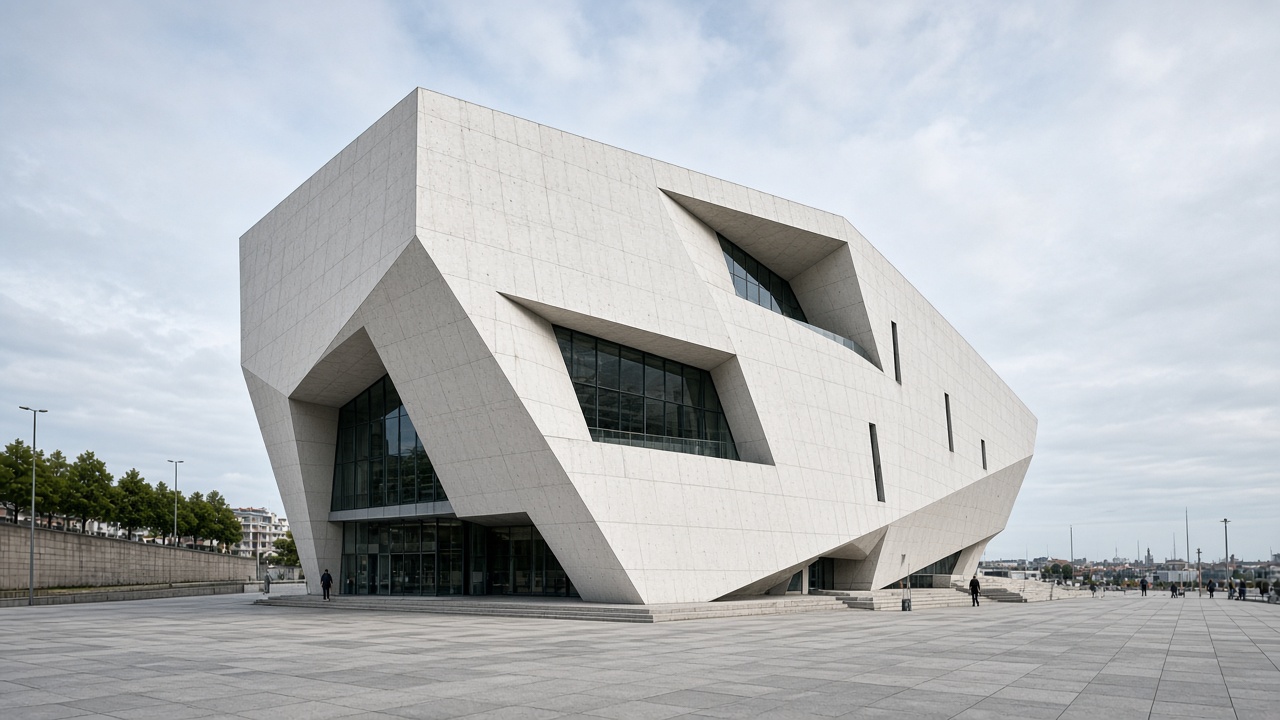 2005
Porto, Portugal Contemporary
A 2005 polyhedral concert hall in Porto, sculptural outside and densely organized with performance and public spaces within.
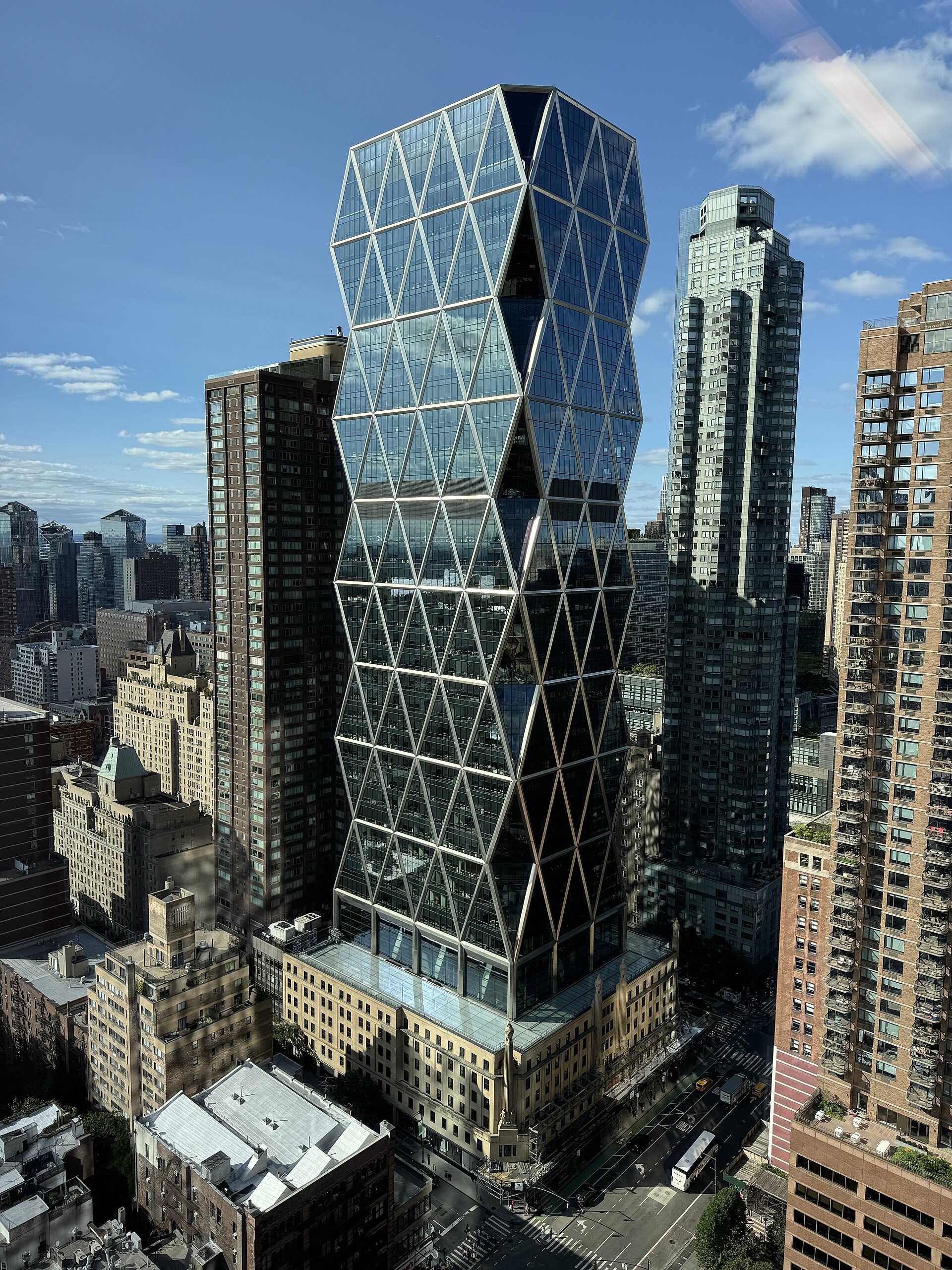 2006
New York, United States High-tech
A diagrid office tower rising above a historic masonry base in Manhattan.
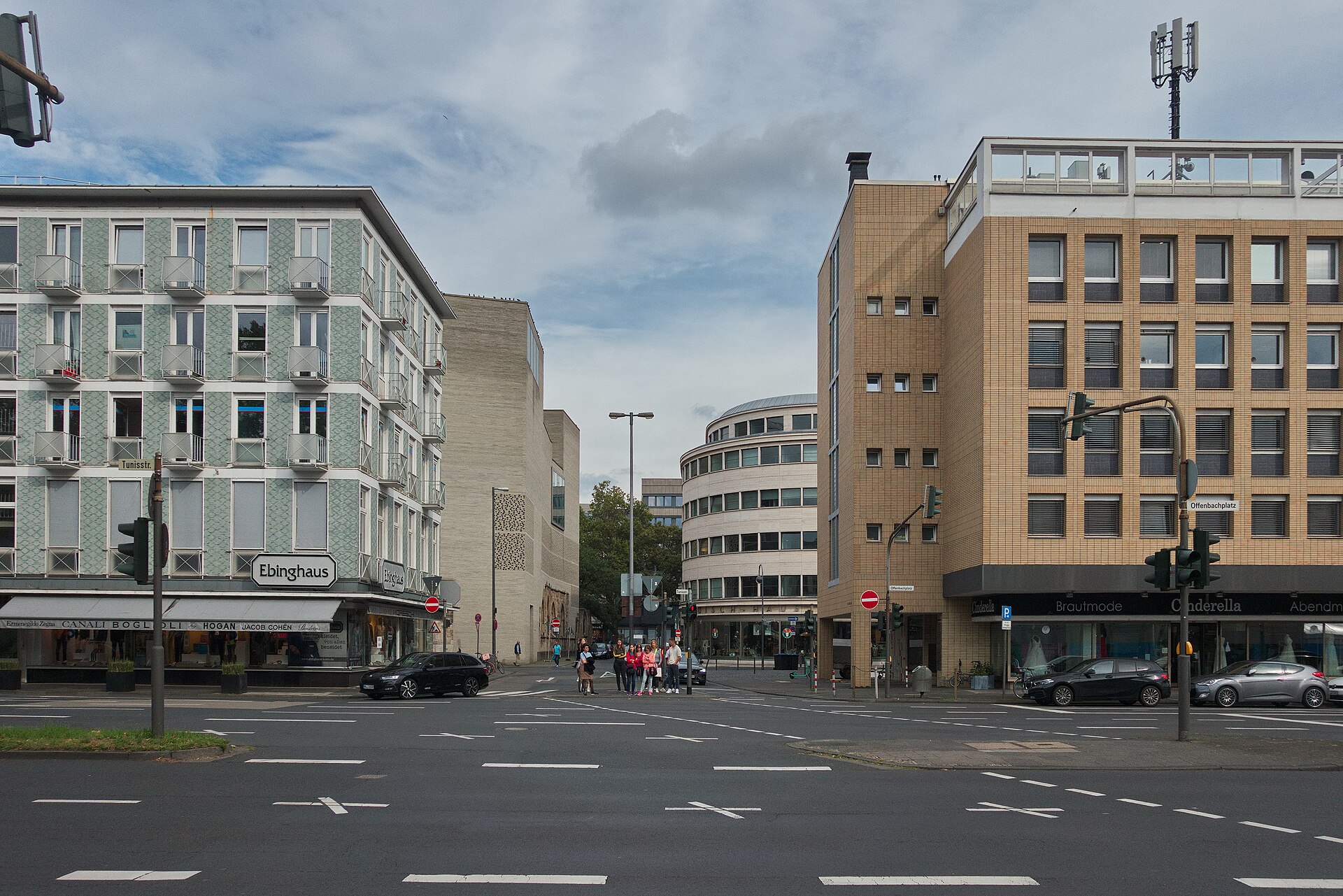 2007
Cologne, Germany Minimal
A museum built over wartime ruins and archaeological layers, distinguished by a perforated brick filter wall.
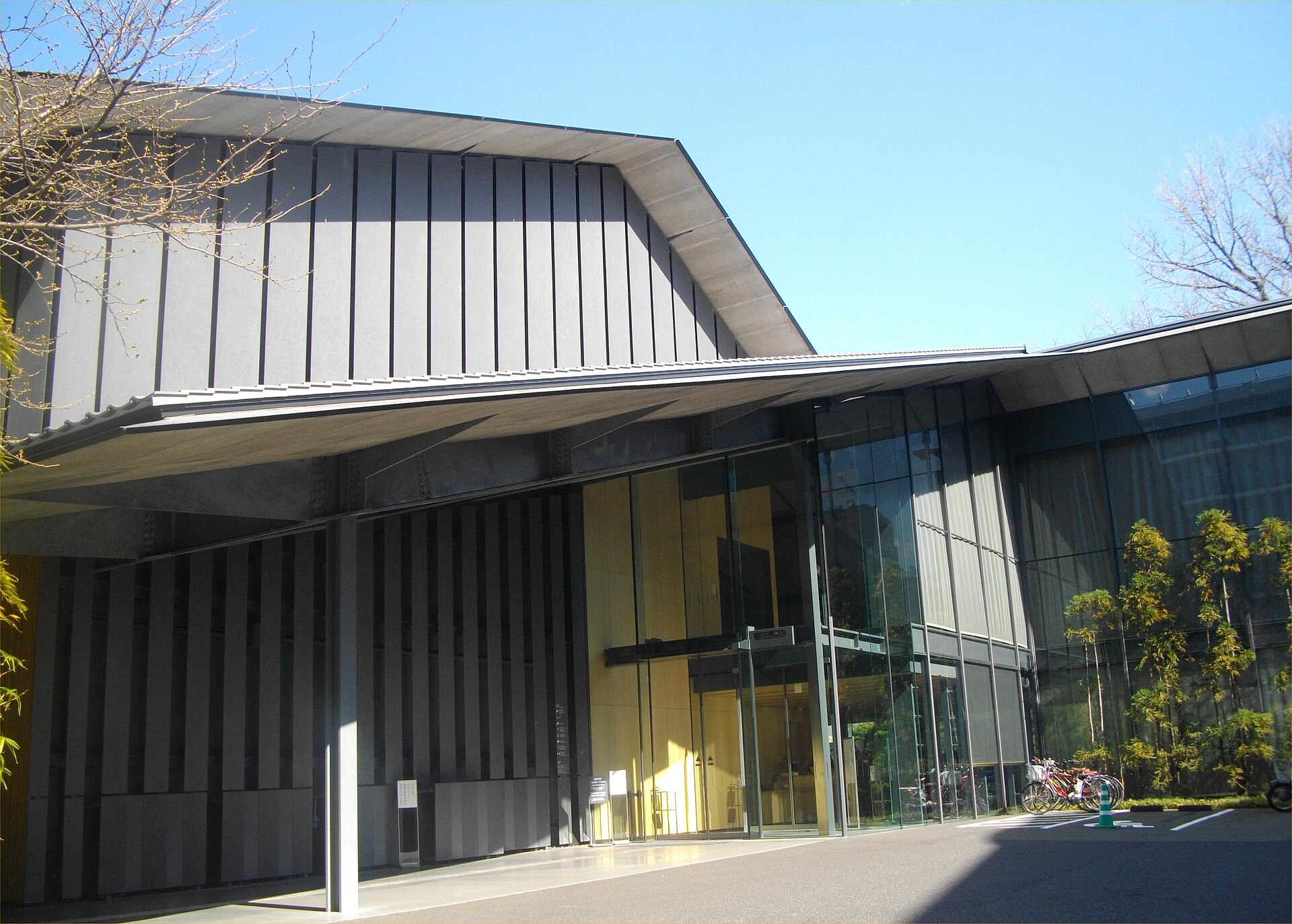 2009
Tokyo, Japan Contemporary
A museum where bamboo, deep eaves, and garden paths express Kengo Kuma’s material sensibility.
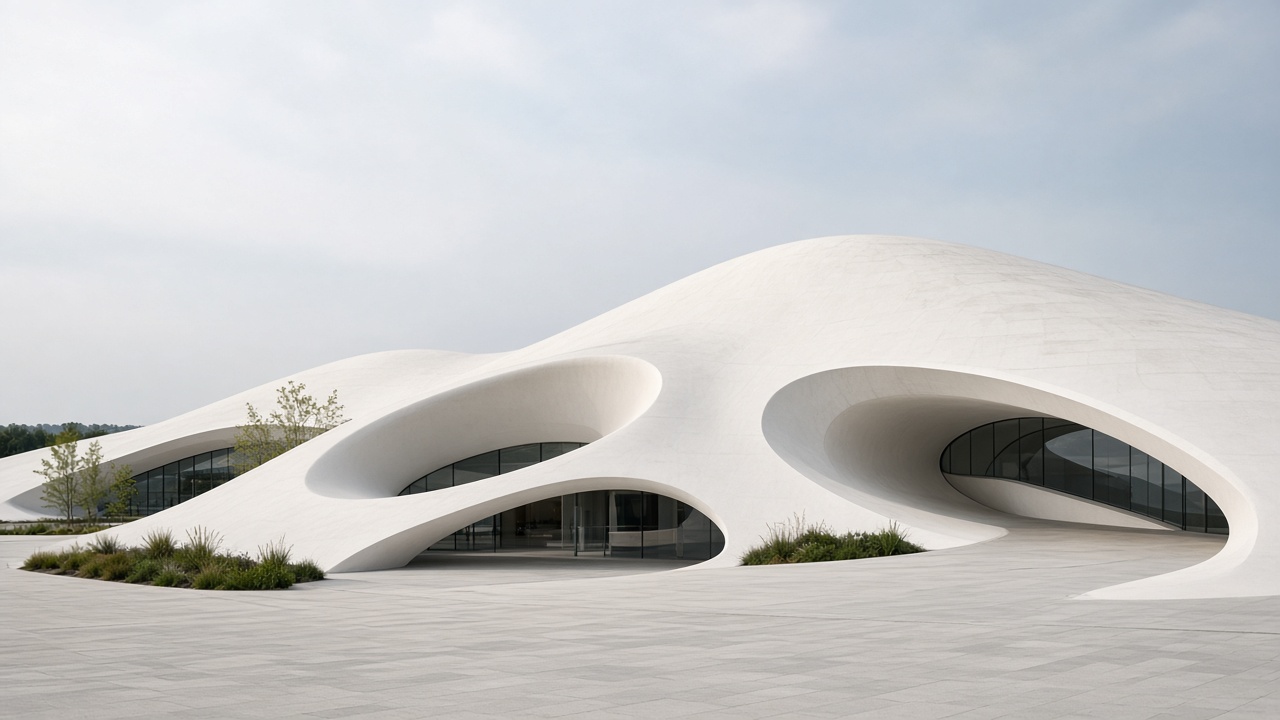 2010
Lausanne, Switzerland Minimal
The 2010 EPFL learning center in Lausanne uses an undulating floor and roof to define zones without conventional stories.
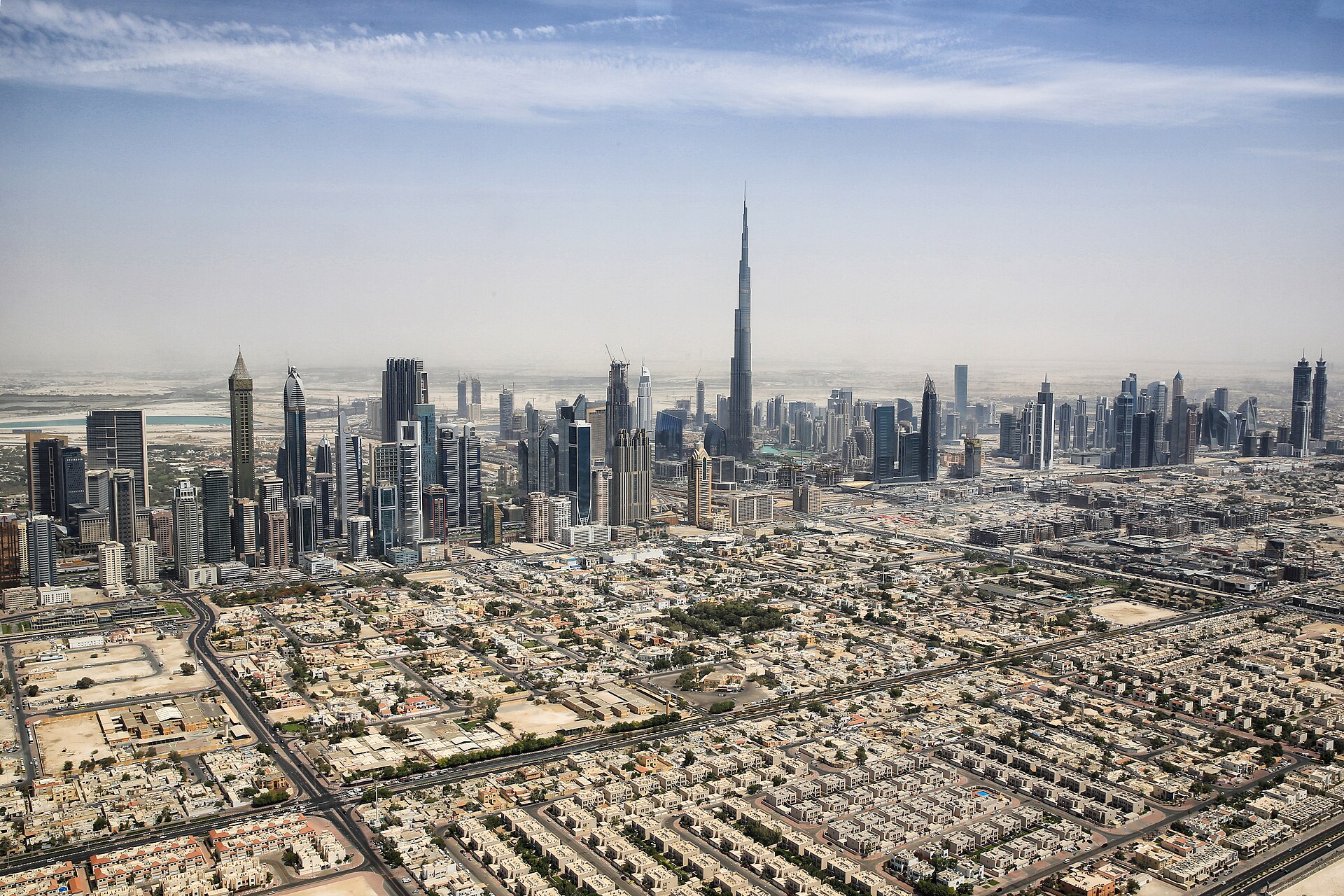 2010
Dubai, United Arab Emirates Skyscraper
A supertall tower whose buttressed Y-shaped plan and stepped setbacks respond to wind.
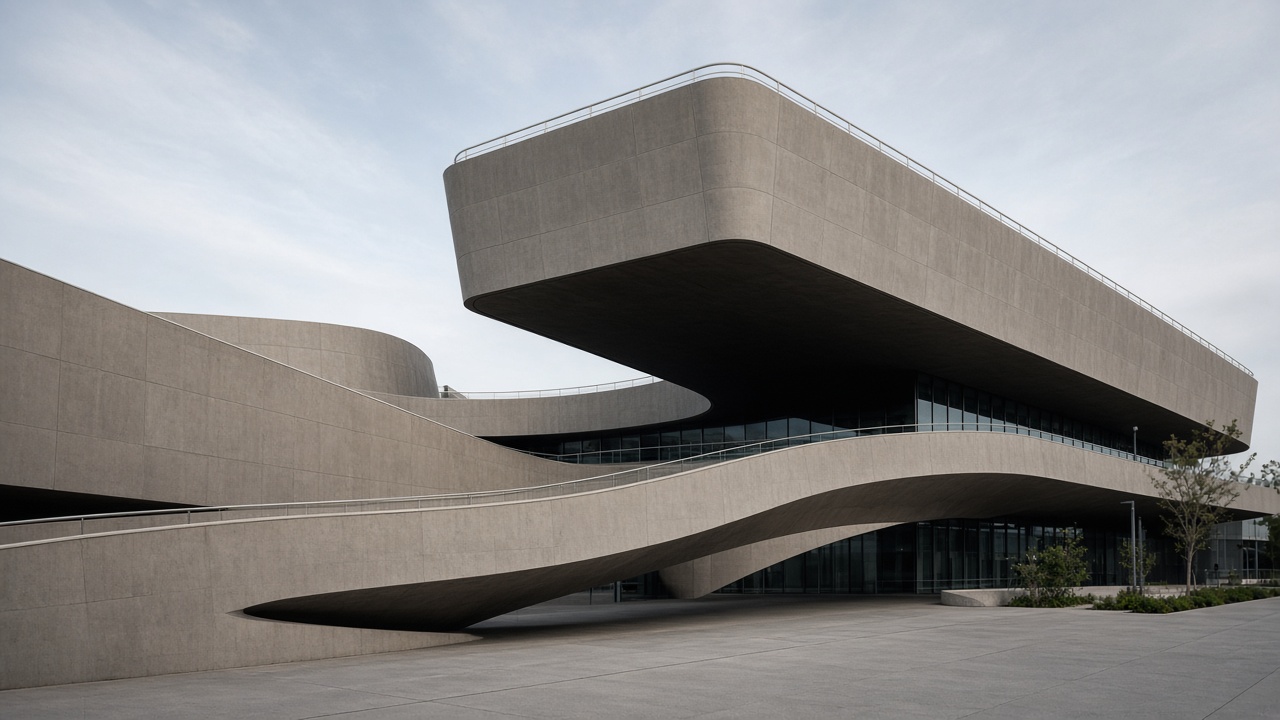 2010
Rome, Italy Contemporary
Rome’s 2010 national museum of twenty-first-century arts, organized as a network of crossing gallery ribbons.
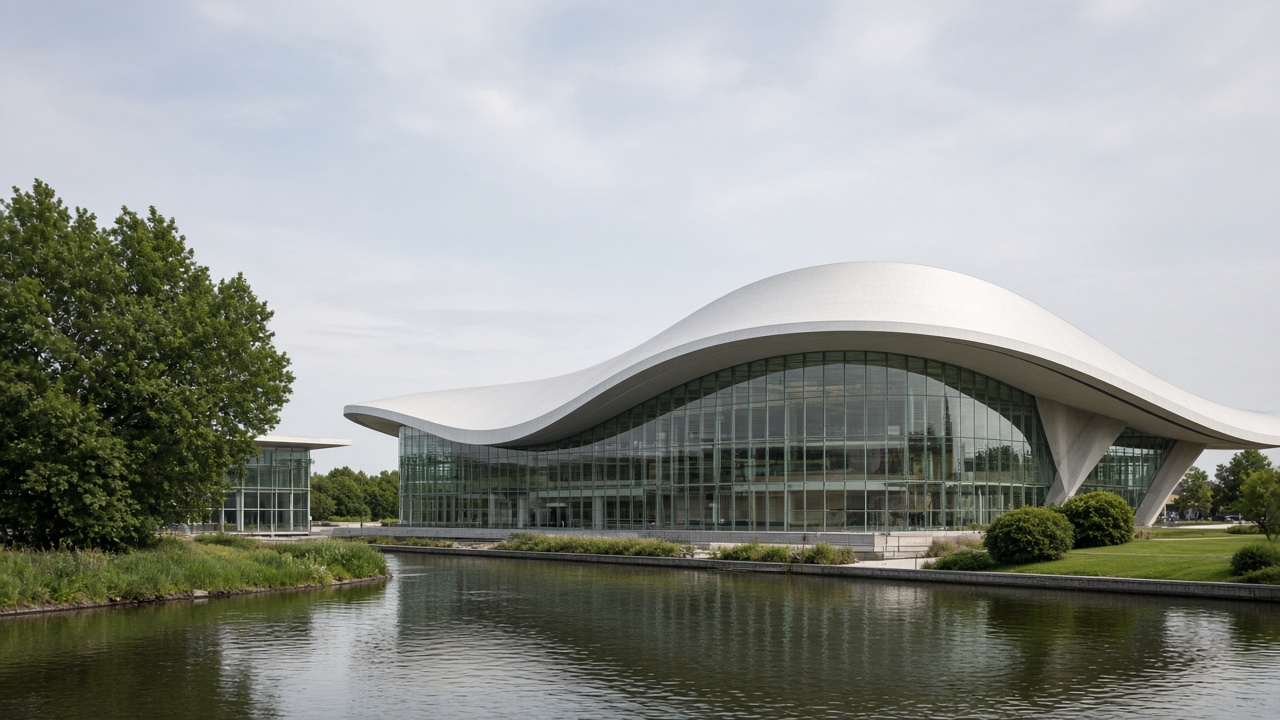 2011
London, United Kingdom Parametric
A 2011 Olympic swimming complex in London beneath a broad wave-like roof.
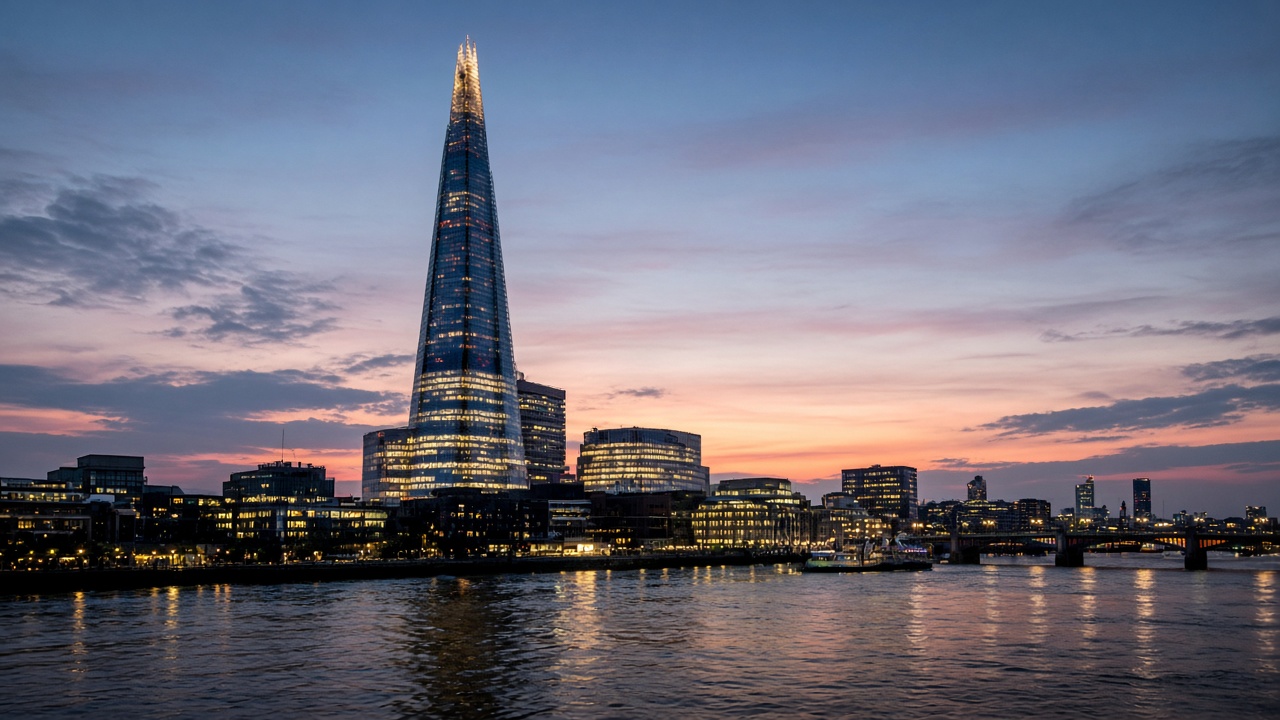 2012
London, United Kingdom High-tech
A 2012 glass spire at London Bridge stacking offices, hotel space, and viewing levels in a mixed-use skyscraper.
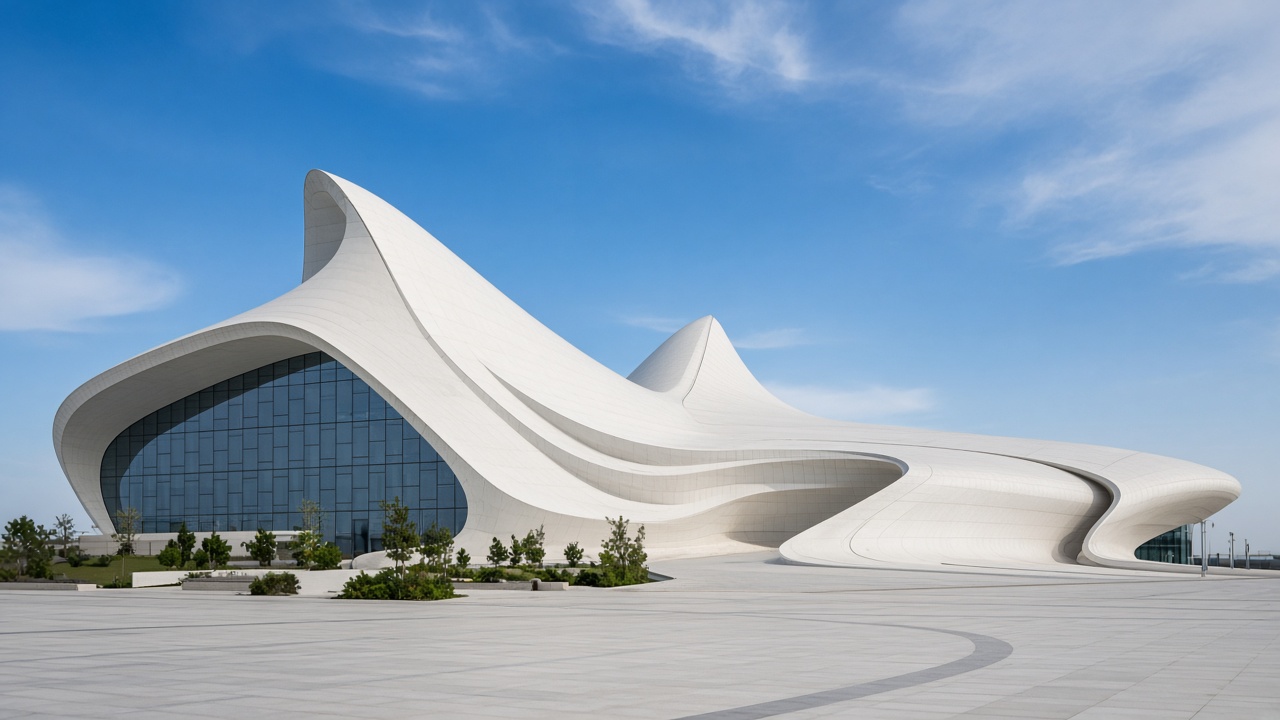 2012
Baku, Azerbaijan Parametric
A 2012 cultural center in Baku whose continuous surfaces make ground, wall, and roof flow together.
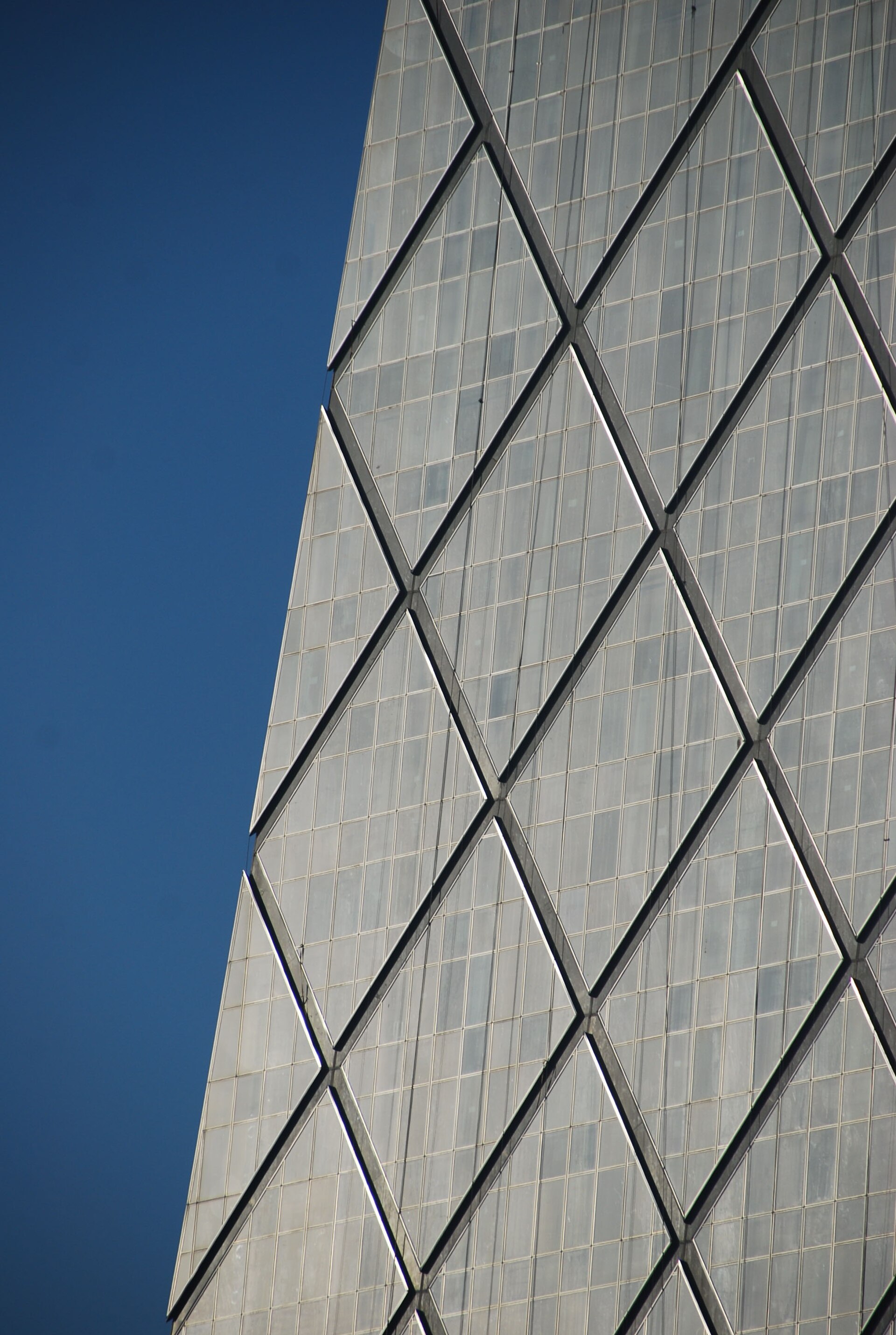 2012
Beijing, China Contemporary
A looped Beijing skyscraper in which OMA twists program and structure into a new urban icon.
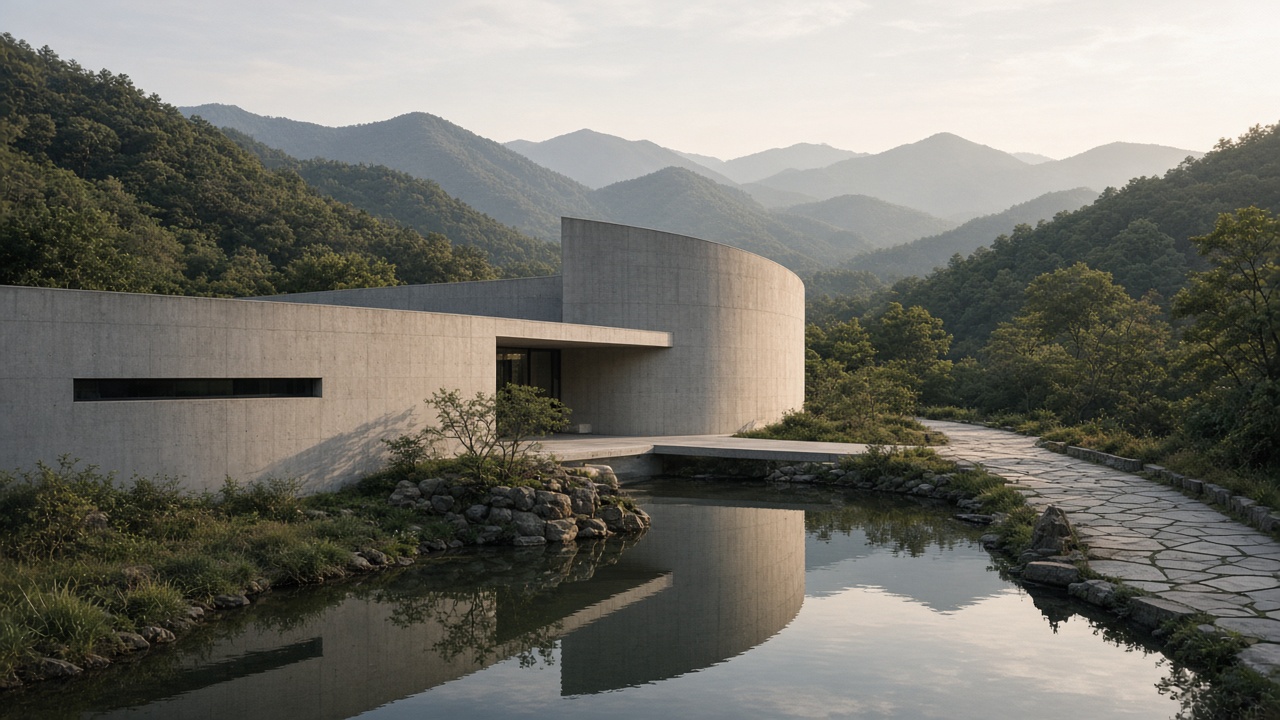 2013
Wonju, South Korea Exposed concrete
A 2013 museum in the mountains of Wonju by Tadao Ando, organized through paths, courts, and terrain.
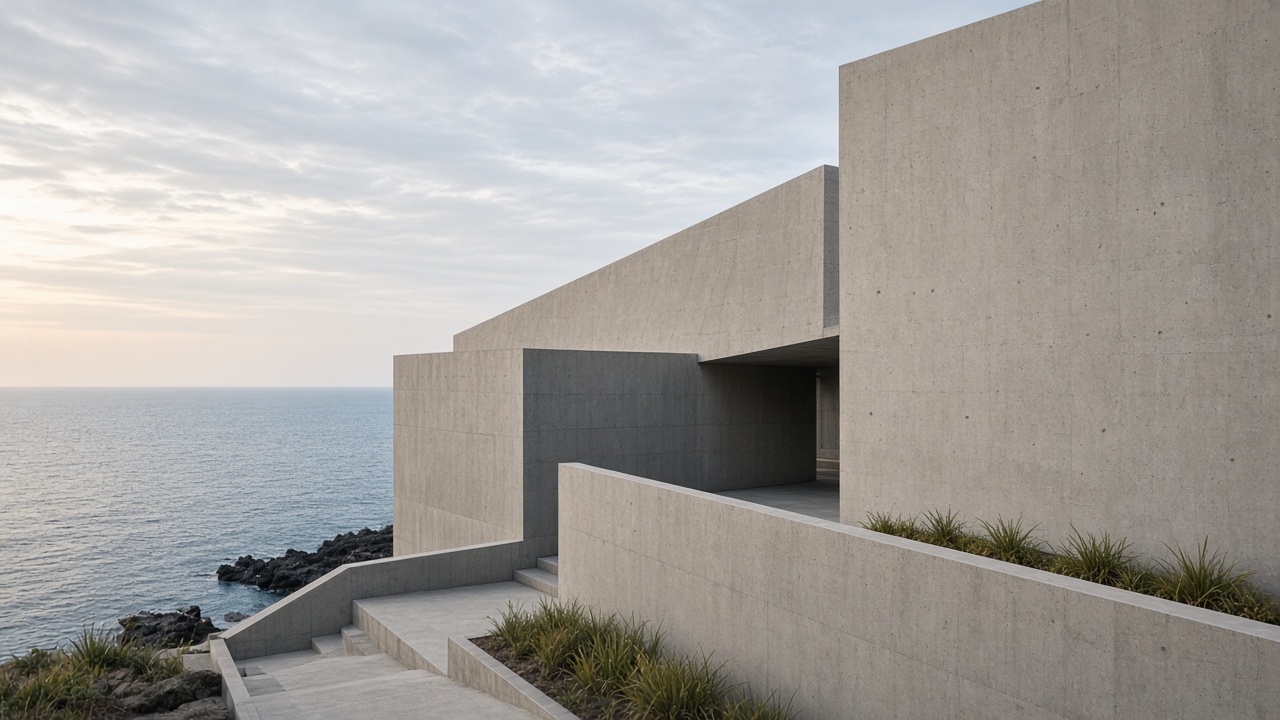 2016
Jeju, South Korea Exposed concrete
A 2016 lodging and architectural project at Seongsan, Jeju, publicly documented in connection with Tadao Ando.
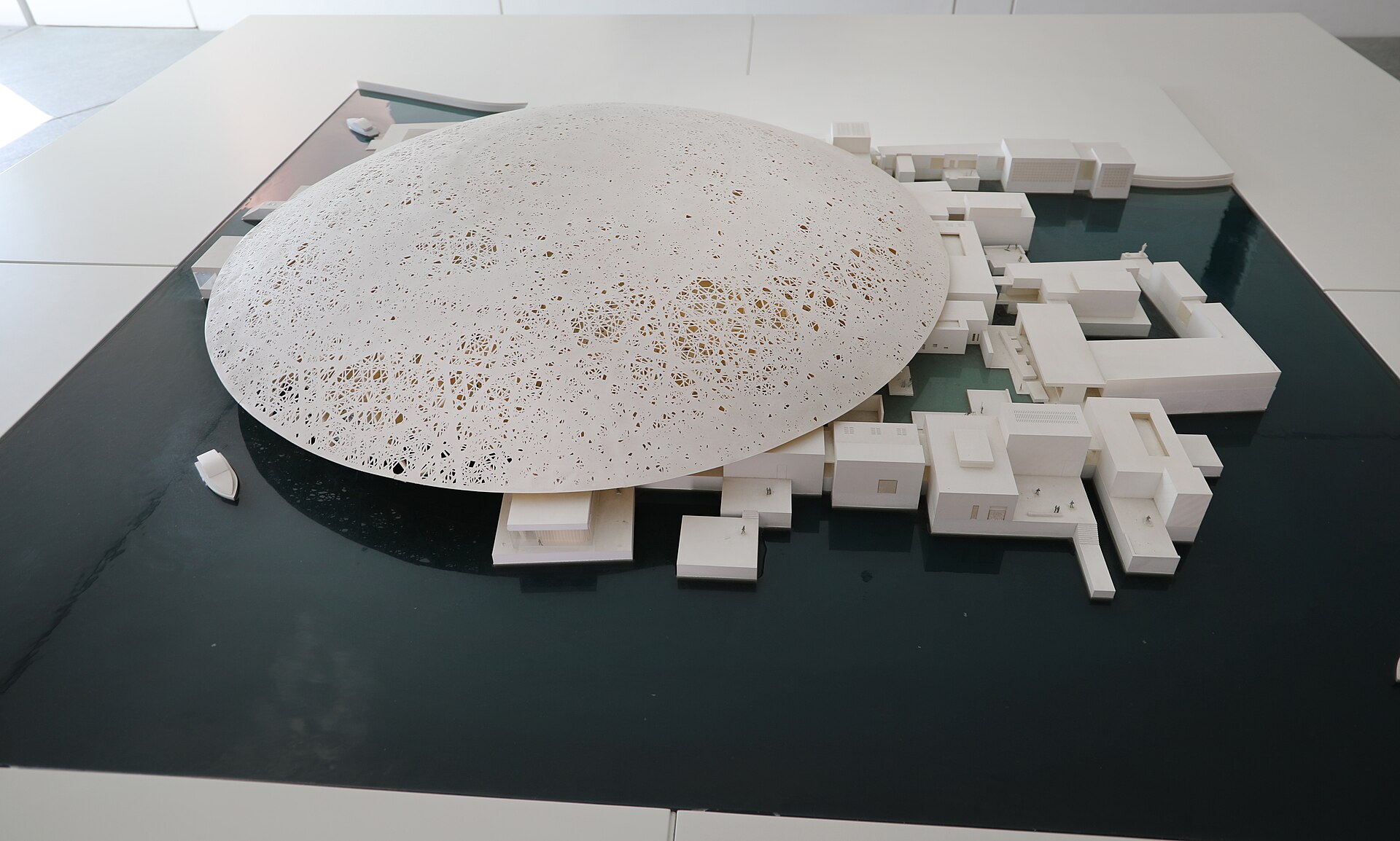 2017
Abu Dhabi, United Arab Emirates Contemporary
A museum city beneath a vast sea-borne dome that produces a patterned rain of light.
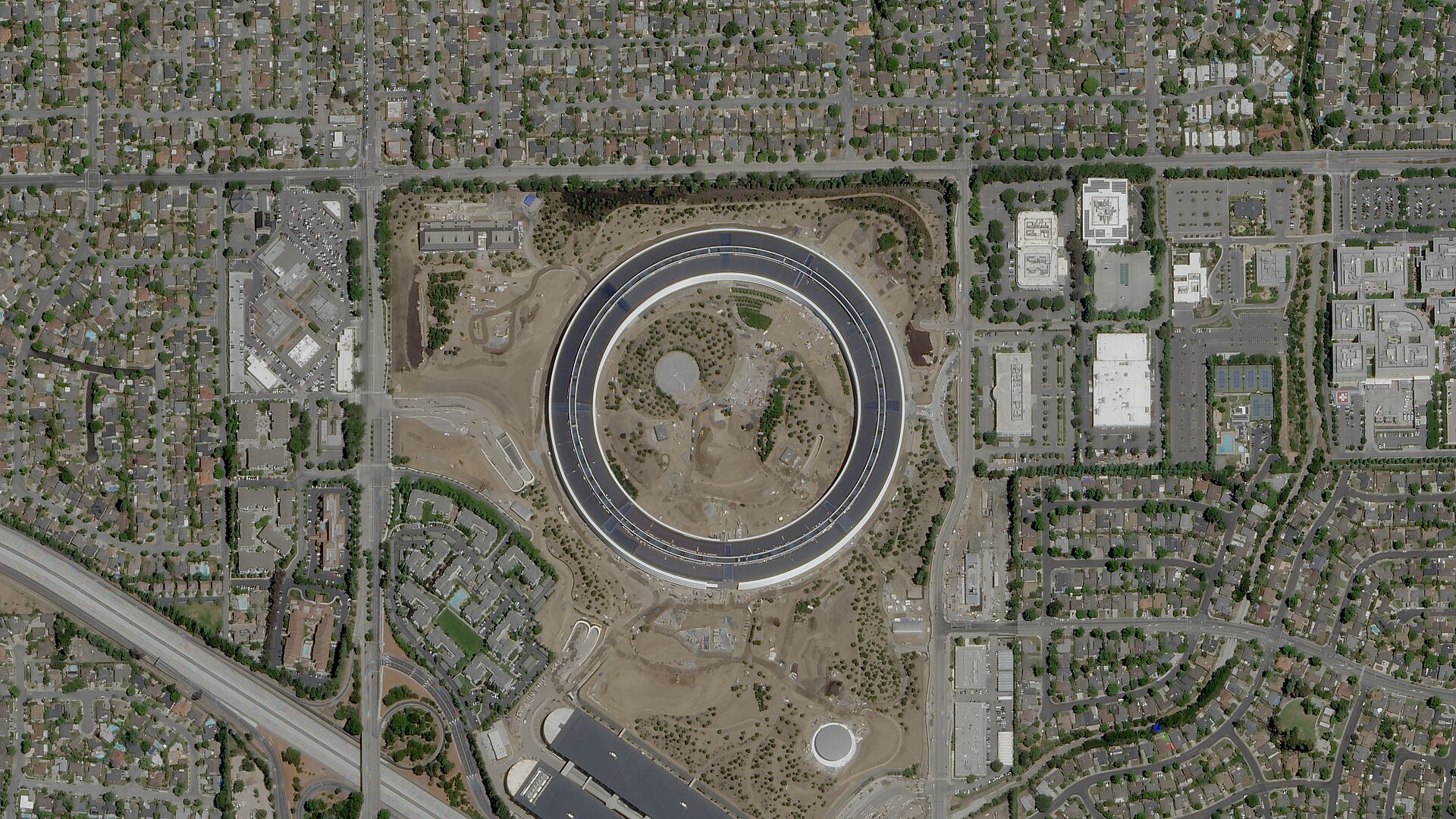 2017
Cupertino, United States High-tech
A circular corporate campus combining landscape, large glass panels, and energy infrastructure.